


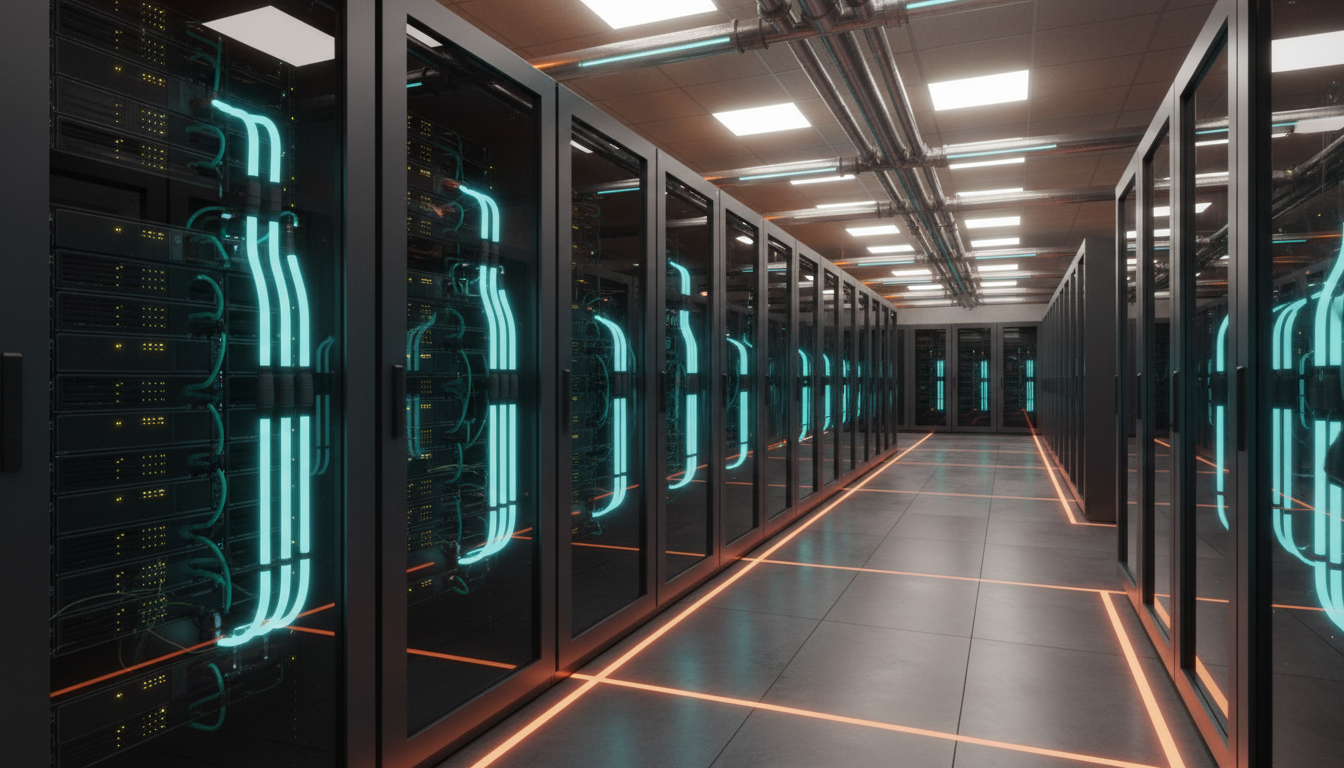
The global tech industry faces a massive power challenge. Specifically, data centers consumed roughly 460 TWh of electricity globally in 2022. Consequently, energy experts project this figure could easily surpass 1,000 TWh by 2026 1 .
Furthermore, traditional air-cooled infrastructure simply cannot handle modern heat loads efficiently. Advanced liquid cooling systems have emerged as a necessary financial upgrade. In fact, these systems fundamentally shift how operators manage their operational architecture and energy budgets.
Ultimately, balancing rising power costs and strict ESG compliance creates a definitive inflection point for infrastructure investors. Thus, operators must evaluate the true liquid cooling cost-benefit equation meticulously.
From a strict financial perspective, failing to upgrade thermal management infrastructure guarantees rapidly compounding operational losses.
“The greatest danger in times of turbulence is not the turbulence — it is to act with yesterday’s logic.”— Peter Drucker, Management Challenges for the 21st Century
Why Are Tech Giants Abandoning Air Cooling for Liquid Systems?
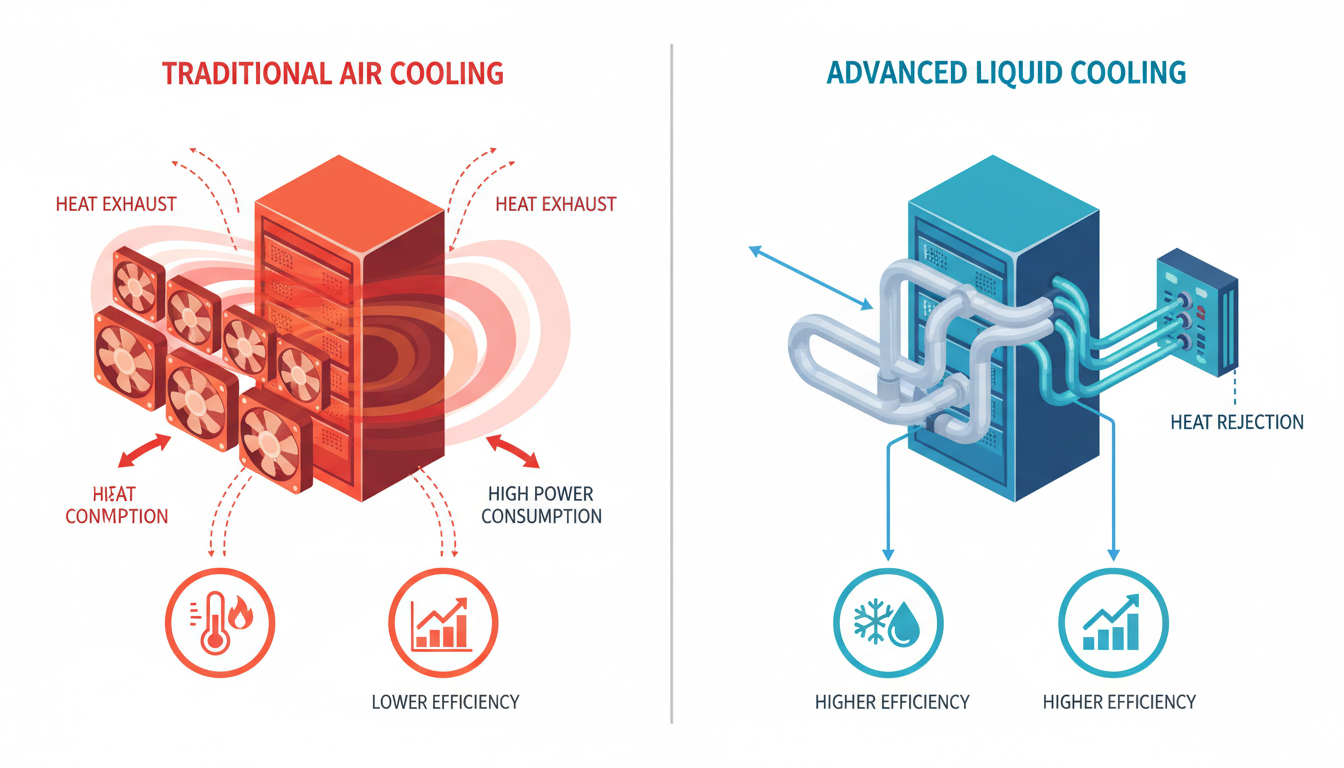
Every major facility operator asks this exact viral question before approving new infrastructure budgets. While upfront costs vary, the long-term data clearly points toward massive energy savings. Moreover, liquid systems dramatically reduce the Power Usage Effectiveness (PUE) metric.
Specifically, direct liquid cooling drops PUE from an air-cooled average of 1.5–1.8 to roughly 1.03–1.15 2 . In other words, nearly all electricity directly powers computation rather than wasteful cooling fans.
Consequently, the analytical verdict is clear: liquid cooling transforms raw electricity expenditures into pure computational yield, maximizing capital efficiency.
“The secret of getting ahead is getting started. The secret of getting started is breaking your complex, overwhelming tasks into small manageable tasks, and then starting on the first one.”— Mark Twain
The CAPEX Equation: Rethinking Upfront Investments
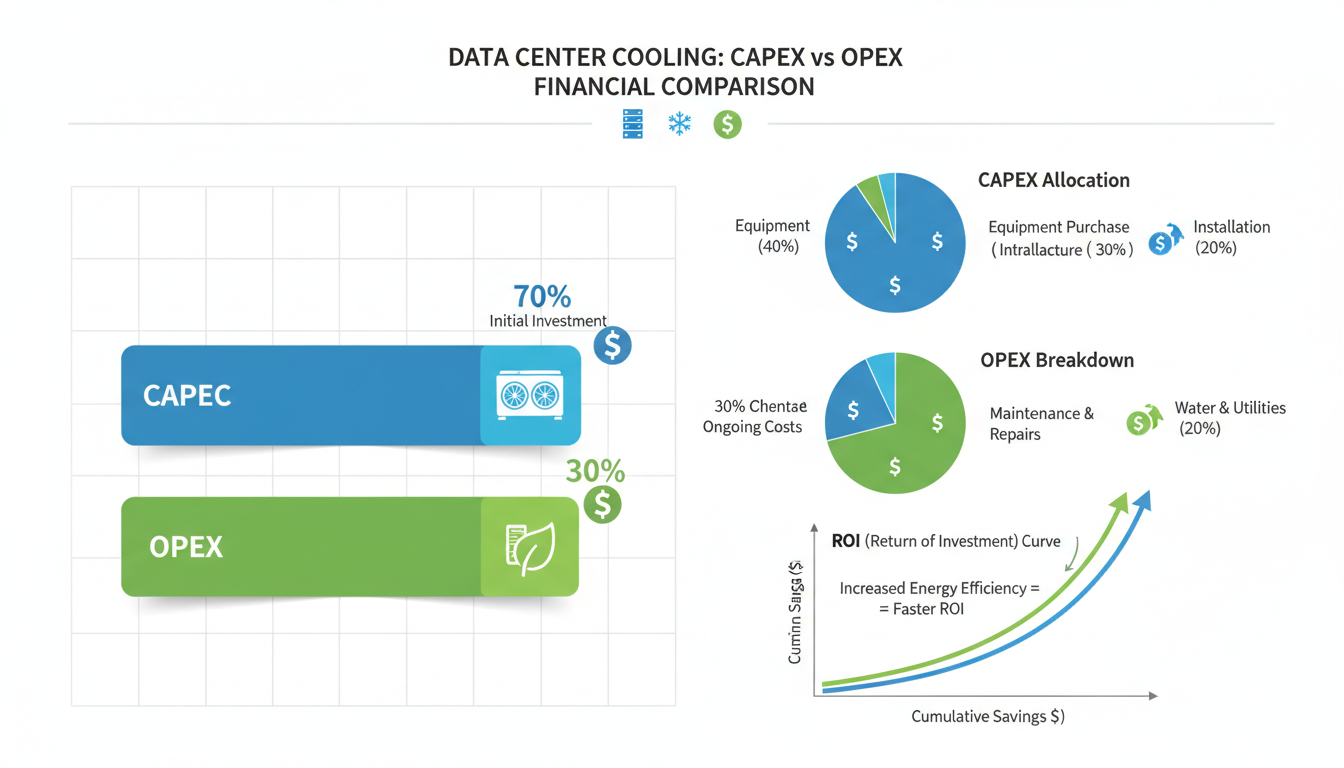
Many executives hesitate to adopt liquid cooling due to perceived high capital expenditure (CAPEX). Indeed, direct-to-chip or immersion systems demand significant initial funding. However, traditional air-cooled layouts dedicate 30–40% of their entire energy budget solely to mechanical cooling 3 .
By contrast, liquid systems completely eliminate the need for expensive raised floors and massive ductwork. For example, a 10 MW hyperscale facility might spend $20 million on traditional air cooling gear. Meanwhile, a liquid alternative might cost $25 million initially but requires 40% less physical space.
|
Metric |
Air Cooling |
Advanced Liquid Cooling |
Financial Impact |
|---|---|---|---|
|
PUE Range |
1.5 – 1.8 |
1.03 – 1.15 |
30-45% Energy Cut |
|
Cooling OPEX / Year (10MW) |
$2.8M |
$0.7M |
$2.1M Saved |
|
Rack Density |
10-15 kW |
40-100 kW |
3x-6x Footprint Gain |
|
Water Loss |
High (Evaporative) |
Near-Zero (Closed Loop) |
Permitting Advantage |
How Energy Economics in Data Centers Calculates ROI
1 – PUE Definition – The Core of Energy Economics in Data Centers:
2 – Total Facility Power and Overhead:
For your 10MW example:
3 – Annual Cooling OPEX:
Where $c_{elec}$ = electricity price per kWh.
4 – The Liquid Cooling Data Center Cost-Benefit Delta – Annual Saving:
5 – Money Verdict – Payback and 10-Year NPV:
Furthermore, reducing your real estate footprint unlocks substantial land savings. You must consider these incredible density gains when calculating LEED certification ROI for commercial real estate and overall facility profitability.
Therefore, the financial verdict on CAPEX is decisive: real estate savings and high-density computing gains typically erase the initial liquid cooling premium within 24 months.
“The secret of getting ahead is getting started. The secret of getting started is breaking your complex, overwhelming tasks into small manageable tasks, and then starting on the first one.”— Mark Twain
The OPEX Advantage: Calculating Long-Term Efficiency
While capital costs dominate board meetings, operational expenditure (OPEX) dictates long-term survival. Annually, power bills consume up to 70% of a standard facility’s operating budget. Consequently, minor cooling efficiency improvements generate millions in retained earnings.
Consider a standard 10 MW facility operating at a 1.6 PUE. This legacy setup wastes roughly 4 MW on cooling overhead alone. At $0.08/kWh, operators burn $2.8 million annually just to push air around the server room.
Conversely, achieving a 1.10 PUE with liquid cooling slashes this overhead to just 1 MW. As a result, facility owners save over $2.1 million every single year. Over a decade, this generates $21 million in pure OPEX reduction.
From an operational standpoint, the financial verdict proves that liquid cooling essentially pays for itself through aggressively compounded energy savings
ESG Compliance: From Cost Center to Strategic Asset
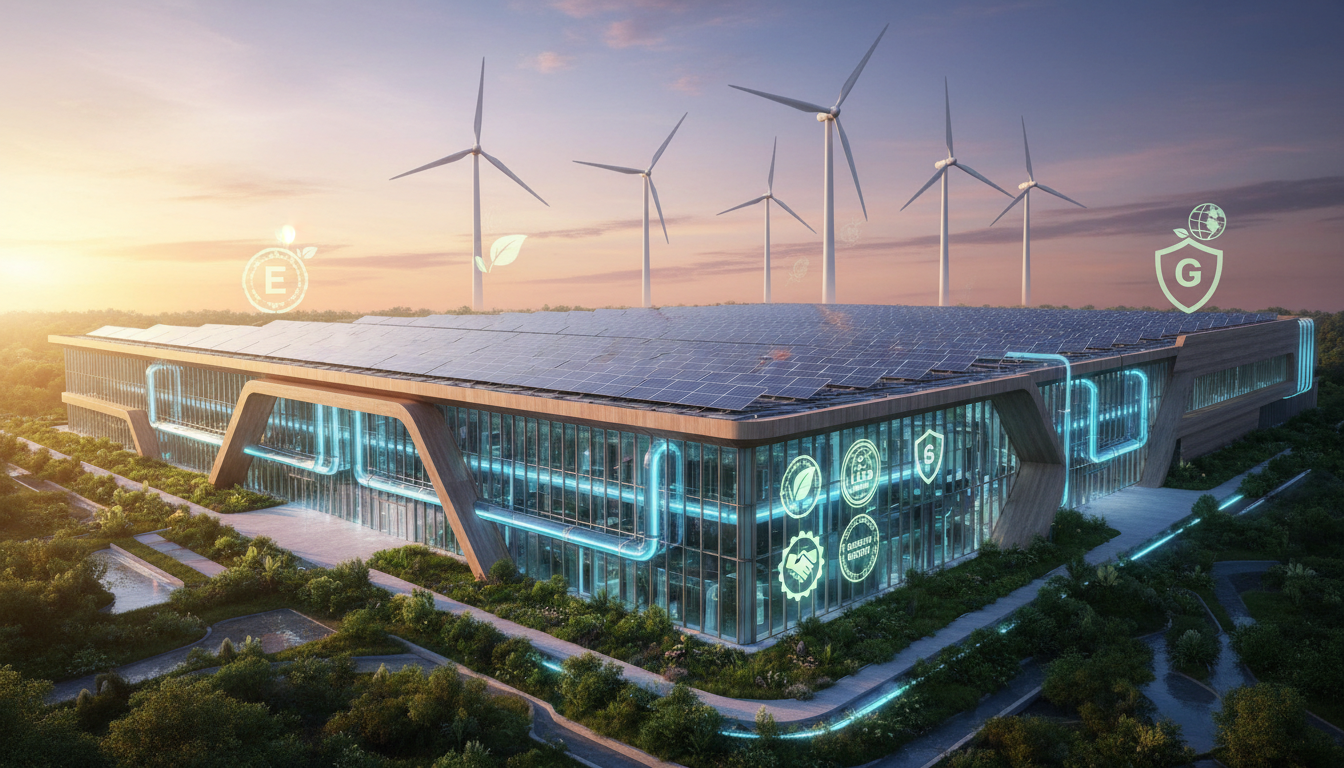
Beyond basic profitability, advanced liquid cooling perfectly aligns with modern environmental regulations. In fact, European regulators now mandate strict energy performance reporting for facilities exceeding 500 kW 4 . Similarly, new United States legislation heavily favors energy-efficient infrastructure 5 6 .
Therefore, implementing sustainable Green Tech & Infra represents a mandatory fiduciary duty today. Furthermore, over 75% of institutional investors actively evaluate these exact ESG metrics before allocating capital to technology real estate.
Most importantly, closed-loop immersion cooling operates with practically zero water loss. In water-stressed regions, eliminating evaporative cooling towers secures community goodwill and accelerates construction permitting.
Analytically, the verdict is absolute: liquid cooling transforms a regulatory liability into a highly attractive, ESG-compliant asset for institutional investors.
“An investment in knowledge pays the best interest — and in the energy economy, that knowledge must include the thermodynamics of efficiency.”—Benjamin Franklin
The AI Workload Factor: Forcing the Density Issue
Modern artificial intelligence workloads completely destroy traditional thermal management models. High-performance GPUs generate immense heat exceeding 700W per individual chip 7 . Accordingly, air cooling physically cannot dissipate this heat without massive energy penalties.
Consequently, major hyperscalers have officially designated liquid cooling as a hard requirement for next-generation AI clusters. This undeniable industry shift thoroughly de-risks the technology for smaller enterprise operators.
Without liquid cooling, operators must throttle expensive hardware or build comically oversized facilities. Neither choice offers a sustainable or competitive business model.
Ultimately, the analytical verdict shows that liquid cooling is the only mathematically viable path to support high-density AI infrastructure profitably.
The Bottom Line: The Cost of Inaction
The underlying energy economics in data centers are experiencing a permanent, structural revolution. Advanced liquid cooling clearly stands as the foundation of this sustainable transition. Specifically, it offers an unmatched blend of financial returns and environmental stewardship.
While initial installation costs remain slightly higher, the total cost of ownership plummets rapidly. Moreover, dramatic operational savings, extended hardware lifespans, and strict ESG compliance create an unbeatable financial model. Organizations that adapt now will easily outpace their legacy competitors.
In short, clinging to traditional air cooling guarantees diminishing returns and regulatory penalties. Timing represents the most critical variable in this highly competitive infrastructural arms race.
The final financial bottom line is irrefutable: transitioning to liquid cooling is not merely an efficiency upgrade, but a mandatory economic pivot to ensure long-term data center solvency.
“He who fails to plan is planning to fail. In data center infrastructure, that failure is measured in megawatts — and millions.”— Winston Churchill
References
Disclaimer: This article is provided for informational and educational purposes only. The financial projections and technical specifications referenced herein are based on publicly available industry data and should not be construed as professional engineering or investment advice.