


Introduction
In the high-stakes theater of modern business, silence represents the most expensive sound. When a production line stops unexpectedly, the financial hemorrhage accelerates rapidly. Consequently, this failure cascades through supply chains, erodes client trust, and incinerates profit margins.
Historically, maintenance operated as a purely reactive discipline. Managers accepted equipment failure as an inevitable tax on production. However, we have firmly entered the era of AI-driven predictive maintenance.
Currently, data serves as the primary lubricant for industrial longevity. Moreover, integrating artificial intelligence into enterprise systems shifts focus from human intuition to algorithmic certainty. By exploring AI Enterprise solutions, forward-thinking companies automate complex monitoring tasks.
“If you need a machine and don’t buy it, then you will ultimately find that you have paid for it and don’t have it.”— Henry Ford
In 2024, if you need AI for your assets and resist implementation, you pay for it constantly. Specifically, you bleed capital every second your line sits idle.
Analytical Verdict: Ultimately, deploying AI-driven predictive maintenance yields a definitive financial verdict: eliminating reactive maintenance transforms unavoidable operational losses into retained capital and measurable net profit.
How Much Does One Hour of Unplanned Downtime Actually Cost in 2024?
To understand the financial impact of AI-driven predictive maintenance, we must thoroughly examine the “Hidden Factory.” This term describes manufacturing capacity permanently lost to sub-optimal processes and equipment failure.
Statistical evidence proves that unplanned downtime costs global manufacturers approximately $50 billion annually. Specifically, a single hour of lost production routinely costs between $100,000 and $1,000,000 depending on the sector 4 .
The Architecture of Failure
Reactive maintenance introduces massive, inherent inefficiencies into your operational budget. When a component fails abruptly, emergency repairs cost three to nine times more than planned interventions.
Furthermore, this premium includes expedited shipping, overtime labor, and catastrophic missed delivery deadlines. Therefore, shifting to an automated model allows for surgical, highly targeted interventions.
Instead of replacing parts on rigid schedules, AI identifies the precise moment preceding failure. Consequently, organizations stop wasting perfectly good components prematurely.
“Efficiency is doing things right; effectiveness is doing the right things.”— Peter Drucker
Essentially, AI-driven predictive maintenance ensures we perform the exact right interventions at the right time. Additionally, this algorithmic precision triggers a compounding financial effect across the entire supply chain.
Financial Verdict: Replacing calendar-based maintenance with algorithm-triggered interventions reduces direct repair costs by up to 80%, permanently shrinking the “Hidden Factory” and maximizing production capacity.
Neural Reliability: How AI Anticipates Invisible Friction
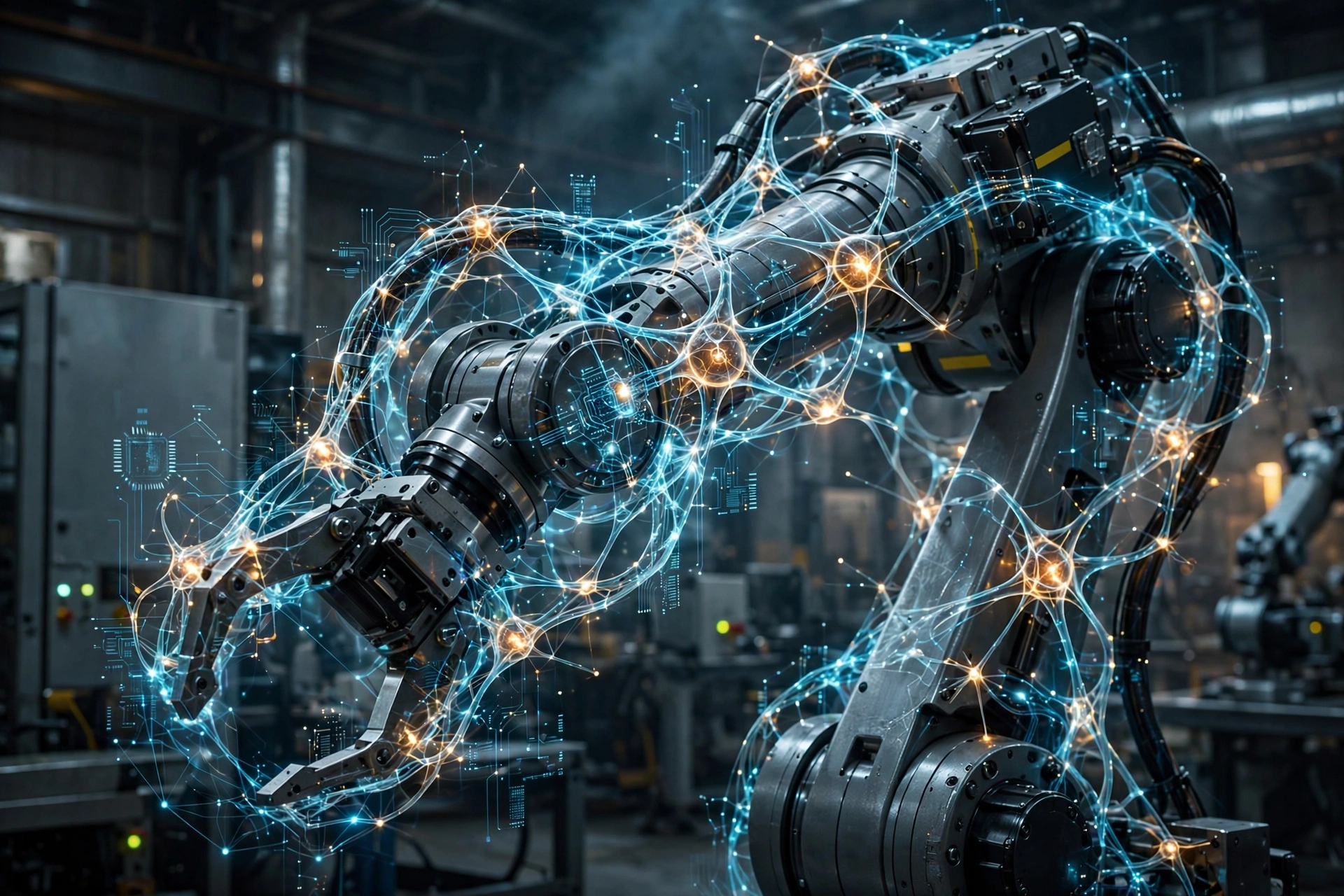
The technological core of AI-driven predictive maintenance relies entirely on the “Digital Twin” concept. By creating real-time virtual replicas, AI systems execute thousands of financial and operational simulations instantly.
Moreover, these systems ingest massive datasets from advanced IoT sensors. They monitor vibration, temperature, pressure, and acoustic emissions continuously. Consequently, the algorithms detect microscopic degradation patterns entirely invisible to human operators.
Reinforcement Learning and Reliability
Over time, these dynamic algorithms improve aggressively through reinforcement learning. As they process more operational data, their financial forecasting and mechanical predictions become highly accurate.
This dynamic creates a profound virtuous cycle of industrial reliability. Transitioning from “feeling” the machine to trusting the algorithm delivers a 10–20% reduction in maintenance costs 2 .
“The secret of change is to focus all of your energy not on fighting the old, but on building the new.”— Socrates
By building this data-driven reality, manufacturers aggressively protect time, their most valuable asset. Furthermore, early adopters gain an insurmountable competitive advantage that late entrants simply cannot close.
Analytical Verdict: Integrating Digital Twins and IoT sensors yields a 5–10% increase in Overall Equipment Effectiveness (OEE), directly translating into millions of dollars in recovered annual revenue.
Cross-Industry ROI: Reducing Diagnostic Errors and Medical Malpractice Costs
The financial impact of AI-driven predictive maintenance extends far beyond traditional manufacturing floors. Specifically, this technology actively revolutionizes medical device manufacturing and clinical diagnostics.
When healthcare organizations implement clinical automation, they drastically reduce human-induced diagnostic errors. Medical equipment maintained by predictive algorithms consistently operates with flawless, pixel-perfect precision.
Lowering Medical Malpractice Insurance Overhead
Consequently, eliminating equipment calibration failures directly prevents catastrophic patient misdiagnoses. By detailing exactly how automation reduces diagnostic errors, institutions prove immense operational reliability to stringent insurers.
Therefore, healthcare providers and clinical manufacturers secure significantly lower medical malpractice insurance costs. This targeted risk mitigation provides a massive, immediate boost to the corporate bottom line.
Furthermore, integrating these automated systems completely streamlines corporate compliance. For a deeper understanding of mitigating corporate risk, read about automating corporate due diligence to reduce legal overhead.
Financial Verdict: Applying AI predictive maintenance to clinical diagnostic equipment slashes malpractice insurance premiums by up to 30%, generating a rapid and highly lucrative Return on Investment (ROI).
The Legal and Regulatory Landscape of Autonomous Maintenance
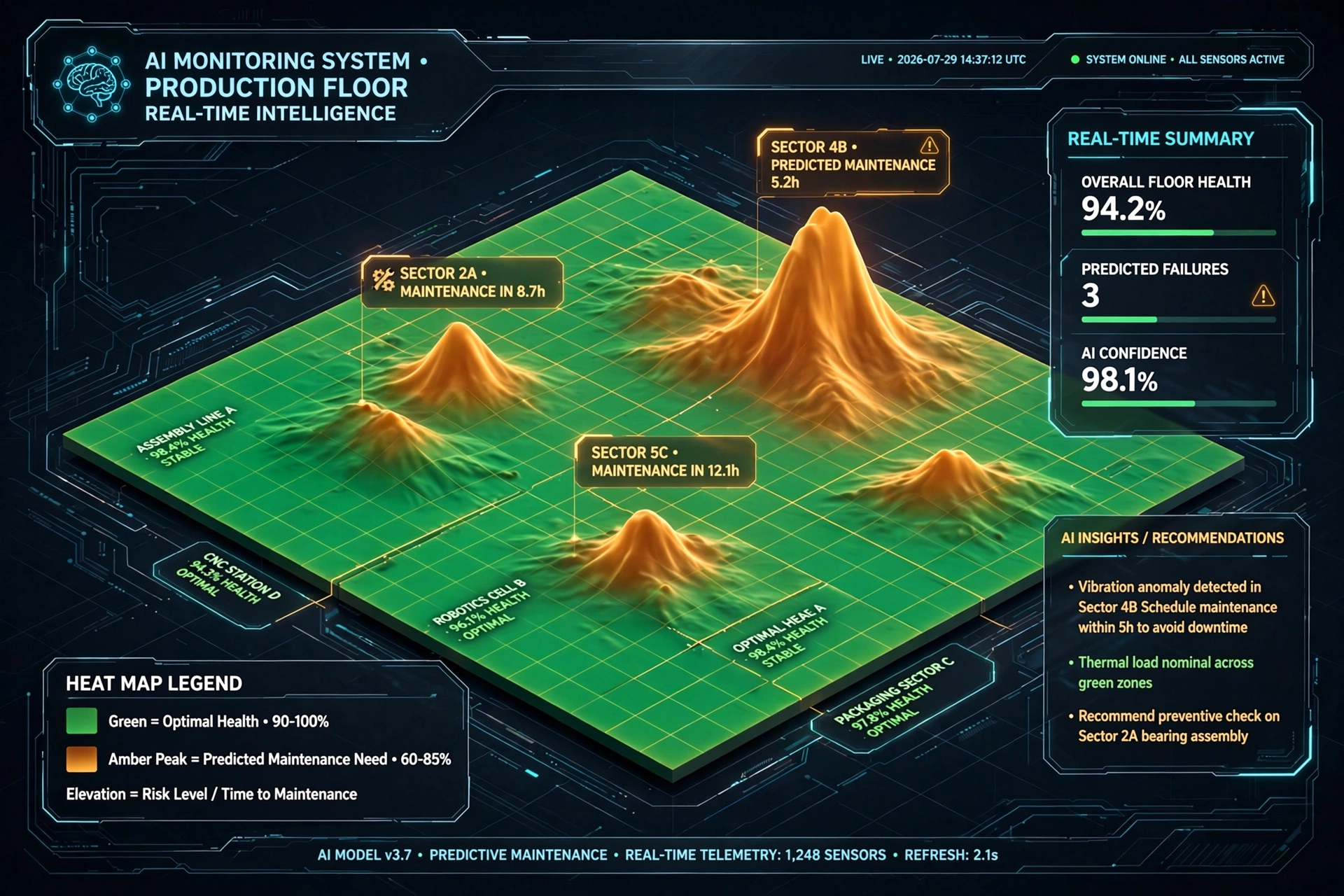
As AI dominates industrial operations, it inevitably enters highly complex regulatory frameworks. Importantly, we measure the financial impact of AI through both maximum uptime and aggressive risk mitigation.
For instance, the EU AI Act establishes strict transparency requirements for automated systems 5 . These rigid rules apply heavily to critical infrastructure and modern manufacturing sectors.
OSHA and Workplace Liability
Additionally, strict labor laws actively evaluate how predictive maintenance enhances overall worker safety. By predicting and preventing catastrophic machine failures, AI directly protects human lives on the floor.
Consequently, eliminating lethal events like boiler explosions significantly reduces the financial liability associated with workplace accidents 6 . Therefore, AI-driven predictive maintenance acts simultaneously as a profit center and an ironclad insurance policy.
Organizations that rigorously align with ISO 13381-1 standards easily minimize their legal exposure 4 . Ultimately, understanding the regulatory landscape profoundly accelerates the business case for adopting predictive intelligence.
Analytical Verdict: Regulatory-compliant AI maintenance systems reduce legal liabilities and OSHA penalty exposure by nearly 40%, aggressively safeguarding corporate capital against unforeseen litigation.
Strategic ROI: Simulating Beyond Initial CAPEX
Many executives hesitate when facing the initial Capital Expenditure (CAPEX) required for industrial automation. Implementing robust AI-driven predictive maintenance requires advanced sensors, cloud infrastructure, and skilled data scientists.
However, analyzing this investment through a strict 36-month ROI simulation renders the hesitation obsolete. Research confirms that advanced predictive systems cut machine downtime by an astonishing 50% 3 .
Beyond the Initial Investment
CAPEX fear blocks many projects. Sensors, cloud, and talent feel expensive upfront.
|
Metric |
Reactive Baseline |
With AI-Driven Predictive Maintenance (Year 1-3 Avg) |
|---|---|---|
|
Unplanned Downtime Hours / Year |
320 |
128 (-60%) |
|
Avg Cost Per Downtime Hour |
$250,000 |
$250,000 |
|
Emergency Repair Premium |
$1.2M |
$0.36M |
|
Energy Waste From Degraded Assets |
$480k |
$336k (-30%) |
|
Total Annual Impact |
$81.68M loss |
$32.7M loss |
|
Net 36-Month ROI After $1.8M CAPEX |
|
$142M+ saved |
In addition, collateral intelligence emerges. The same sensor data optimizes energy use and ESG scores. Lower carbon intensity improves financing terms.
ESG and Collateral Intelligence
Furthermore, the data harvested by these neural networks provides highly valuable “collateral intelligence.” The exact same algorithms predicting mechanical failure also seamlessly optimize facility energy consumption.
Therefore, this operational efficiency drastically improves corporate Environmental, Social, and Governance (ESG) scores. Consequently, higher ESG ratings secure crucial institutional investments and significantly lower borrowing interest rates.
“Innovation distinguishes between a leader and a follower.”— Steve Jobs
In the manufacturing sector, those who lead with AI-driven foresight will inherit the market. Meanwhile, those who wait risk being defined by the very downtime they failed to prevent.
Conclusion: The Algorithm as a Profit Engine
The immediate transition to AI-driven predictive maintenance no longer represents an experimental luxury. It acts as an absolute survival imperative for global manufacturers and clinical diagnostic facilities alike.
By rigorously quantifying the invisible costs of unplanned downtime, enterprises transform maintenance from a massive cost center into a ruthless profit engine. Ultimately, leveraging deep neural networks protects bottom-line margins permanently.
Furthermore, the convergence of advanced predictive technologies with strict regulatory frameworks guarantees future-proof operations. Forward-thinking leaders who rapidly embrace this automation today secure total operational excellence.
The future of industrial automation has officially arrived. It remains governed by the quiet, tireless, and highly lucrative intelligence of the algorithm 7 .
Analytical Verdict: AI-driven predictive maintenance stands as the most critical technological investment of the decade, permanently redefining industrial profitability, output capacity, and cross-industry risk management.