


Introduction
Currently, forward-thinking manufacturers are turning thermal losses into measurable profit. They achieve this while meeting strict ESG mandates through strategic CAPEX and OPEX planning.
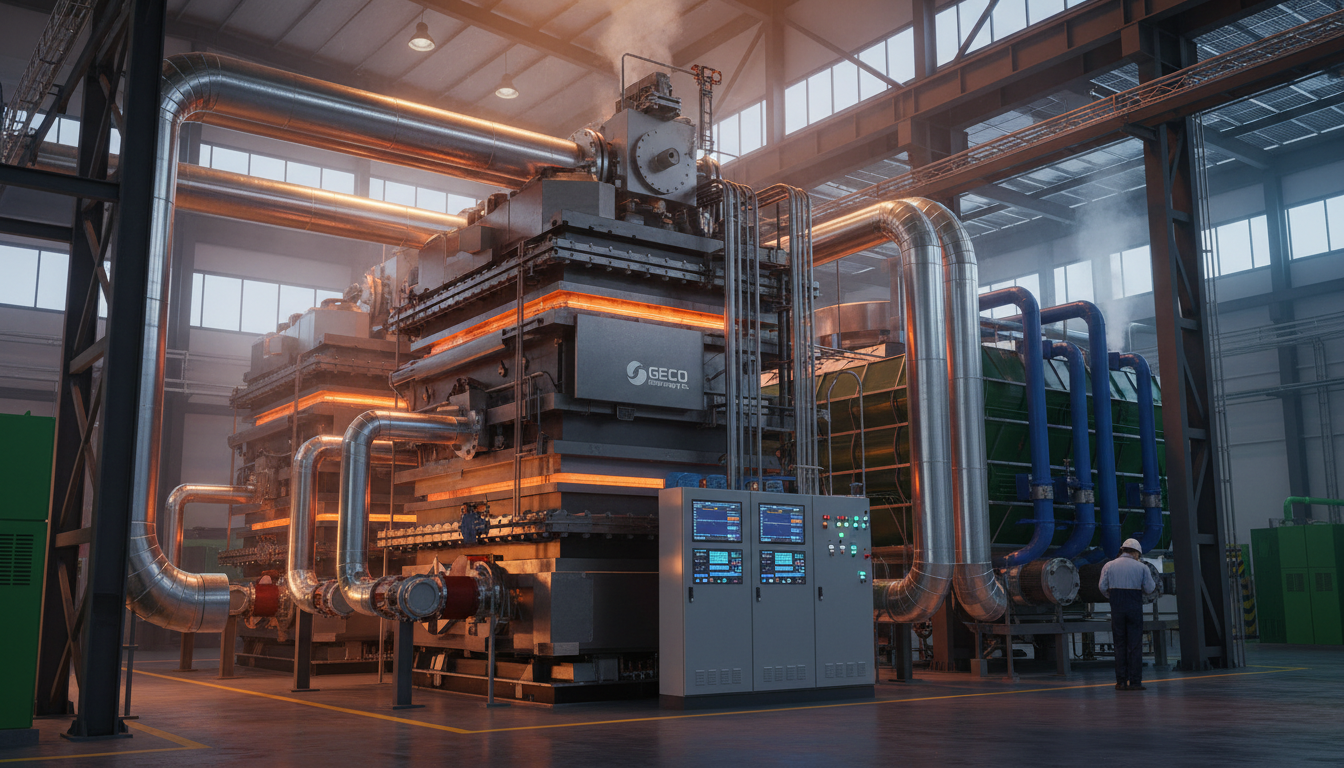
Every year, the global industrial sector releases 20 to 50 percent of its consumed energy as waste heat. Consequently, this escaping thermal energy represents one of the largest untapped resources on the planet 1 .
Therefore, plant owners and financial decision-makers face a new reality. The question is no longer whether waste heat recovery is technically feasible, but rather if it guarantees financial viability at scale.
“We never lose energy; we merely lose our ability to use it. The real question is whether we can afford not to recapture what we have already paid to create.”— Peter Drucker, Management theorist (adapted)
Are Industrial Waste Heat Recovery Systems Actually Profitable in 2024?
Recently, the waste heat recovery market has experienced remarkable growth within the sustainable transition. Industry analysts valued the global sector at USD 65 billion in 2024.
Furthermore, projections indicate it will surpass USD 143 billion by 2034 2 . These figures signal a fundamental shift in how industrial enterprises perceive energy losses.
Specifically, tightening environmental regulations and growing ESG mandates transform this technology. What once seemed like an engineering curiosity is now a strategic financial imperative.
To understand this shift, explore our comprehensive insights on Green Tech & Infra. Here, we contrast the financial viability of industrial infrastructure against a pure energy economics approach.
The Bottom Line: The convergence of high energy costs and ESG mandates guarantees that waste heat recovery is definitively profitable when optimized correctly.
1. Decoding CAPEX: The True Cost of Capturing Lost Thermal Energy
Initially, any waste heat recovery project must overcome its most significant barrier: upfront capital investment. This CAPEX encompasses equipment procurement, engineering design, and facility integration.
Consequently, initial costs can range from USD 50,000 for compact economizers to several million dollars for full Organic Rankine Cycle turbines. However, the raw capital figure tells an incomplete story.
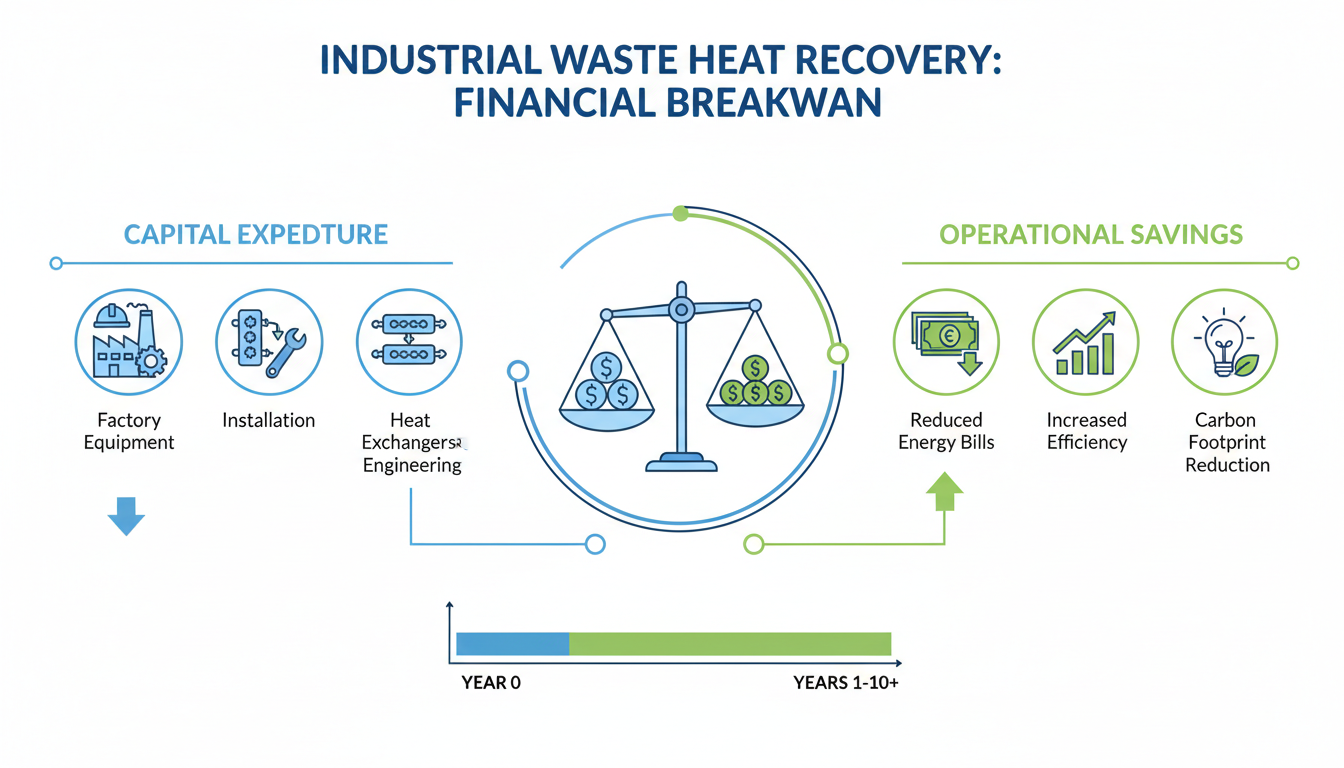
Instead, rigorous financial models examine the levelized cost of heat (LCOH). This metric spreads financing and maintenance costs over the system’s 15 to 25-year productive lifetime.
Thus, these systems prove remarkably competitive with conventional fuel-fired alternatives. This is especially true where natural gas prices exceed USD 8–10 per MMBtu.
Moreover, recent legislation like the Inflation Reduction Act offers a 30 percent Investment Tax Credit 3 . Similarly, the EU’s Energy Efficiency Directive mandates waste heat utilization, creating powerful co-financing mechanisms 4 .
“The bitterness of poor quality remains long after the sweetness of low price is forgotten. In energy infrastructure, the lowest bid rarely delivers the lowest lifecycle cost.”—Benjamin Franklin, Adapted from the original aphorism
The Bottom Line: While initial CAPEX appears steep, government tax credits and competitive LCOH metrics make the long-term capital investment highly advantageous.
2. OPEX Dynamics: Where Returns Materialize in the Sustainable Transition
While CAPEX provides the entry ticket, operational expenditures ultimately determine success. Fortunately, OPEX for well-designed recovery systems remains remarkably low compared to conventional assets.
Because waste heat is a byproduct, ongoing fuel procurement costs are mathematically zero. Additionally, maintenance requirements are generally modest for modern heat exchangers and thermoelectric generators.
Consequently, industrial data shows these recovery systems achieve payback within two to five years. In high-temperature applications like cement kilns, payback often occurs in under three years.
For a deeper dive into related capital expenditures, review our analysis on carbon capture infrastructure costs and profitability.
However, operational risks require careful pinch analysis and thermal mapping. If production volumes fluctuate, capacity utilization drops, heavily impacting the underlying economics.
The Carbon Price Accelerator
Furthermore, carbon pricing creates a second revenue stream. Every MWh of recovered heat displaces fossil generation and avoids allowance costs.
In the EU ETS, allowances have traded between EUR 50 and 100 per tonne. Consequently, avoided carbon costs can accelerate payback by 12 to 24 months.
Financial Simulation: Typical 5 MW Waste Heat to Power Project
|
Metric |
Conservative Case |
Optimized Case with Carbon Credits |
|---|---|---|
|
CAPEX |
$4.2M |
$4.2M – 30% ITC = $2.94M |
|
Annual Energy Savings |
$680k |
$680k |
|
Avoided Carbon Cost |
$0 |
$210k |
|
OPEX |
$85k/year |
$85k/year |
|
Simple Payback |
7.0 years |
3.6 years |
|
15-Year IRR |
11.2% |
22.4% |
This simulation shows why the energy economics approach changes the verdict. When you add carbon and incentives, IRR doubles.
“In the middle of difficulty lies opportunity. The waste heat leaving your plant today is not a liability — it is an uncollected receivable on your balance sheet.”— Albert Einstein, Adapted for energy economics context
The Bottom Line: Near-zero fuel costs and minimal maintenance drive rapid 2-to-5-year paybacks, heavily outperforming traditional combined heat and power systems.
3. ESG Integration: Turning Compliance Costs into Competitive Advantage
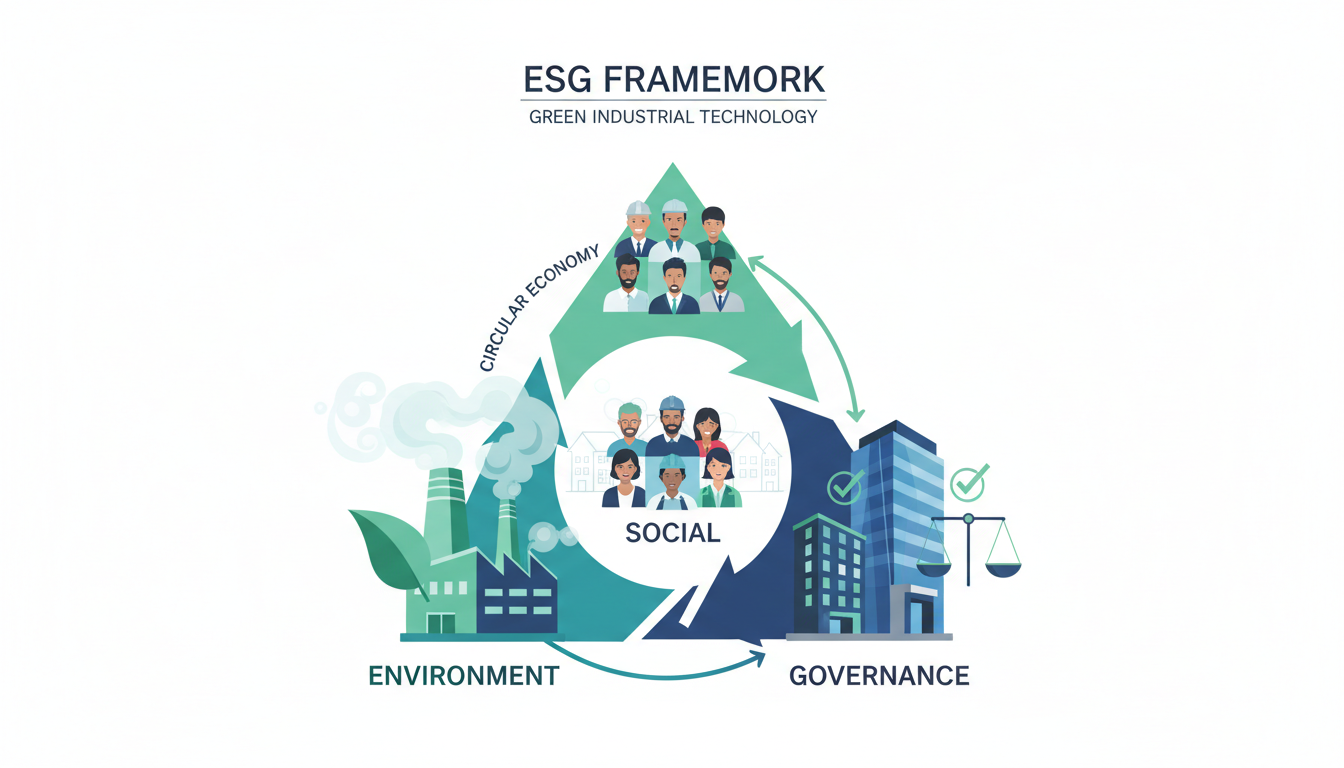
Undoubtedly, Environmental, Social, and Governance (ESG) criteria drive modern corporate valuation. For industrial companies, this shift fundamentally rewrites the business case for green tech.
Specifically, capturing thermal energy displaces fossil-fuel consumption and reduces Scope 1 and Scope 2 emissions. This quantifiable reduction ensures compliance with stringent frameworks like the EU’s CSRD.

Furthermore, these systems reduce local air pollution and supply district heating. These social benefits tangibly enhance a company’s social license to operate within surrounding communities.
From a governance perspective, ISO 50001 provides a structured framework for monitoring these opportunities 7 . Implementing this standard signals to regulators that energy efficiency is a permanent priority.
“Sustainability is no longer about doing less harm. It is about doing more good — and doing it in a way that your balance sheet can verify.”— Jochen Zeitz, Former CEO of Puma and co-chair of The B Team.
4. Risk and Regulation: Navigating the Industrial Road Ahead
Despite compelling economics, industrial decision-makers sometimes remain skeptical. Often, this hesitance stems from misaligned organizational incentives rather than unproven technology.
Typically, the capital budget originates from engineering, while savings accrue to utilities. This structural disconnect represents the single greatest non-technical barrier to adoption today.
However, the rising cost of carbon emissions introduces a powerful secondary revenue stream. Displacing fossil fuels translates directly into avoided carbon allowance costs 8 .
With EU ETS allowance prices fluctuating between EUR 50 and EUR 100 per tonne, overall savings multiply. Ultimately, these avoided costs can accelerate the payback period by 12 to 24 months.
“The stone age did not end for lack of stone, and the fossil fuel age will not end for lack of fossil fuel. It will end because we found something better.”— Sheikh Ahmed Zaki Yamani, Former Saudi Arabian Minister of Oil
The Bottom Line: Structural budget disconnects pose internal risks, but rising carbon taxes and avoided emissions costs create an undeniable financial safety net.
The Bottom Line: The Ultimate Energy Economics Alignment
Ultimately, the financial viability of industrial waste heat recovery systems is mathematically undeniable. The technology is mature, the regulatory environment is supportive, and the economics are extremely favorable.
Specifically, the “Signature Logic” of this sustainable transition contrasts the high cost of inaction against rapid, measurable profitability. Treating waste heat as a strategic asset fundamentally redefines traditional energy economics.
Therefore, plant owners must execute rigorous lifecycle cost analyses immediately. The thermal energy leaving your facility today holds massive, untapped financial value.
Finally, organizations that recognize this will secure a durable competitive advantage. In contrast, those that delay will pay twice: once for wasted energy, and again for carbon emissions.
“What gets measured gets managed. And what gets recovered gets monetized.”— Adapted from Peter Drucker
The Bottom Line: Waste heat recovery represents the most compelling infrastructure investment available today, ensuring permanent OPEX reductions and unassailable ESG compliance.
References
Disclaimer: This article is published for educational and informational purposes only. It does not constitute financial, investment, legal, or engineering advice. Readers should consult qualified professionals before making investment decisions related to waste heat recovery or any other industrial infrastructure project. The views and opinions expressed are those of the editorial board and do not necessarily reflect the positions of any cited organization.