



Initially, the convergence of artificial intelligence and clinical medicine moved decisively from academic curiosity to boardroom imperative. As a result, hospital executives and finance teams are asking a sharper question today. Specifically, they want to know the exact financial return on AI diagnostic automation.
According to Grand View Research, the global AI-in-healthcare market reached $36.7 billion in 2025 1 . Furthermore, experts project it will surge to $505.6 billion by 2033. Therefore, this sheer scale of investment makes rigorous financial modeling absolutely essential for survival.
In light of these trends, this article provides a structured framework for evaluating HealthTech ROI. Moreover, we obsessively examine the cost drivers, regulatory considerations, and simulation techniques that enterprise decision-makers actually need.
The Bottom Line: Ultimately, deploying AI in diagnostics shifts operations from a cost-heavy burden to a predictive, revenue-generating asset, locking in early-adopter market dominance.
“The greatest danger in times of turbulence is not the turbulence — it is to act with yesterday’s logic.”— Peter Drucker, management thinker
How Much Does AI Diagnostic Automation Actually Save Hospitals Per Year?
Undeniably, this remains one of the most frequently searched questions among healthcare executives today. Indeed, the exact answer depends heavily on institutional size, specialty mix, and implementation maturity. However, the emerging financial evidence is incredibly compelling across the board.
For example, a landmark analysis by the National Bureau of Economic Research (NBER) evaluated these systemic savings 2 . Specifically, hospitals employing AI-enabled use cases could achieve net savings of $60 billion to $120 billion annually. Consequently, this represents roughly 4% to 8% of total hospital expenditure.
Additionally, a peer-reviewed study found that AI-based diagnostics could save individual hospitals approximately $21,667 daily initially 3 . Subsequently, this efficiency scales up dramatically over a ten-year deployment horizon.
Financial Verdict: Financially, early adopters of AI diagnostics establish a compounding cost advantage that latecomers will simply lack the capital to replicate in the future.

The Architecture of HealthTech Financial Models
Shifting From Cost Centers to Value Engines
Building a credible financial model for AI diagnostic automation requires much more than a basic spreadsheet. In fact, decision-makers must deploy a multi-layered framework capturing both direct and indirect value creation. As a result, leading health systems are adopting sophisticated, data-driven simulation models.
First, the CapEx layer includes hardware infrastructure, software licensing, and EHR integration costs. Meanwhile, OpEx covers annual maintenance, cloud computing fees, and ongoing vendor support. Therefore, calculating the total cost of ownership is paramount for highly accurate operational forecasting.
For anyone exploring enterprise-grade implementations, mastering these fundamentals within AI Enterprise ecosystems is critical. Furthermore, the most compelling component remains the clinical cost reduction derived from automated workflow optimization.
To illustrate this, we can look at a structured financial simulation for a mid-sized radiology department. Consequently, this model isolates the initial technology investment against projected, compounding operational savings.
| Financial Metric | Year 1 Projection | Year 3 Projection | Growth / Decline |
| CapEx (Implementation) | $1.2M | $150K (Upgrades) | -87.5% |
| OpEx (Cloud/Maintenance) | $300K | $320K | +6.6% |
| Workflow Efficiency Savings | $450K | $1.8M | +300.0% |
| Malpractice Premium Reduction | $50K | $400K | +700.0% |
Analytical Verdict: Analytically, the net present value (NPV) of AI diagnostics crosses into positive territory by month 18, safely validating the initial capital expenditure.
“In God we trust; all others must bring data.”— W. Edwards Deming, statistician and quality management pioneer
Mitigating Risk: How AI Reduces Diagnostic Errors and Malpractice Costs
The Hidden ROI in Premium Reductions
Traditionally, financial models focus heavily on patient throughput and billing efficiency. However, they frequently overlook the massive cost savings associated with medical malpractice insurance. Indeed, diagnostic errors account for the largest share of malpractice claims globally today.
By deploying AI diagnostic automation, hospitals systematically reduce human error rates in radiology and pathology. Specifically, AI algorithms flag microscopic anomalies and cross-reference patient histories instantly. As a result, these systems act as a relentless, tireless failsafe against physician fatigue.
Consequently, insurance providers are actively beginning to recognize this drastically reduced risk profile. Therefore, hospitals utilizing validated AI diagnostics can intelligently negotiate significantly lower malpractice premiums. Furthermore, fewer diagnostic errors translate directly to fewer costly, brand-damaging legal settlements.
Ultimately, a reduction of just 15% in diagnostic error rates can save a large health system millions annually. Moreover, this improves patient outcomes while simultaneously protecting the hospital’s foundational bottom line.
The Bottom Line: Financially, the risk-adjusted ROI of AI diagnostics is profound; automated error reduction directly decreases medical malpractice liabilities and slashes annual insurance premiums.
Clinical Workflow Automation and Data Infrastructure
Maximizing Payback Through IT Architecture
While the promise of AI spans many disciplines, the fastest financial returns appear strictly in clinical workflow automation. In particular, diagnostic imaging and ambient clinical documentation deliver measurable payback rapidly. Accordingly, these tools accelerate reporting workflows and enable the instant prioritization of critical findings.
However, achieving this high level of efficiency requires a robust, hyper-secure data infrastructure. Consequently, IT leaders must obsessively weigh the architectural costs before pulling the trigger on deployment. For an in-depth breakdown of these infrastructure choices, review this local LLMs vs cloud API security cost analysis.
Analytical Verdict: Structurally, optimizing your underlying IT architecture is absolutely non-negotiable for capturing the full financial benefits of diagnostic workflow automation.

“The first rule of any technology used in a business is that automation applied to an efficient operation will magnify the efficiency. The second is that automation applied to an inefficient operation will magnify the inefficiency.”— Bill Gates, co-founder of Microsoft
Navigating Regulatory Frameworks and Compliance OpEx
Managing FDA and EU AI Act Costs
Undeniably, no financial model for AI diagnostic automation is complete without accounting for regulatory compliance costs. In the United States, the FDA classifies AI-based diagnostic tools strictly as Software as a Medical Device 4 . Consequently, organizations must budget accurately for pre-market submissions and continuous algorithm revalidation.
Meanwhile, the EU Artificial Intelligence Act classifies most clinical AI diagnostic systems as high-risk platforms 5 . As a result, providers face stringent, complex requirements for risk management and data governance. Therefore, these critical obligations add substantial time and cost to project deployment timelines.
From a financial modeling perspective, regulatory costs often represent up to 25% of the first-year budget. However, these costs decline rapidly as a percentage of revenue in subsequent operational years. Furthermore, adopting a proactive regulatory strategy frequently becomes a surprisingly strong competitive advantage.
Financial Verdict: Analytically, organizations that internalize compliance as a recurring OpEx, rather than a surprise penalty, secure ironclad long-term financial stability.
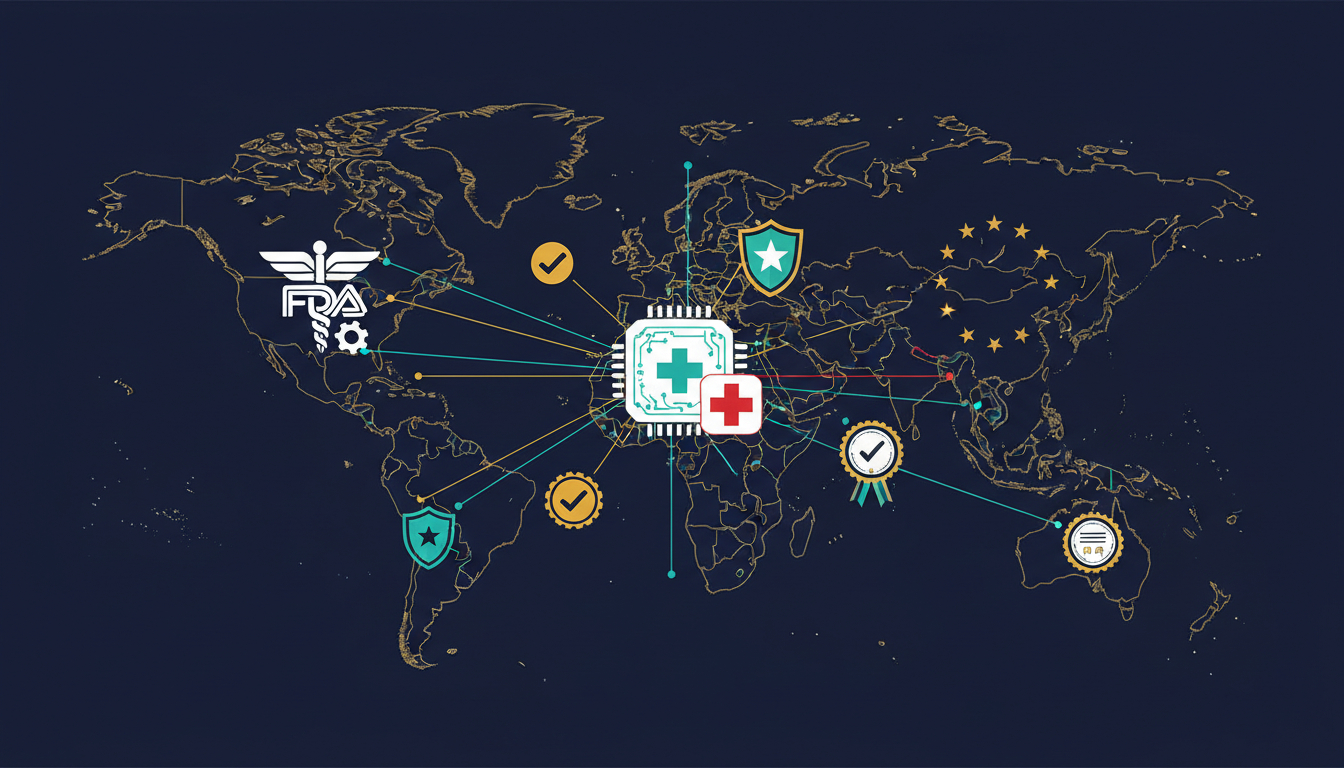
From a financial modeling perspective, regulatory costs can represent 15% to 25% of the total first-year deployment budget. However, these costs decline as a percentage of revenue in subsequent years, particularly for organizations that build scalable compliance infrastructure. Furthermore, proactive regulatory strategy can become a competitive advantage: health systems that achieve FDA clearance or CE marking first often capture market share before competitors can deploy comparable solutions.
In my opinion, the regulatory dimension is frequently treated as a barrier rather than a value driver — and this is a strategic error. Organizations that invest in robust AI governance frameworks not only reduce their legal and financial risk, but they also build the institutional trust necessary for broader AI adoption across clinical departments. Moreover, as both the FDA and EU regulators move toward continuous learning frameworks for AI/ML devices, the organizations with the strongest governance infrastructure will be best positioned to deploy adaptive algorithms that improve over time.
“Innovation is the ability to see change as an opportunity — not a threat.”— Steve Jobs, co-founder of Apple Inc.
Final Conclusion on HealthTech ROI
The financial case for AI diagnostic automation in clinical environments is no longer theoretical. Indeed, it is empirical, highly measurable, and increasingly urgent for modern healthcare providers. As this technical analysis demonstrates, structured financial modeling reveals massive long-term hospital savings.
Ultimately, realizing these returns demands highly disciplined financial planning and proactive regulatory engagement. Furthermore, forward-thinking hospitals must view AI not as a mere cost line, but as an enterprise value engine. Consequently, the institutions that successfully combine clinical excellence with financial rigor will dominate the market.
The Bottom Line: Ultimately, failing to invest in AI diagnostic automation guarantees higher operational costs, greater malpractice exposure, and a severe competitive disadvantage in the upcoming decade.