


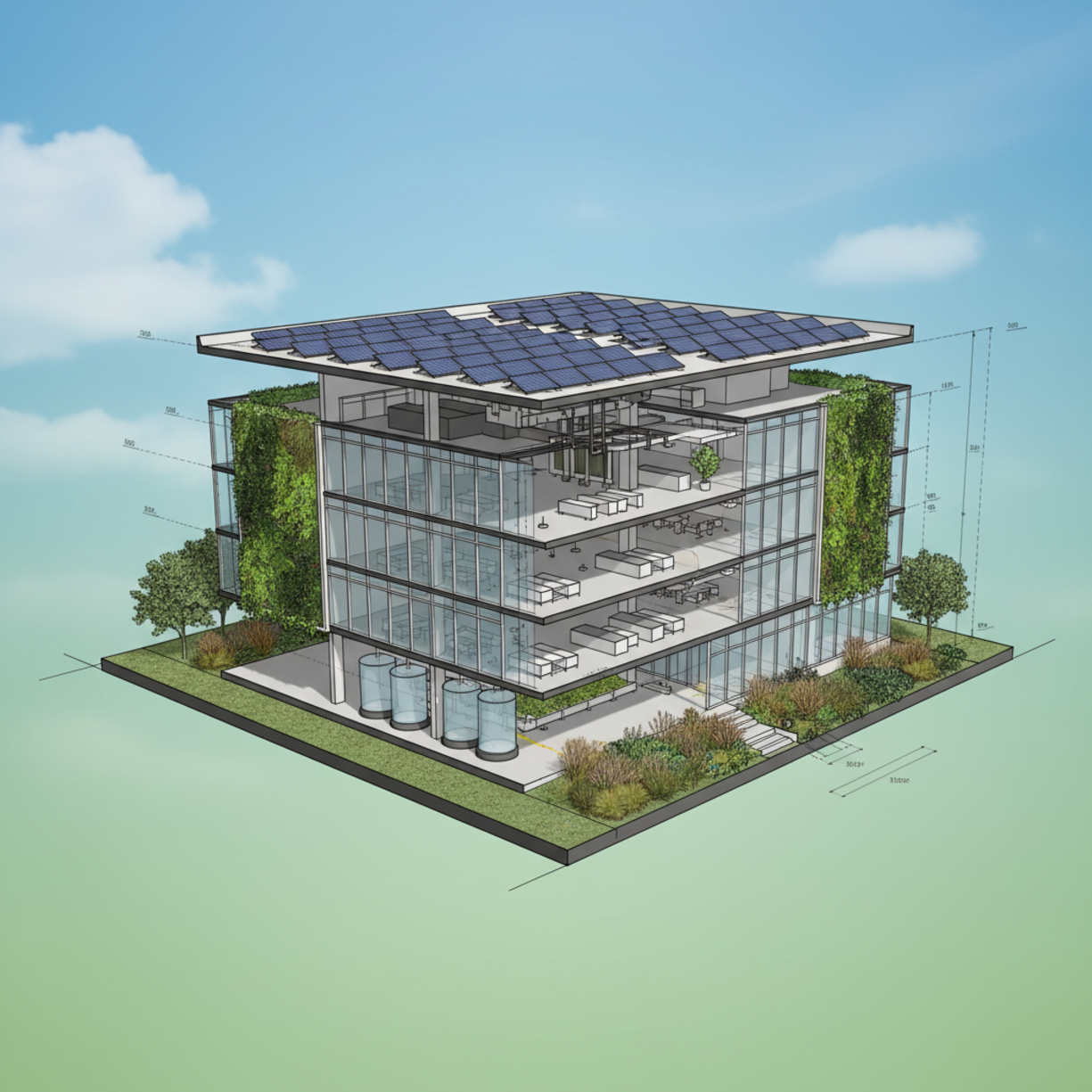
In recent years, sustainability claims have flooded the commercial real estate market. However, investor confidence actively demands much more than vague environmental promises. Consequently, greenwashing has rapidly transitioned from activist jargon into a serious boardroom liability.
Property owners and facility engineers now face a critical turning point. They no longer ask if they should build green. Instead, they demand to know exactly how these investments generate measurable financial returns.
LEED (Leadership in Energy and Environmental Design) provides a rigorously structured framework. The U.S. Green Building Council (USGBC) actively administers this system globally. Currently, this standard encompasses over 2.2 million certified projects worldwide.
Yet, recognition alone does not satisfy institutional stakeholders. We must obsessively analyze the actual ROI of LEED certification in commercial real estate. Therefore, this article breaks down the precise financial mechanics behind these green assets.
“What gets measured gets managed.”— Peter Drucker, Management Thought Leader
Does LEED Certification in Commercial Real Estate Actually Save Money, or Is It Just Greenwashing?
This viral question dominates search engines and boardrooms alike. Naturally, developers want transparent evidence before allocating significant capital. Therefore, we must firmly separate verified financial performance from superficial marketing claims.
To answer this effectively, we cannot merely look at the “what.” We must deeply analyze the “how” and “why” behind the operational metrics. Ultimately, structured data reveals a highly compelling financial narrative.
The CAPEX Equation: Upfront Costs Versus Long-Term Yields
A persistent misconception suggests that green building drastically inflates construction budgets. Indeed, a modest cost premium exists during the initial build-out phase. However, this premium is shrinking rapidly due to industry standardization and improved supply chains.
According to the World Green Building Council, the average cost premium ranges from just 0.8% to 2.5% 1 . Consequently, developers can easily absorb this within conventional contingency budgets. Furthermore, the lifecycle value vastly outweighs this initial hurdle.
| Financial Metric | Conventional Build | LEED Certified Build | Net Impact |
| Initial CAPEX | $10,000,000 | $10,200,000 | +$200,000 (2% Premium) |
| Annual Energy Cost | $300,000 | $225,000 | -$75,000 (25% Savings) |
| Estimated Payback | N/A | 2.6 Years | Accelerated ROI |
As demonstrated above, energy and water savings typically recover the initial premium within three years. Moreover, Cushman & Wakefield data shows a 25.3% price-per-square-foot premium at sale 2 . Thus, the CAPEX transforms into a highly lucrative asset investment.
“An investment in knowledge pays the best interest.”— Benjamin Franklin
Franklin’s timeless observation applies precisely here. The “knowledge” embedded in a LEED certification — the energy modeling, the commissioning, the materials documentation — is not merely a compliance exercise. Rather, it becomes institutional intelligence about the building’s long-term operational performance. In my opinion, this embedded knowledge represents perhaps the most undervalued aspect of the entire certification process.
Key Insights: The upfront cost of LEED certification is mathematically negligible when amortized over the asset’s lifecycle. It fundamentally re-engineers the building’s cost profile, efficiently converting a minor CAPEX premium into a major equity multiplier.
OPEX Performance: Where Verifiable Savings Accumulate
While CAPEX discussions capture initial attention, OPEX performance truly dictates long-term profitability. Specifically, LEED-certified buildings reliably consume 25% less energy 3 . Additionally, they require 11% less water than their conventional counterparts.
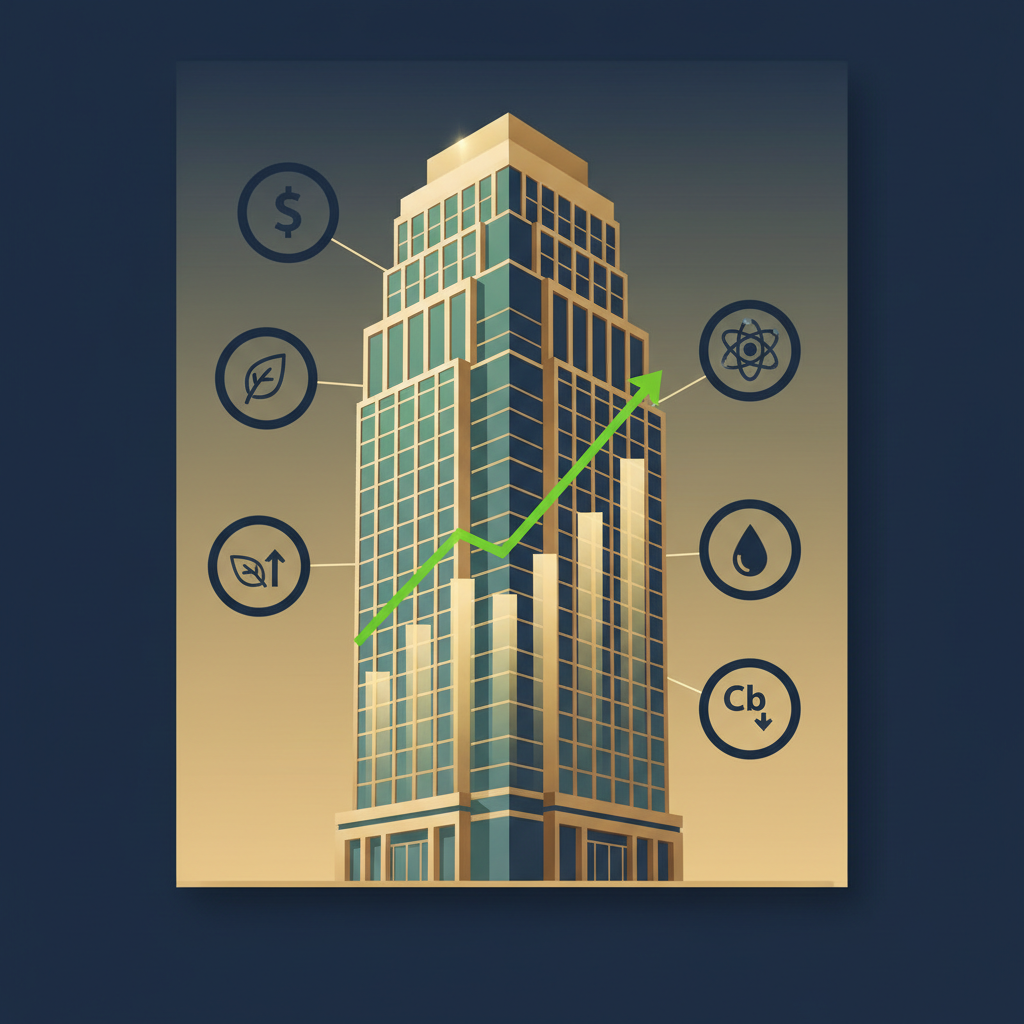
These operational efficiencies compound dramatically over a standard ten-year hold period. Furthermore, integrating advanced mechanical systems actively drives these reductions. For instance, evaluating similar system efficiencies is crucial, much like assessing industrial waste heat recovery financial viability in the manufacturing sector.
Revenue also benefits significantly from these established green certifications. Data from the American Institute of Architects confirms a 4.1% higher average occupancy rate for certified buildings. Consequently, properties experience fewer vacancies and maintain much stronger cash flows.
On the rental side, a USGBC analysis reveals an average $4.13 per square foot rent premium. Similarly, CBRE identified a consistent 3.7% rent premium across major U.S. markets 4 . Therefore, top-tier tenants actively pay more for verifiable sustainability.
“Price is what you pay. Value is what you get.”— Warren Buffett, Investor
ESG Credibility and Emerging Regulatory Tailwinds
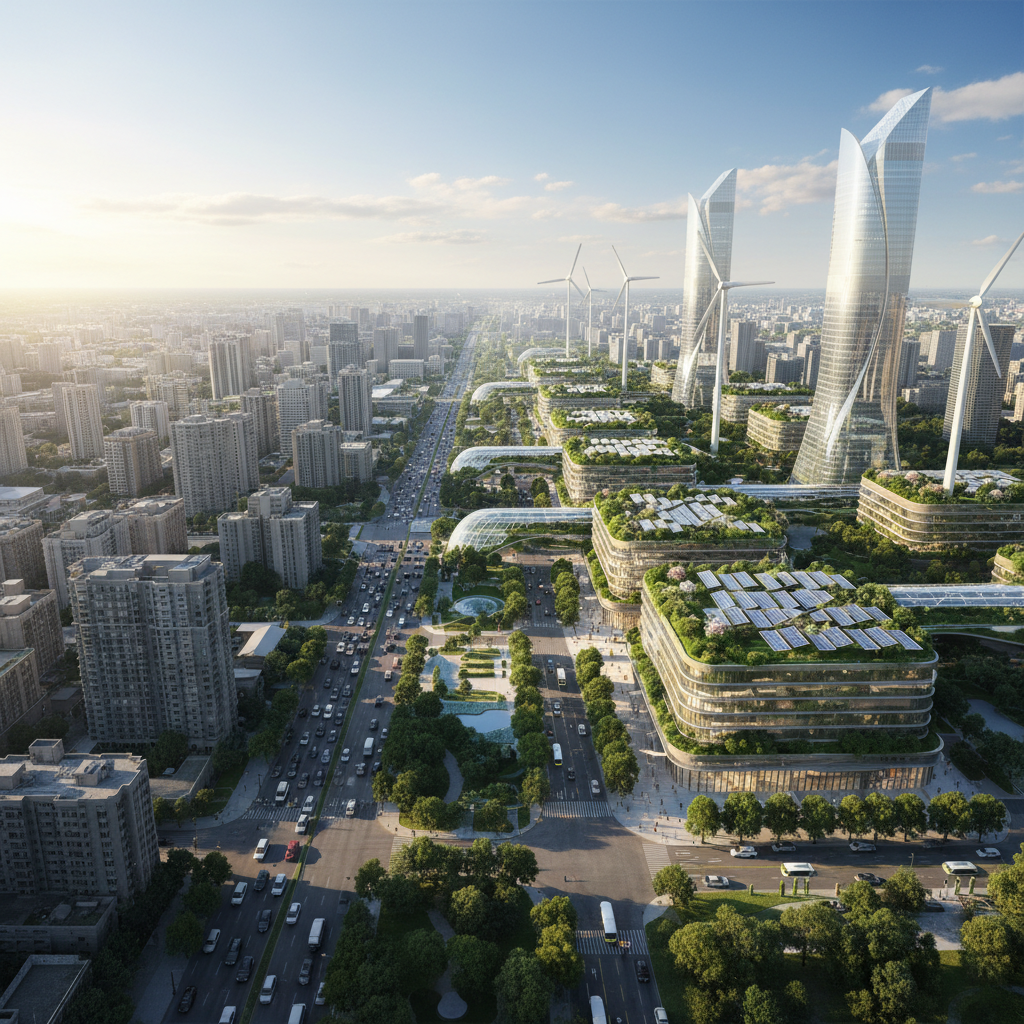
The argument for LEED certification extends far beyond basic operational financial returns. Today, the global push toward mandatory ESG disclosure completely reshapes the real estate market. Consequently, verifiable certifications serve as essential compliance tools within robust Green Tech & Infra strategies.
In March 2024, the SEC officially adopted stringent climate disclosure rules 5 . These specific regulations require publicly traded entities to meticulously report material climate risks. Although politically contested, this mandate clearly indicates that data transparency is non-negotiable.
Simultaneously, state-level regulations forcefully drive this industry-wide transition. California’s SB 253 and SB 261 explicitly mandate comprehensive corporate emissions reporting 6 . Therefore, portfolios lacking documented sustainability metrics face immediate regulatory friction.
“If you think the cost of addressing climate change is high, wait until you get the bill for ignoring it.”— Christine Lagarde, President of the European Central Bank
The Bottom Line: We have fully transitioned from an era where sustainability was a differentiator to one where its absence is a disqualifier. Verifiable green certifications effectively hedge real estate portfolios against escalating regulatory penalties and sudden market obsolescence.
The Financial Verdict: Moving Beyond Greenwashing
The evidence presented clearly dismantles the outdated skepticism surrounding green building initiatives. LEED certification in commercial real estate build-outs emphatically transcends vanity metrics. Instead, it operates as a structured, data-backed financial strategy.
We must recognize that the cost of not certifying now exceeds the cost of certification itself. Building owners, institutional investors, and facility engineers must strictly prioritize verifiable performance over empty claims. Accordingly, integrating these rigorous frameworks ensures maximum portfolio resilience.
“You never change things by fighting the existing reality. To change something, build a new model that makes the existing model obsolete.”— Buckminster Fuller, Architect & Futurist
Ultimately, the true signature logic of moving beyond greenwashing lies in undeniable mathematics. The sustainable transition is not merely a moral crusade; it is a rigorous capital allocation strategy. The Bottom Line: LEED certification systematically transforms a negligible 2% upfront CAPEX premium into compounding double-digit valuation and OPEX returns, proving that verified sustainability is the most reliable mechanism for future-proofing commercial real estate yields.
References
Disclaimer: This article is provided for informational and educational purposes only. It does not constitute financial, legal, or investment advice. Readers should consult qualified professionals before making investment decisions. Data cited herein was accurate at the time of writing and may be subject to revision.