Calculating the ROI of Predictive Maintenance in Commercial Fleets: A Financial Lifecycle Analysis
Unlocking the fiscal potential of modern aviation assets requires a shift from reactive repairs to data-driven foresight, ensuring that every flight hour translates into measurable profit and operational safety.
In the high-stakes theater of commercial aviation, the margin between operational excellence and fiscal turbulence is razor-thin. Consequently, the industry is undergoing a paradigm shift from traditional Time-Based Maintenance (TBM) to Predictive Maintenance (PdM). This evolution is not merely a technological upgrade; rather, it represents a fundamental financial restructuring of fleet management within the broader AI Enterprise ecosystem. As a result, modern aircraft are becoming flying data centers, where the ability to forecast component failure before it manifests as an Aircraft on Ground (AOG) event constitutes the ultimate competitive advantage.
Furthermore, this article explores the intricate engineering-economic nexus where data-driven maintenance transforms from a cost center into a powerful engine for Return on Investment (ROI). In addition, we examine how the Predictive Maintenance ROI Aviation framework connects engineering precision with fiscal discipline in Aviation economics. Therefore, stakeholders across the value chain—from fleet owners to insurance underwriters—stand to benefit from understanding this financial calculus.
“In aviation, ignorance is not bliss—it is a grounding event with a six-figure invoice.”
—Aviation Maintenance Weekly, 2023
How Does Predictive Maintenance Reduce AOG Costs in Commercial Aviation Fleets?
The Engineering Calculus of Predictive Reliability & Thermodynamics
To understand the financial power of predictive maintenance, one must analyze the aircraft from the dispassionate perspective of mechanics and thermodynamics. A commercial jet engine is fundamentally a complex thermodynamic machine operating on the Brayton cycle. During peak takeoff thrust, high-pressure turbine (HPT) blades endure continuous thermal cycling at gas temperatures exceeding 1,500°C—hotter than the melting point of the nickel alloys from which they are cast—while experiencing centrifugal loads of several tons at over 10,000 RPM.
Predictive maintenance relies on the synthesis of Aircraft Health Monitoring (AHM) systems and advanced machine learning algorithms. By continuously ingesting terabytes of telemetry—ranging from exhaust gas temperature (EGT) margins and rotor spool-up rates to micro-vibration acoustics in auxiliary power units—engineers can identify the subtle digital signatures of thermal creep, thermal barrier coating (TBC) degradation, and bearing race spalling long before physical degradation is visible to human inspection
1
.
Instead of replacing a component at an arbitrary, fixed calendar interval, operators evaluate its true Remaining Useful Life (RUL) under real-world operational stress. This engineering precision prevents premature retirement of healthy components while eliminating catastrophic in-service failures.
“The most dangerous phrase in aviation maintenance is ‘we’ve always done it this way.'”
— Adapted from Grace Hopper
Consequently, the maintenance division undergoes a profound transformation: it shifts from firefighting emergency failures to strategically forecasting mechanical behavior. Scheduled component exchanges replace emergency groundings, moving downtime into low-revenue maintenance windows rather than peak operational periods.
Flight Kinematics and the Kerosene-to-Weight Ratio
When evaluating aviation economics, efficiency cannot be treated superficially. True financial lifecycle analysis requires calculating the ratio of kerosene consumption to total aircraft weight—the fundamental flight kinematics governing range, payload capacity, and operating margin.
In commercial flight mechanics, every structural misalignment, compressor blade tip clearance expansion, or stator vane erosion imposes a compounding thermodynamic penalty. When an engine’s internal clearances expand due to unmitigated wear, the Brayton cycle thermal efficiency drops, causing an immediate rise in Specific Fuel Consumption (SFC). Consider the Breguet range equation, which dictates commercial flight kinematics:
Where V is cruise velocity, g is gravitational acceleration, $\frac{L}{D}$ is the aerodynamic lift-to-drag ratio, and $\normalsize \frac{W_{\text{initial}}}{W_{\text{final}}}$ represents the mass ratio of take-off weight to zero-fuel landing weight.
A seemingly minor 1.5% thermodynamic efficiency loss due to compressor fouling or turbine degradation degrades SFC. For a modern wide-body aircraft burning approximately 6,000 kg of kerosene per hour, this 1.5% penalty demands an extra 90 kg of fuel per hour. Over a 10-hour long-haul sector, the engines require an additional 900 kg of kerosene just to generate equivalent thrust.
However, the laws of flight kinematics dictate a cruel compounding rule: to carry extra fuel, an aircraft must burn additional fuel simply to lift the weight of that added kerosene. This “fuel-burn fraction” means that uploading 900 kg of extra trip fuel requires burning an additional ~250 kg of fuel just to transport the added weight against gravity and induced drag.
Across a fleet of 50 aircraft flying 4,000 revenue hours annually, eliminating this mechanical degradation through predictive engine washing and precision blade maintenance saves tens of millions of dollars in direct Operation cost, reduces thermal stress on turbine architectures, and preserves critical revenue payload capacity
7
.
Why Do Airlines Still Lose Millions to AOG Events If Modern Aircraft Are Flying Data Centers?
The most aggressive predator of aviation profitability is undoubtedly the unscheduled AOG event. While modern aircraft generate over 20 terabytes of data per flight hour, many legacy operators lack the analytical infrastructure to process this telemetry in real time, leaving them vulnerable to surprise groundings.
The financial hemorrhage of an unscheduled grounding extends far beyond the immediate parts and labor invoice. A comprehensive accounting reveals a cascading chain of liability:
Direct Maintenance Costs: Expedited parts sourcing, emergency hangar fees, and double-time mechanical labor.
Passenger Recovery: Re-booking accommodations, mandatory meal vouchers, hotel compensations, and EU261 regulatory penalties.
According to industry empirical data, a single narrowbody AOG event costs between $10,000 and $150,000 per hour, depending on network density and hub criticality. For wide-body international flights, the hourly cost can easily exceed $250,000.
Furthermore, traditional invasive maintenance carries a high statistical probability of “Infant Mortality”—failures triggered directly by human intervention during routine inspections. A technician conducting an unnecessary exploratory disassembly may inadvertently torque a fitting improperly, introduce foreign object debris (FOD), or damage a fragile elastomeric seal
4
. By utilizing non-invasive digital condition monitoring, PdM drastically reduces the frequency of unnecessary physical disturbance, lowering maintenance-induced failure rates.
“Risk is not what happens to you. It is what you don’t know is about to happen to you.
—Nassim Nicholas Taleb, Author of The Black Swan
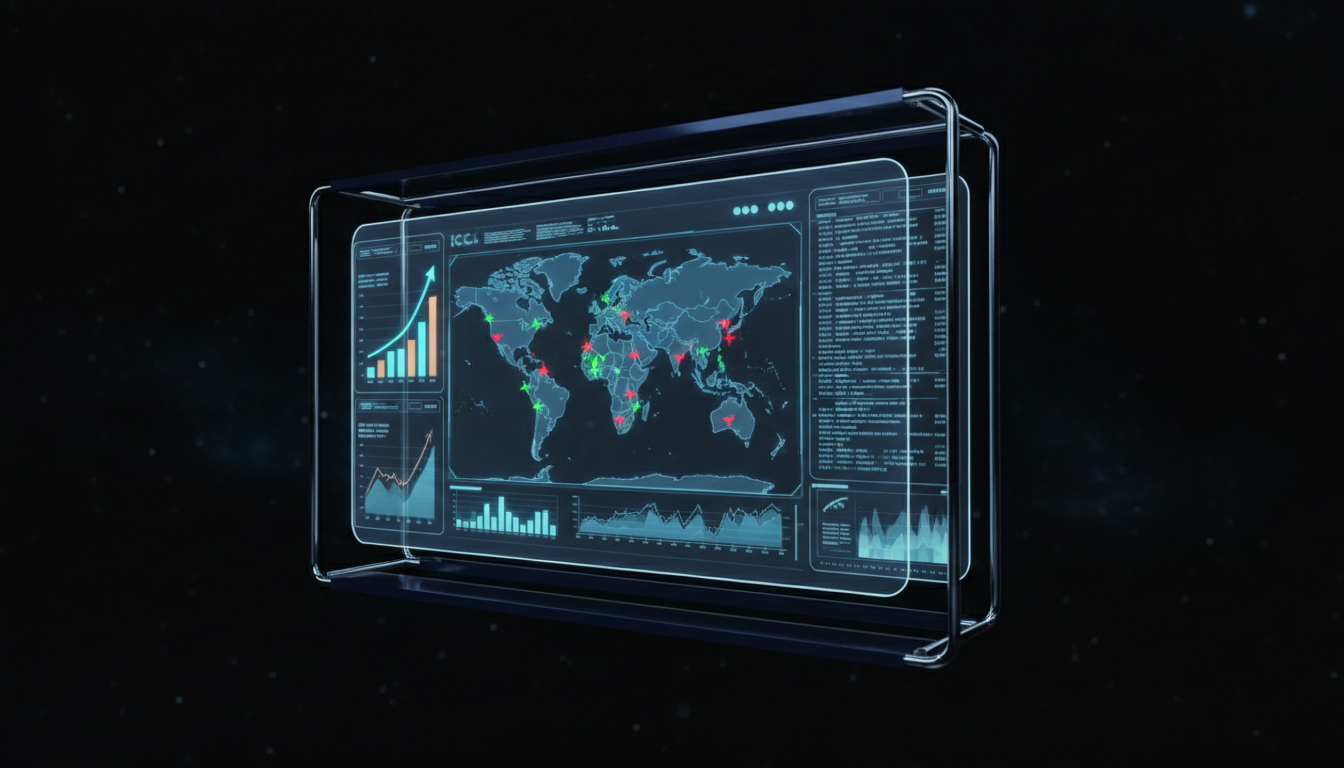
Real-time financial dashboards correlate aircraft health telemetry with potential revenue loss per hour across the fleet network. (Source: Global Flight Analytics.)
PdM ROI Estimator
However, below we’ve an interactive simulator for you to understand how ROI calculation works, while the theoretical mechanics and thermodynamic benefits of predictive maintenance are undeniable, justifying the upfront capital expenditure (CAPEX) to executive leadership requires precise, data-driven financial modeling. The PdM ROI Estimator transforms abstract engineering reliability into board-ready financial calculus, allowing fleet planners, CFOs, and maintenance directors to simulate the exact economic impact of digital transformation on their specific operations.
This interactive simulation is particularly valuable for strategic decision-making because it replaces static industry averages with a dynamic, multi-variable financial model:
Customized Airframe Modeling: Rather than treating all aircraft as identical assets, the estimator calibrates calculations across five distinct operational classes—from regional turboprops to heavy widebodies like the A380 and B777. By mapping your exact fleet size against standardized IATA and Boeing cost benchmarks, it generates an baseline tailored to your network density.
Maturity-Adjusted Calculations: A transition to predictive maintenance is rarely an overnight leap; it is an evolutionary process. The tool accounts for your current operational baseline—whether you are relying on a pure Reactive (Fix-on-Fail) approach, traditional Time-Based Preventive schedules, or Partial PdM—and applies verified algorithmic multipliers to project realistic, achievable efficiency gains rather than inflated theoretical maximums.
Granular Value-Stream Isolation: A single lump-sum ROI figure can obscure where the operational wins actually happen. This estimator separates your financial returns into two distinct progress tracks: immediate AOG Cost Savings (eliminating catastrophic unscheduled groundings that can cost up to $150,000 per hour) versus steady-state OPEX Reductions (optimizing spare parts inventory and extending component Remaining Useful Life).
Instant Capital Amortization: By adjusting the per-aircraft technology investment and extending the analysis timeline up to 15 years, decision-makers can instantly visualize their break-even payback period in months alongside cumulative net profit. This provides the empirical clarity needed to prove that predictive software and sensor integrations amortize rapidly, turning a perceived IT cost center into a compounding financial asset.
⚠️ESTIMATES BASED ON IATA & BOEING INDUSTRY BENCHMARKS. ACTUAL RESULTS VARY BY OPERATOR, REGION, AND IMPLEMENTATION MATURITY. FOR INFORMATIONAL PURPOSES ONLY.
Financial Lifecycle Analysis: Beyond the Initial CAPEX
Critics often point to the high Capital Expenditure (CAPEX) required for PdM software platforms, AI enterprise cloud integrations, and sensor retrofitting programs. However, a rigorous financial lifecycle analysis reveals that these upfront costs amortize rapidly against operational savings. According to federal aviation standards regarding continuing airworthiness obligations, transitioning to data-backed maintenance schedules can reduce total Operating Expenditure (OPEX) by up to 20% over a 10-year period
6
. Boeing Global Services has documented that airlines adopting full PdM integration achieve a full CAPEX payback within 18 to 36 months.
Financial Metric
Traditional TBM Strategy
Predictive Maintenance (PdM)
Net Economic Impact
Primary Spend Focus
High emergency parts premiums & labor overtime
Upfront software CAPEX & sensor integration
Amortized CAPEX with 18–36 month payback
Component Lifetime
Fixed-interval retirement (wastes remaining life)
Full Remaining Useful Life (RUL) utilization
15–25% reduction in annual spare parts procurement
Unscheduled Downtime
High frequency of disruptive AOG events
Scheduled replacement during low-revenue windows
Up to 35–50% reduction in network delay costs
Asset Residual Value
Standard depreciation curve
Documented digital twin maintenance history
Higher resale/lease valuation at mid-life upgrade
Furthermore, there is a critical, often-overlooked balance-sheet dimension: Asset Residual Value. An aircraft backed by a continuous, immutable digital health record commands a premium valuation on the secondary market compared to an airframe maintained via traditional interval paper logs. In addition, aviation insurance underwriters increasingly offer structural premium reductions for fleets demonstrating PdM maturity, as continuous monitoring represents a lower statistical risk profile
3
.
Consequently, CFOs who evaluate PdM solely through the lens of initial CAPEX make an incomplete assessment. Evaluating the asset through a Total Cost of Ownership (TCO) lens—spanning acquisition, active service, mid-life heavy maintenance visits, and ultimate retirement or resale—proves that the financial advantage of data intelligence compounds exponentially over time.
“An investment in knowledge always pays the best interest.”
— Benjamin Franklin
AR-assisted inspections reduce human error by up to 40% and accelerate the data-to-decision pipeline for complex structural assessments. (Source: Visionary Aerospace Lab.)
The Digital Transformation of Aviation Economics
The adoption of predictive maintenance has evolved from a tactical advantage into an existential necessity for commercial fleets navigating economic volatility. The integration of artificial intelligence within the maintenance hangar does not replace the mechanical engineer; rather, it elevates them from diagnostic labor to strategic reliability management. As the global commercial fleet ages—with the average airframe now exceeding 12 years in service—the requirement for precision thermodynamic and mechanical monitoring becomes paramount
8
.
Civil aviation authorities, including the FAA and EASA, have increasingly recognized data-driven condition monitoring as a primary standard for continuing airworthiness. Regulatory frameworks are adapting to permit extended maintenance intervals for operators who prove continuous, high-fidelity monitoring capabilities
5
.
Simultaneously, the convergence of 5G telemetry connectivity, edge-computing architecture, and automated cloud analytics has democratized predictive capabilities. Regional carriers and cargo operators can now leverage advanced machine learning models that were once exclusive to major flag carriers with multi-billion-dollar IT budgets.
“The measure of intelligence is the ability to change. In aviation, the measure of profitability is the ability to predict.”
— Adapted from Albert Einstein
Conclusion
“The best way to predict the future is to create it,” Peter Drucker once noted. In commercial aviation, however, the best way to predict a failure is to calculate it—precisely, continuously, and relentlessly.
The ROI of Predictive Maintenance stands as a testament to the power of merging mechanical thermodynamics with fiscal discipline. By investing in the digital nervous system of the fleet today, operators are not merely cutting maintenance overhead; they are eliminating the kinetic weight penalties of engine inefficiency, slashing unscheduled AOG downtime, and securing their financial liquidity for decades to come.
While the transition from reactive TBM to predictive digital infrastructure demands substantial technological investment and organizational adaptation, the alternative—reactive stagnation in an era of volatile kerosene prices, stringent carbon regulations, and unforgiving operational schedules—is infinitely more expensive. The question for aviation leadership is no longer whether to adopt predictive maintenance, but how rapidly they can achieve the data maturity necessary to unlock its full financial payload.
References
1
INTERNATIONAL AIR TRANSPORT ASSOCIATION (IATA). Guidance Material on Aircraft Health Management and Predictive Maintenance. 2nd ed. Montreal: IATA, 2022. https://www.iata.org⤴
2
SMITH, J. Aviation Economics: Theory and Practice in the Digital Age. London: Routledge, 2021. ISBN 978-0-367-55123-4. ⤴
CHEN, L. and WANG, Y. “Financial impact of predictive maintenance on commercial airline operations.” Journal of Air Transport Management, 2020, vol. 84, no. 101783. ISSN 0969-6997. ⤴
INTERNATIONAL CIVIL AVIATION ORGANIZATION (ICAO). Annex 6 to the Convention on International Civil Aviation: Operation of Aircraft. 11th ed. Montreal: ICAO, 2021. [International Treaty/Standard] https://www.icao.int/publications/pages/doc-series.aspx⤴
Analytical Researcher and Systems Specialist, focusing on technical risk evaluation, market metrics, and business economics. Uses background in exact sciences and structural analysis to deconstruct complex corporate, technological, and financial data.
We use cookies to ensure that we give you the best experience on our website. If you continue to use this site we will assume that you are happy with it.