



The global logistics sector currently stands exactly where environmental mandates meet fiscal reality. Therefore, analyzing CAPEX vs. OPEX heavy-duty EV fleets is no longer a theoretical debate, but a pressing boardroom imperative.
Transitioning a fleet involves much more than simply swapping fuel tanks for battery packs. In fact, it triggers a fundamental restructuring of your entire corporate balance sheet.
“The best way to predict the future is to create it.”— Peter Drucker
Understanding the Total Cost of Ownership (TCO) is now absolutely essential to maintain a competitive edge. Ultimately, fleet managers must navigate this landscape where initial capital decisions dictate a decade of operational profitability 1 .
Analytical Verdict: The initial capital outlay for fleet electrification is not merely a sunk cost, but rather a strategic asset acquisition that firmly locks in long-term operational solvency.
Are Electric Semi-Trucks Actually Cheaper to Run Than Diesel Over Their Lifetime?
The Front-End Burden: Deciphering the CAPEX of Electrification
The biggest hurdle for fleet owners undeniably remains the staggering initial Capital Expenditure (CAPEX). Currently, heavy-duty electric trucks command a price tag two to three times higher than traditional diesel counterparts.
For instance, a Class 8 battery-electric truck usually costs between $300,000 and $480,000. Meanwhile, a comparable diesel model sits comfortably near the $150,000 mark. However, this base sticker price only tells a fraction of the financial story.
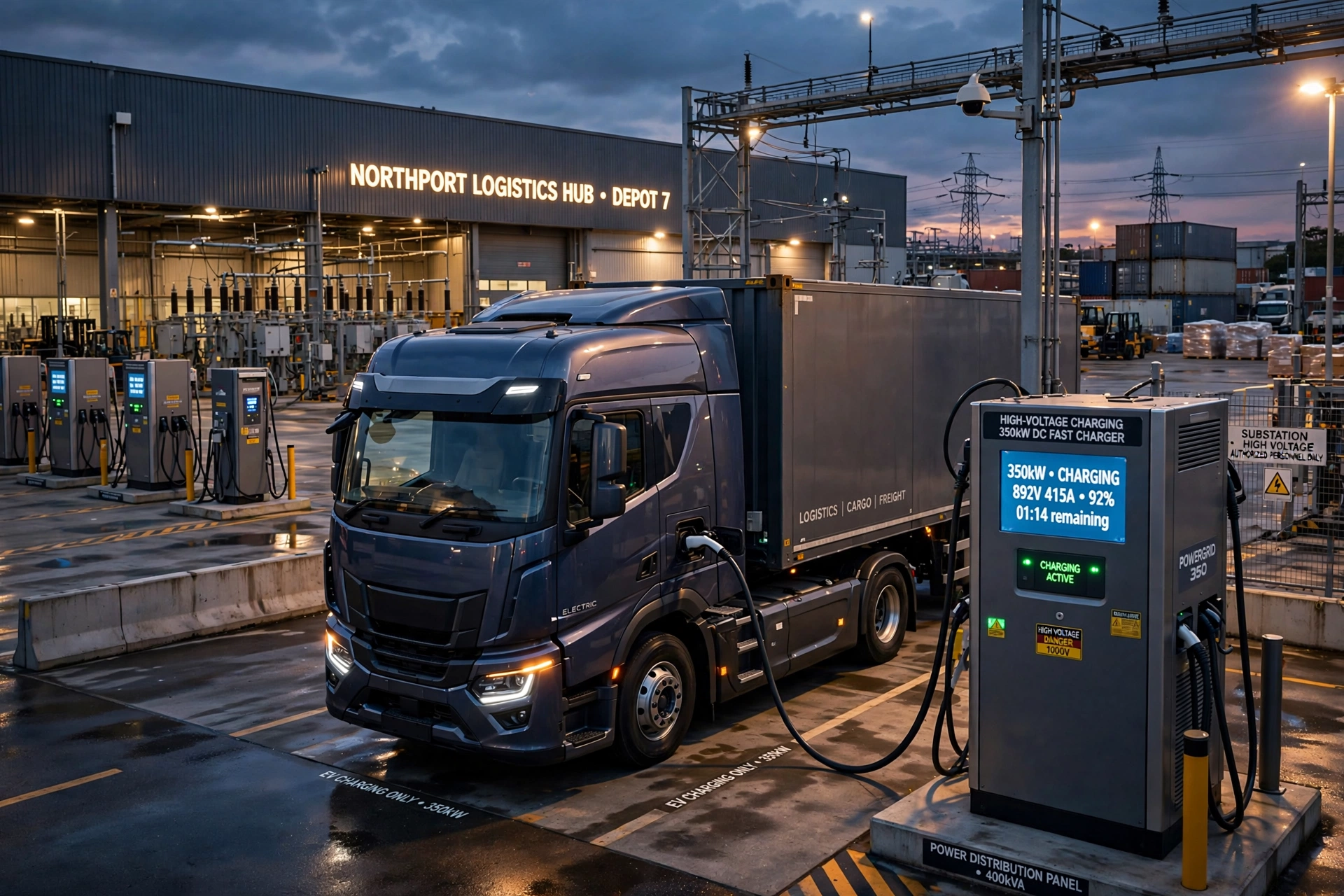
Operators must simultaneously account for the specialized high-voltage “Charging Ecosystem.” Consequently, installing transformers and software-integrated chargers demands serious capital allocation and proactive grid planning.
Importantly, investing in future-proof 350kW+ chargers immediately avoids the devastating sunk costs of upgrading underpowered systems later 2 . Furthermore, implementing robust Green Tech & Infra strategies ensures that proper infrastructure scales seamlessly with future fleet expansions.
Government incentive programs, moreover, actively mitigate this initial front-end burden. For example, the Inflation Reduction Act (IRA) offers robust tax credits that drastically reduce the net effective purchase price 5 .
Financial Verdict: While the upfront EV premium initially shocks the balance sheet, deploying subsidized capital into future-proof infrastructure establishes a permanent, depreciable corporate asset rather than an ongoing operational expense.
Operational Zenith: The OPEX Advantage and Maintenance Efficiency
Although CAPEX presents a genuine entry barrier, the Operating Expenditure (OPEX) is where electric fleets generate massive wealth. Traditionally, diesel fleets constantly battle volatile, high-frequency fuel and maintenance costs that severely erode profit margins.
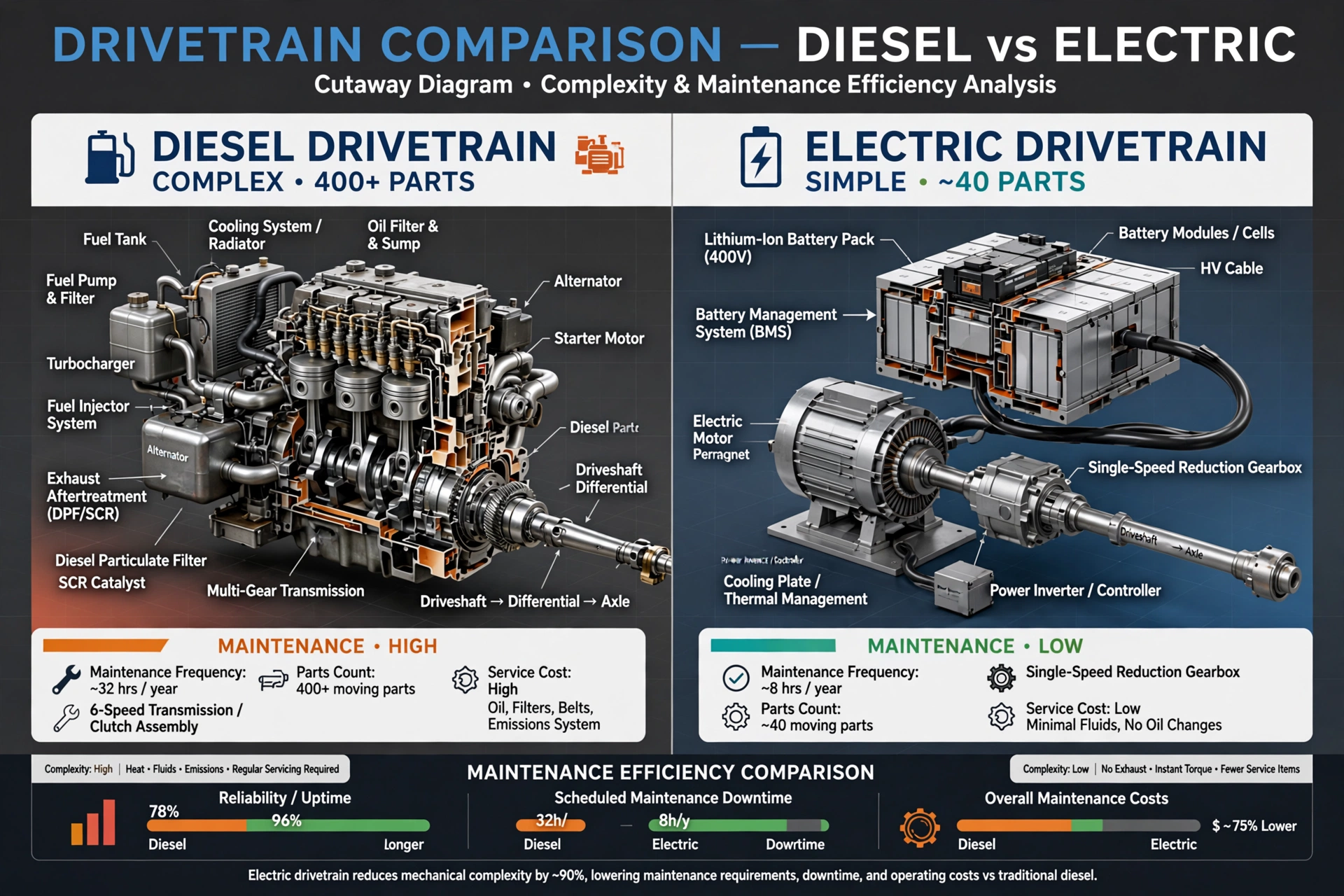
Conversely, electric drivetrains contain roughly 20 times fewer moving parts than internal combustion engines. Therefore, embracing electrification fundamentally transforms your company’s entire maintenance paradigm and dramatically minimizes operational downtime 3 .
“Efficiency is doing things right; effectiveness is doing the right things.”— Peter Drucker
Regenerative braking inherently extends the lifespan of friction brakes by thousands of miles. Moreover, eliminating oil changes, transmission repairs, and complex exhaust treatments consistently slashes scheduled maintenance downtime.
In reality, maintenance costs for electric trucks can reliably drop 40% to 60% lower per mile than diesel equivalents. Similarly, much like the cost dynamics seen in the energy economics of data centers, systemic efficiency drives undeniable long-term savings.
Additionally, utilizing electricity as a fuel allows fleets to secure fixed-rate utility contracts. Consequently, this strategy provides a profound level of budgetary certainty that unpredictable global oil markets simply cannot offer 4 .
The Bottom Line: The radical reduction in moving parts and fuel volatility transforms OPEX from a margin-eroding liability into a highly predictable, easily controllable financial advantage.
Test the financial assumptions of electrification using the lifecycle calculator below:
Note: You can adjust the input sliders for mileage and fuel costs to instantly visualize your custom breakeven point and 10-year savings.
Fleet TCO Comparison
The ESG Multiplier: Lifecycle Carbon Credits and Brand Equity
Modern financial performance remains completely inseparable from Environmental, Social, and Governance (ESG) metrics. Recently, strict regulations have placed logistics companies under immense pressure to systematically report and actively reduce Scope 1 emissions.
As a result, the core debate surrounding CAPEX vs. OPEX heavy-duty EV fleets extends far beyond basic truck economics 5 . Effectively, adopting EVs transforms your traditional fleet from a historical cost center into a modern value driver.
“Sustainability is no longer about doing less harm. It is about doing more good.”— Jochen Zeitz, CEO of Harley-Davidson
Beyond direct OPEX savings, intelligent companies frequently monetize their carbon offsets for additional revenue streams. Furthermore, adopting sustainable technologies routinely unlocks access to lucrative “Green Financing” rates that easily undercut standard commercial loans.
Institutional investors now strictly screen for fleet-electrification commitments before authorizing any major capital allocation 6 . Consequently, this powerful “ESG Multiplier” noticeably lowers the weighted average cost of capital (WACC) across the entire organization.
Strong ESG performance also significantly enhances brand equity among eco-conscious B2B customers. Ultimately, your electric fleet functions as a formidable competitive differentiator during complex, high-value contract negotiations 7 .
TL;DR: Leveraging ESG compliance directly lowers the weighted average cost of capital (WACC), simultaneously accelerating the breakeven horizon and turning emission reductions into tangible financial equity.
The Strategic Horizon: Decoding the Electrification Mandate
The transition toward heavy-duty EV fleets is certainly no longer a matter of “if,” but “when.” Initially, the central CAPEX vs. OPEX heavy-duty EV fleets equation appears overwhelmingly lopsided due to steep purchase prices.
However, a meticulous lifecycle analysis consistently reveals a compelling narrative of long-term resilience and sustained profitability. Moreover, the steady convergence of falling battery prices and expanding infrastructure rapidly accelerates this timeline beyond most early industry forecasts.
Viewing these vehicles as mobile technology assets enables logistics leaders to aggressively unlock unprecedented operational efficiency. Additionally, factoring in green financing instruments and government incentives makes the economic case completely irrefutable for high-mileage routes.
“The electric vehicle is not merely a product — it is the physical manifestation of a new industrial philosophy.”— Industry Editorial Perspective
The green infrastructure revolution undeniably acts as a sturdy bridge connecting global commerce to a highly profitable future. Therefore, decisive fleet operators who act today will invariably command the strategic high ground of tomorrow’s sustainable supply chains.
Strategic Economic Conclusion: Ultimately, the transition to EV fleets mandates a permanent shift from short-term cash preservation to long-term lifecycle yield. Consequently, embracing the steep initial CAPEX guarantees structurally lower OPEX, a superior WACC, and absolute dominance in future profit margins.