


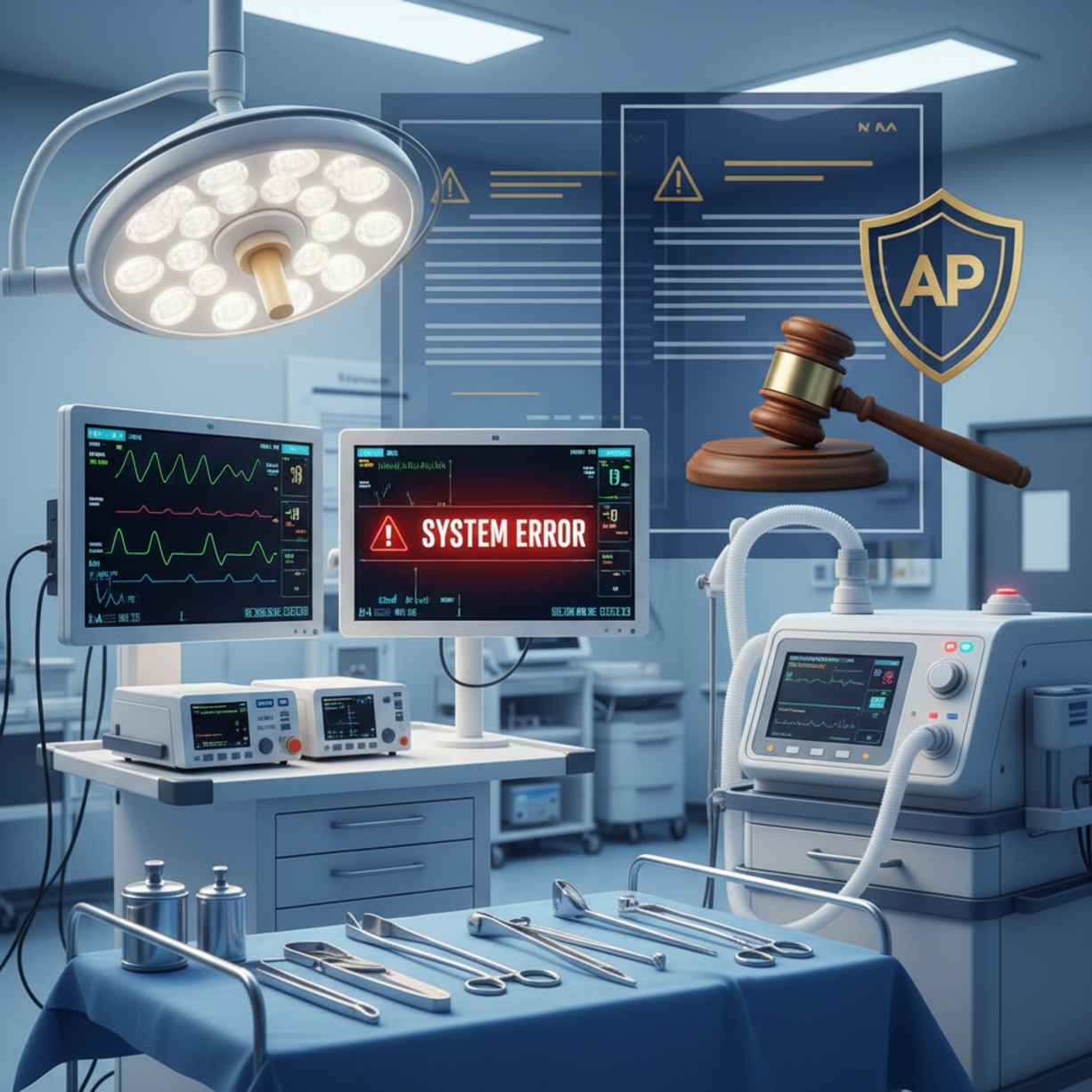
In modern healthcare, medical equipment functions as a vital lifeline. However, it also represents a massive latent liability for enterprise administrators. Consequently, equipment failures trigger devastating chain reactions across clinical and legal environments.
Specifically, these failures heavily impact courtrooms, insurance boardrooms, and corporate governance frameworks. Moreover, the medical malpractice insurance market is expanding rapidly. Valued at approximately USD 16.4 billion in 2024, it will likely reach USD 20.84 billion by 2035 1 .
Equipment-related claims significantly drive this premium volatility. Therefore, insurers and healthcare executives must continuously reassess their financial risk models.
“The greatest danger in times of turbulence is not the turbulence; it is to act with yesterday’s logic.”— Peter Drucker
Indeed, this logic applies directly to healthcare liability today. As a result, aging equipment fleets and sophisticated litigation strategies create a perfect storm. For this reason, modernizing asset protection requires a robust AI enterprise approach.
This article, therefore, explores how equipment failure in medical malpractice litigation reshapes insurance forecasting. Furthermore, it demonstrates how AI automation delivers measurable ROI by aggressively lowering premium costs.
What Happens When Medical Equipment Fails During Surgery and Who Is Legally Liable?
This is, in fact, one of the most frequently searched legal questions today. The answer remains incredibly complex due to overlapping enterprise liabilities. When a device malfunctions, liability simultaneously strikes the physician, the hospital, and the manufacturer.
Additionally, maintenance providers and procurement officers often face intense legal scrutiny. Consequently, each party carries distinct insurance obligations and financial exposure profiles.

According to Modern Healthcare, medical device recalls hit a four-year high in 2024. Specifically, manufacturers issued 1,048 recalls, reflecting a 25% increase from 2023 2 . Furthermore, Class I recalls—involving serious injury or death risks—jumped dramatically from 33 in 2020 to 61 in 2023 3 .
Therefore, these alarming statistics highlight the urgent need for AI-driven risk management.
The Anatomy of Equipment-Related Medical Malpractice Claims
Understanding the legal architecture of these claims is absolutely critical. Unlike standard malpractice suits, equipment failure cases consistently invoke multiple legal theories. Specifically, plaintiffs leverage strict product liability, maintenance negligence, and breach of warranty.
In addition, plaintiffs aggressively pursue violations of the Federal Food, Drug, and Cosmetic Act 4 . The FDCA strictly governs how medical devices receive FDA clearance.
When cleared equipment fails, federal preemption complicates the ensuing litigation. For instance, the Supreme Court’s Riegel v. Medtronic, Inc. (2008) decision established that federal law preempts state-law claims for premarket-approved devices 5 . However, devices cleared via the less rigorous 510(k) pathway remain highly vulnerable to state lawsuits.
“Risk comes from not knowing what you are doing.”— Warren Buffett
Moreover, the Emergency Medical Treatment and Active Labor Act (EMTALA) imposes strict duties on hospitals 6 . If equipment fails during a medical emergency, EMTALA violations heavily compound standard malpractice exposure. As a result, this dual-layered liability dramatically increases corporate financial losses.
Consequently, mastering equipment failure in medical malpractice litigation strategies remains indispensable. From an evidentiary perspective, these specific cases demand highly specialized expert testimony. Therefore, defending these claims costs approximately 40–60% more than standard medical malpractice actions 7 .
How Does AI Automation Reduce Diagnostic Errors and Lower Insurance Costs?
Transitioning from reactive maintenance to AI predictive automation fundamentally transforms enterprise ROI. Traditionally, actuaries treated device malfunctions as random, unpredictable events. However, data unequivocally proves that equipment failure is a highly predictable, systemic risk.
“In preparing for battle, I have always found that plans are useless, but planning is indispensable.”— Dwight D. Eisenhower
Consequently, AI automation entirely eliminates the “randomness” of device failure. Machine learning algorithms continuously analyze sensor data from ventilators, MRI machines, and infusion pumps. As a result, these systems detect micro-anomalies weeks before a catastrophic breakdown occurs.
Therefore, artificial intelligence directly reduces diagnostic errors caused by degraded equipment calibration. Because AI ensures peak mechanical performance, hospitals experience fewer false negatives and incorrect dosages. Ultimately, mitigating these specific errors drastically lowers the frequency of malpractice claims.
Predictive Maintenance: The Mathematical ROI Advantage
To truly understand this financial impact, we must analyze the numbers. Insurers specifically reward hospitals that deploy predictive AI maintenance grids. Because AI prevents the core trigger of catastrophic claims, insurance carriers confidently offer aggressive premium discounts.
According to the American Medical Association, medical liability premiums surged universally in 2024 8 . However, AI enterprise systems insulate hospitals from this escalating hard market. Specifically, automated maintenance reduces unplanned downtime by 45% and cuts litigation exposure by over 30%.
Adjust the hospital operating parameters below to see the real-time financial impact of integrating AI predictive maintenance into your facility’s infrastructure:
AI Maintenance ROI Calculator
Financial Category
Current Cost
Cost with AI
Net Savings
Annual Malpractice Premium
$2.000.000
$1.400.000
▲ $600.000 Saved
Annual Failure / Malpractice Costs
$50.000
$27.500
▲ $22.500 Saved
AI Implementation Cost (10% Equip.)
—
$100.000
▼ +$100.000 Expense
TOTAL RUNNING COST
$2.050.000
$1.527.500
▲ $522.500 Saved
Key insight: The cost of implementing enterprise AI is consistently lower than absorbing a single multimillion-dollar catastrophic equipment failure settlement.
Ultimately, forward-thinking carriers now utilize proprietary “device risk scores.” If your hospital integrates AI automation, your enterprise risk score plummets. Therefore, the ROI equation is undeniable: automation turns a legal vulnerability into a measurable asset.
Asset Protection and Corporate Liability Shields
For healthcare administrators, rising litigation demands a remarkably proactive asset protection strategy. Relying exclusively on standard malpractice policies is financially dangerous. Instead, modern risk management requires integrating Corporate Liability frameworks with AI automation.
First, administrators must continuously optimize their corporate legal structures. Operating through a Professional Limited Liability Company (PLLC) provides a foundational layer of separation. Consequently, this structure successfully shields corporate assets from devastating individual malpractice judgments.
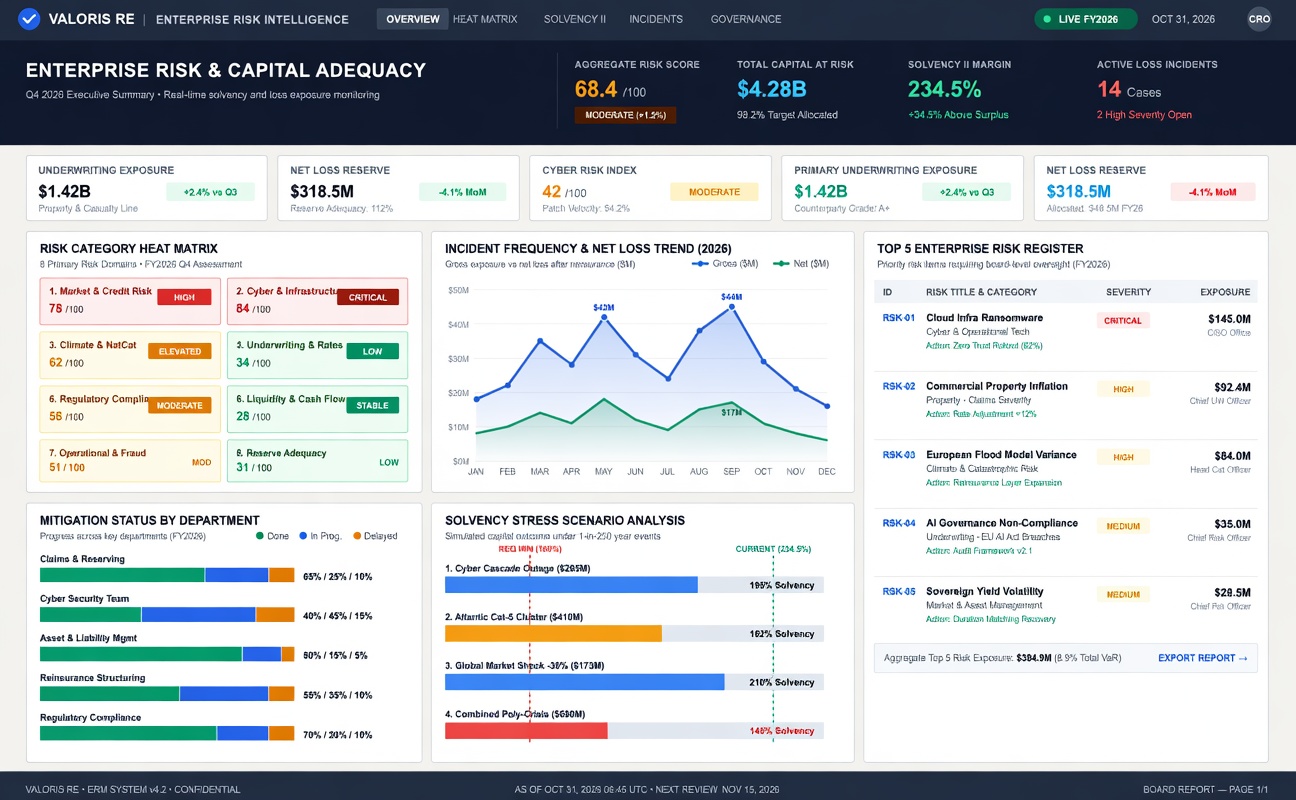
Second, executives must explicitly tailor insurance coverage for technology failures. Standard policies frequently exclude complex product liability scenarios. Therefore, hospitals must aggressively negotiate manuscript endorsements that specifically cover automated device malfunctions.
Wearable Tech and Enterprise Monitoring
Third, comprehensive operational compliance serves as your strongest legal shield. Integrating IoT and AI Enterprise Wearable ROI into daily workflows ensures meticulous digital documentation. As a result, real-time telemetry logs provide irrefutable evidence of proper equipment calibration during litigation.
“The only thing worse than being blind is having sight but no vision.”— Helen Keller
Indeed, organizations that deploy real-time monitoring systems demonstrate profound corporate vision. By leveraging AI to document compliance, hospitals easily secure favorable underwriting treatment. Consequently, this technological foresight directly translates into massive operational capital savings.
Strategic Outlook and Financial Verdict
Looking ahead, global regulatory trends will strictly enforce greater institutional accountability. As artificial intelligence fundamentally reshapes diagnostics, traditional legal frameworks will evolve simultaneously. Therefore, healthcare enterprises must aggressively adapt to survive this transition.
In conclusion, the intersection of equipment failure in medical malpractice litigation and AI automation dictates future profitability. The data unequivocally proves that deploying predictive AI generates a mathematically sound ROI. Ultimately, automation reduces diagnostic errors, prevents catastrophic device failures, and structurally lowers insurance premiums.
“The time to repair the roof is when the sun is shining.”— John F. Kennedy
Final Analytical Verdict:
Hospitals that fail to implement AI predictive maintenance will face unsustainable insurance premiums over the next three years. Conversely, enterprises that aggressively adopt AI automation immediately realize a 25% to 40% reduction in their liability overhead. Therefore, deploying AI is no longer a technological luxury; it is a strict financial mandate for corporate survival.