


Introduction
In 2016, Ukrainian engineer Vladimir Tatarenko captured global attention with a radical proposition: a commercial aircraft whose entire passenger cabin could detach in mid-flight, descending safely to the ground under parachutes. Moreover, the idea was elegantly simple in theory. However, it was catastrophically expensive in practice. Consequently, the design ignited a worldwide debate about the intersection of innovation, safety, and economic viability in aerospace engineering 1 .
The concept of an aviation rescue capsule is not entirely new. In fact, military ejection systems and the Cirrus Airframe Parachute System (CAPS) for general aviation have proven that emergency descent technology can work. Nevertheless, scaling such systems to transport-category aircraft introduces structural, regulatory, and financial challenges that no manufacturer has been willing to absorb. As a result, the Tatarenko design remains an unfunded concept — a powerful illustration of how certification economics can ground even the most compelling safety ideas.
This article examines why the aviation rescue capsule cost proved prohibitive, how regulatory frameworks under FAA and EASA create unavoidable financial barriers, and — most importantly — whether a new funding model based on passenger crowdfunding could finally transform this idea from fantasy into reality. In addition, we explore the structural engineering compromises that would be necessary, the legal landscape governing airworthiness certification, and the economic case for distributing the cost of safety innovation across the very people it would protect.
The significant problems we face cannot be solved at the same level of thinking we were at when we created them.
Why did the detachable airplane cabin never get built, and could passengers fund it themselves?
This is the question millions of aviation enthusiasts are asking — and the answer lies in certification economics. Indeed, the staggering costs of recertifying a new fuselage architecture and the immense liability risks make private crowdfunding virtually impossible. Furthermore, even if passengers pooled billions, the regulatory hurdles and testing timelines would still render the project unviable — ultimately, the economics simply don’t add up.
The Engineering Paradox: Brilliant Concept, Impossible Economics
Understanding why a detachable aircraft cabin sounds revolutionary but collapses under the weight of certification costs and structural engineering constraints.
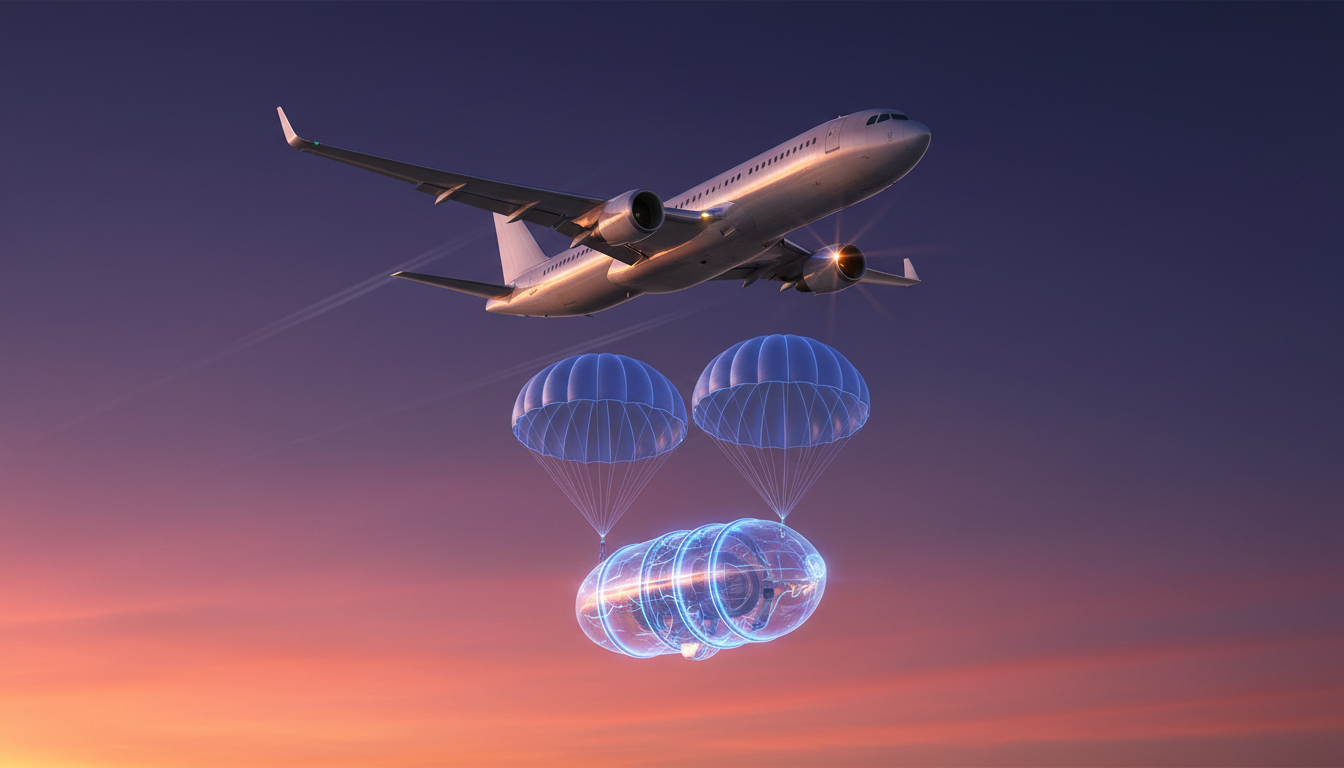
At first glance, Tatarenko’s design appears to solve one of aviation’s most visceral fears: the helplessness passengers feel during an uncontrollable descent. The capsule concept, which Tatarenko patented, envisions a passenger module that slides into the aircraft fuselage like a cartridge. In the event of a catastrophic failure, the rear fuselage opens and drag chutes extract the capsule, which then descends under large parachutes while inflatable bumpers cushion the landing 2 .

However, the fundamental engineering problem is this: commercial aircraft fuselages are not passive shells. On the contrary, they are load-bearing, pressurized structures that distribute stress across the entire airframe. Therefore, introducing a separation mechanism would require the fuselage to function as two independent structural systems — one that carries flight loads and another that carries passengers — without compromising the integrity of either 3 . Additionally, every wire, hydraulic line, and control cable that passes through the cabin section would need redundant routing or instant-disconnect couplings, each of which adds weight, complexity, and potential failure modes.
Tatarenko estimated that each capsule unit would cost approximately $1 million to build, with an additional $40 to $60 million required to retrofit and install them inside even a small fleet of aircraft 4 . Furthermore, these figures almost certainly underestimate the true cost. According to aerospace industry analysts, a full Type Certificate for a novel transport-category aircraft under 14 CFR Part 25 can cost between $1 billion and $5 billion, including design, testing, and certification. Consequently, even a Supplemental Type Certificate (STC) for a major structural modification of this magnitude would likely exceed $100 million — before a single production unit rolls off the line.
An investment in knowledge pays the best interest — but in aerospace, that investment must first survive the valley of certification.
In other words, the aviation rescue capsule cost is not merely a manufacturing problem. Instead, it is fundamentally a certification economics problem. The regulatory frameworks that keep aviation extraordinarily safe — approximately 0.07 fatal accidents per million flights globally — simultaneously create financial barriers that no single inventor, and arguably no single manufacturer, can overcome without massive institutional backing. As a result, the most innovative safety concepts often die not because they are technically impossible, but because they are economically impractical within existing regulatory structures.
The Regulatory Wall: FAA, EASA, and the Cost of Proving Safety
How international airworthiness standards under 14 CFR Part 25, EASA CS-25, and ICAO Annex 8 create a multi-billion-dollar certification gauntlet for disruptive aerospace technologies.
To understand why the Tatarenko capsule was never built, one must first understand the certification environment. In the United States, the Federal Aviation Administration (FAA) governs transport-category aircraft certification through 14 CFR Part 25, which establishes detailed airworthiness standards for structural loads, pressurization, crashworthiness, and emergency evacuation 5 . Similarly, the European Union Aviation Safety Agency (EASA) enforces parallel standards through CS-25. Both frameworks require exhaustive testing, analysis, and documentation before any aircraft — or major modification to an aircraft — can carry paying passengers.
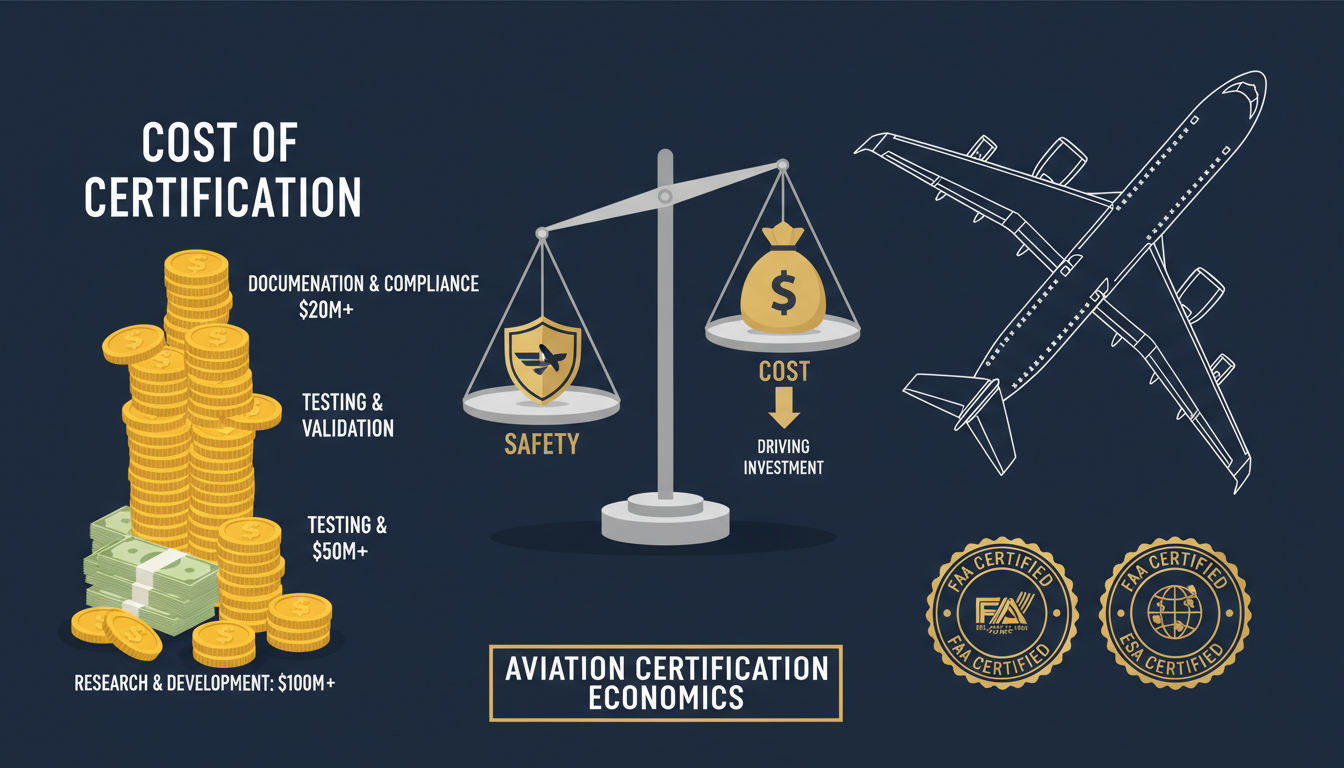
Internationally, the framework is anchored by the Convention on International Civil Aviation (Chicago Convention, 1944), whose Annex 8 — “Airworthiness of Aircraft” — defines the minimum standards that all contracting states must meet 6 . Therefore, any detachable-cabin aircraft would need to satisfy not just one national regulator, but effectively all of them, since airlines operate across borders under bilateral airworthiness agreements. This multiplies the certification burden exponentially.
Moreover, the FAA’s recent rulemaking on System Safety Assessments (published August 2024) has further standardized the criteria for evaluating novel flight-critical systems 7 . Under these updated rules, any cabin-separation mechanism would be classified as a “catastrophic failure condition” system — meaning it would need to demonstrate a probability of unintended activation of less than one in one billion per flight hour. Achieving that level of reliability through testing and analysis alone could take a decade and cost hundreds of millions of dollars. Consequently, the regulatory path for the Tatarenko design is not merely expensive; it is, for a solo inventor without institutional backing, essentially impassable.
In my opinion, the greatest barrier to transformative aviation safety is not the lack of engineering talent — it is the economic architecture of certification itself. We have built a system that is superbly effective at maintaining the safety of existing designs, but profoundly hostile to disruptive ones.
This opinion is shared by many within the aerospace industry. Although the current certification system has produced the safest era in commercial aviation history, it has also created a paradox: the safer aviation becomes, the harder it is to justify the enormous investment required to make it even safer. In addition, the existing regulatory structure inherently favors incremental improvements to proven designs over radical departures. Thus, innovations like the detachable cabin remain trapped in what some engineers call the “valley of death” — too expensive to certify, too radical for risk-averse manufacturers, and too unfamiliar for regulators to evaluate efficiently.
The Crowdfunding Thesis: Could Passengers Themselves Fund the Future of Flight Safety?
Exploring a disruptive financing model where billions of annual air travelers collectively invest in aviation rescue capsule technology — transforming passengers from consumers into safety stakeholders.
If neither governments, airlines, nor manufacturers will fund the development of a detachable passenger cabin, then who will? Here, a provocative idea emerges: the passengers themselves. In 2023, approximately 4.4 billion passengers boarded commercial flights worldwide, according to IATA 8 . If each passenger contributed just $1 per flight — a surcharge barely noticeable on a $300 ticket — the resulting fund would generate approximately $4.4 billion annually. That figure exceeds the entire estimated certification cost of a new transport-category aircraft.

This is not as radical as it sounds. In fact, the aviation industry already operates on a model of distributed cost-sharing. Airport improvement fees, security surcharges, and fuel surcharges are all mechanisms through which passengers collectively fund infrastructure and safety improvements that benefit everyone. Therefore, extending this model to fund next-generation safety research is a logical — if politically complex — evolution of existing practice.
The best way to predict the future is to create it — and sometimes, the future requires four billion people each contributing a single dollar.
However, significant obstacles remain. First, any global surcharge would require international regulatory coordination through ICAO, a process that typically takes years. Second, the fund would need transparent governance to prevent misuse — perhaps an independent international body modeled on the Flight Safety Foundation. Third, and most importantly, the technical feasibility of the capsule concept itself must be validated through preliminary engineering studies before committing billions to full-scale development. Nevertheless, the crowdfunding model addresses the core economic failure of the Tatarenko design: it distributes the cost across the entire beneficiary population, rather than concentrating it on a single inventor, manufacturer, or airline.
In our editorial opinion, the passenger crowdfunding model represents the most viable path forward for disruptive aviation safety technologies. The current model — in which manufacturers bear the full certification cost and pass it to airlines, who pass it to passengers through ticket prices — creates perverse incentives that favor cost minimization over safety maximization. By contrast, a dedicated safety innovation fund would decouple the economics of safety research from the economics of aircraft production. As a result, it would allow engineers and regulators to evaluate novel concepts on their technical merits, rather than dismissing them on financial grounds alone.
Conclusion: From Engineering Dream to Collective Responsibility
The Tatarenko capsule failed not because the engineering was impossible, but because the economics were — and only a fundamentally new funding model can change that equation.
Vladimir Tatarenko’s detachable cabin concept remains one of the most discussed — and most dismissed — ideas in modern aerospace engineering. As we have shown, the design failed primarily on cost: the certification economics of transport-category aircraft create barriers that no individual inventor can overcome. Furthermore, the structural compromises required to make a separable fuselage both flyable and separable introduce engineering challenges that current manufacturing techniques cannot efficiently solve.
Nevertheless, the idea itself has merit. The emotional and practical appeal of an aviation rescue capsule is undeniable, and the underlying technology — parachute recovery systems — is proven in military and general aviation applications. What is missing is not engineering talent or public interest. Instead, what is missing is a funding mechanism that matches the scale of the problem to the scale of the population it would protect.
Consequently, the passenger crowdfunding model — whether implemented as a voluntary surcharge, a government-managed safety innovation levy, or a public-private partnership — deserves serious examination by ICAO, national regulators, and the aerospace industry. The cost of not innovating is measured in the lives lost during the rare but catastrophic accidents that current technology cannot prevent. Accordingly, transferring the financial burden of safety innovation from manufacturers to the global community of air travelers may be the only way to bridge the gap between what is technically possible and what is economically viable.
He who saves a single soul saves a whole world.
In the final analysis, the Tatarenko capsule is not merely a failed invention. Rather, it is a case study in how the economics of aerospace certification can suppress genuine innovation. If aviation safety is truly a shared responsibility — and every regulation from the Chicago Convention onward says it is — then perhaps its funding should be shared as well. The technology to save lives in the air may already exist. The question is whether we are collectively willing to pay for it.
References
Disclaimer: This article represents the editorial analysis and opinion of the Aerospace Safety Editorial Board. The views expressed herein are based on publicly available information and do not constitute engineering advice, investment recommendations, or regulatory guidance. All cost estimates are approximations based on industry sources and public reporting.