



In the fast-paced environment of modern medical clinics, every single no-show quietly chips away at both revenue and operational efficiency. Consequently, AI-driven scheduling solutions have emerged to anticipate, avert, and compensate for missed appointments. As a result, these tools generate thousands of dollars in monthly savings while simultaneously streamlining daily workflows—ultimately meeting the high standards of doctors and clinic owners who settle for nothing less than excellence.
Why Missed Appointments Hurt Your Clinic
In today’s busy medical clinics, every missed appointment silently cuts revenue and efficiency. In fact, patient no-shows remain one of the most costly yet avoidable challenges in healthcare. For example, across the U.S. healthcare system, missed appointments generate annual losses estimated at $150 billion (Ruiz-Hernández et al., 2019)
1
. Furthermore, the average cost per no-show sits between $150 and $200.
To illustrate, if an independent clinic sees 20 patients daily with a 15% no-show rate, it loses up to $7,500 every month. Importantly, this amount does not even include wasted staff time or disrupted schedules. Nevertheless, smart clinic owners no longer accept these losses. Instead, they actively use artificial intelligence (AI) to combat the problem. Consequently, intelligent AI scheduling platforms reduce no-show rates by up to 50% while generating quick financial returns.
“If you can’t measure it, you can’t improve it.” — Peter Drucker
The right AI solution does not just fill calendars. Instead, it protects your time and translates directly into thousands of dollars saved monthly.
The Hidden Cost of Empty Waiting Rooms
No-shows mean much more than empty chairs. They represent lost revenue, wasted resources, and frustrated teams. Studies show that even a low national average no-show rate costs a single practice $150,000 annually. Moreover, some medical specialties see rates as high as 30%. Endoscopy suites, for example, face massive revenue losses when patients fail to attend (Berg et al., 2013)
2
.
An empty waiting room acts as a financial leak. Staff salaries, rent, utilities, and equipment costs continue even if the patient stays home. For clinic owners focused on process excellence, this inefficiency is simply unacceptable.
Empty waiting room symbolizing the hidden cost of no-shows in professional healthcare settings.

“Lost time is never found again.” — Benjamin Franklin
Consequently, AI tools turn this hidden cost into a measurable opportunity. They identify risk patterns before missed appointments happen.
How AI Scheduling Works to Prevent No-Shows
Modern AI scheduling systems go far beyond simple text reminders. Specifically, they analyze historical data, patient behavior, and appointment types to predict risks. Additionally, these tools assign a no-show risk score in real time. Consequently, high-risk patients receive personalized reminders at the exact moment they are most likely to respond. Moreover, research highlights that AI scheduling methodologies directly optimize healthcare capacity and reduce wait times (Beliën, 2006)
3
.
Self-scheduling portals and intelligent waitlist automation ensure rapid slot filling. For example, when a cancellation occurs, the system fills the gap instantly. As a result, one clinic reported a consistent 40% drop in missed appointments, directly adding thousands to their monthly revenue.
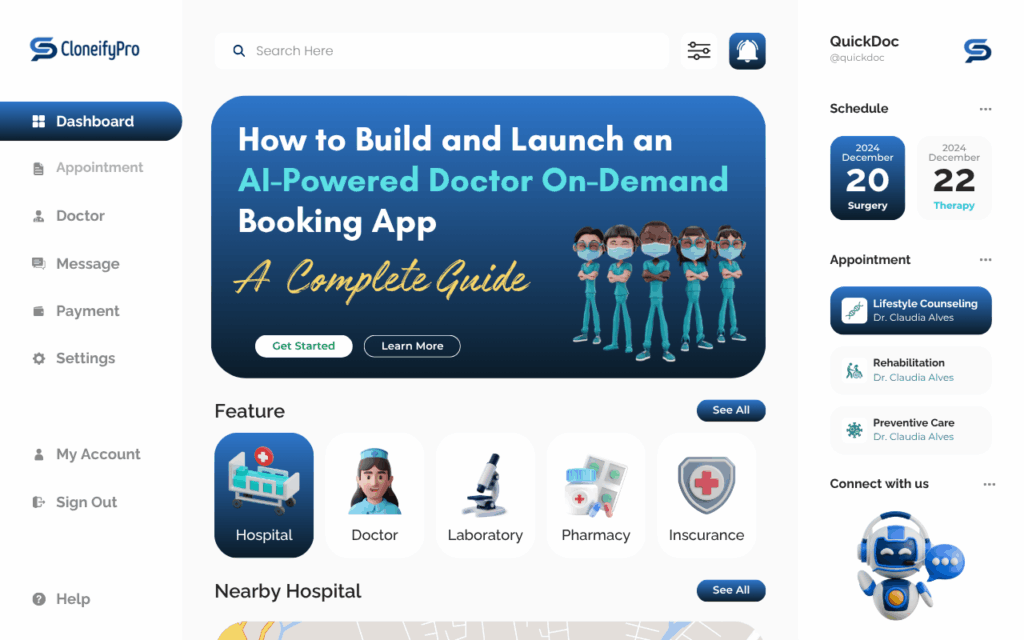
AI scheduling dashboard showing real-time appointment management and predictive insights for clinics.
Navigating Healthcare Regulations and AI
Indeed, the financial reality of modern medicine is unforgiving. Therefore, outdated workflows bleed efficiency. Thus, clinic owners must adopt AI carefully to protect patient data. Moreover, intelligent systems must strictly comply with federal laws. For instance, in the United States, the Health Insurance Portability and Accountability Act (HIPAA) mandates strict confidentiality when AI processes patient schedules
4
.
Similarly, the HITECH Act enforces rigid electronic health record (EHR) privacy protections
5
. Additionally, clinics operating in Europe must follow the General Data Protection Regulation (GDPR)
6
. Nevertheless, when properly configured, these AI tools integrate smoothly with existing EHR systems without breaking data privacy laws. Consequently, they provide exactly what process-oriented doctors demand.
Proven Monthly Savings and Return on Investment
The numbers speak clearly about AI success. For example, clinics using AI scheduling report monthly savings between $2,500 and $7,500 from reduced no-shows alone. As a result, full ROI often happens within 12 months, achieving net returns of 300% to 500%.
Furthermore, beyond direct revenue recovery, practices gain improved staff morale and higher patient satisfaction. In addition, predictable cash flow also becomes a critical advantage in a competitive healthcare market.
“The best way to predict the future is to create it.” — Peter Drucker
In line with this idea, by turning reactive scheduling into proactive, data-driven management, AI tools deliver the operational excellence that clinic owners and physicians have long sought. More specifically, by turning reactive scheduling into proactive management, AI tools deliver true operational excellence.
Conclusion: Lead the Future of Healthcare
No-show prevention is no longer optional. In fact, AI scheduling tools have moved from futuristic concepts to proven solutions. Moreover, they directly protect clinic revenue while elevating the patient experience. Doctors who invest in intelligent automation do not just fill calendars. Instead, they build resilient, scalable business processes.
Ultimately, the question is no longer if AI scheduling will transform healthcare. So, the only question is: will your clinic lead or follow? Therefore, explore enterprise-grade AI scheduling platforms today. Then, turn every appointment into guaranteed revenue and watch your clinic thrive.
References
Cited by: 11
Cited by: 179
Cited by: 73
| Disclaimer: This article is provided for informational purposes only and does not constitute professional advice. The statistics cited reflect publicly available reports at the time of writing. Readers should verify current data before making business decisions. |