




Discover how artificial intelligence is empowering farmers to increase profits, optimize operations, and seize new business and investment opportunities in modern agriculture.
How AI Is Revolutionizing Farming for Business Success and Investment Growth
Artificial intelligence is no longer a futuristic concept in agriculture—it is a practical, proven tool driving measurable business gains today. From optimizing daily field operations to improving access to capital and insurance, AI helps farmers run more profitable, resilient, and scalable agribusinesses while simultaneously opening doors to new investment streams.
The global AI in agriculture market is expanding at an unprecedented pace. Valued at approximately $3.75–4.7 billion in 2025, the sector is projected to reach $8–15 billion by 2030–2032, representing compound annual growth rates (CAGRs) between 20% and 26%. This explosive growth reflects strong investor confidence and accelerating adoption across both developed and emerging farming economies.
The real-world impact on farm profitability is equally compelling. Farmers implementing AI-driven solutions report yield increases ranging from 12% to 25% in documented case studies, alongside dramatic reductions in input costs—up to 40% on fertilizers and as high as 60% on irrigation water. AI-powered predictive analytics also enhance risk management, helping farmers anticipate pest outbreaks, weather volatility, and price fluctuations. These improvements translate directly into stronger bottom lines, lower operational volatility, and significantly greater appeal to agri-tech investors seeking high-growth, impact-driven opportunities.
1. Precision Farming: Cutting Costs and Maximizing Efficiency (Core Business Boost)
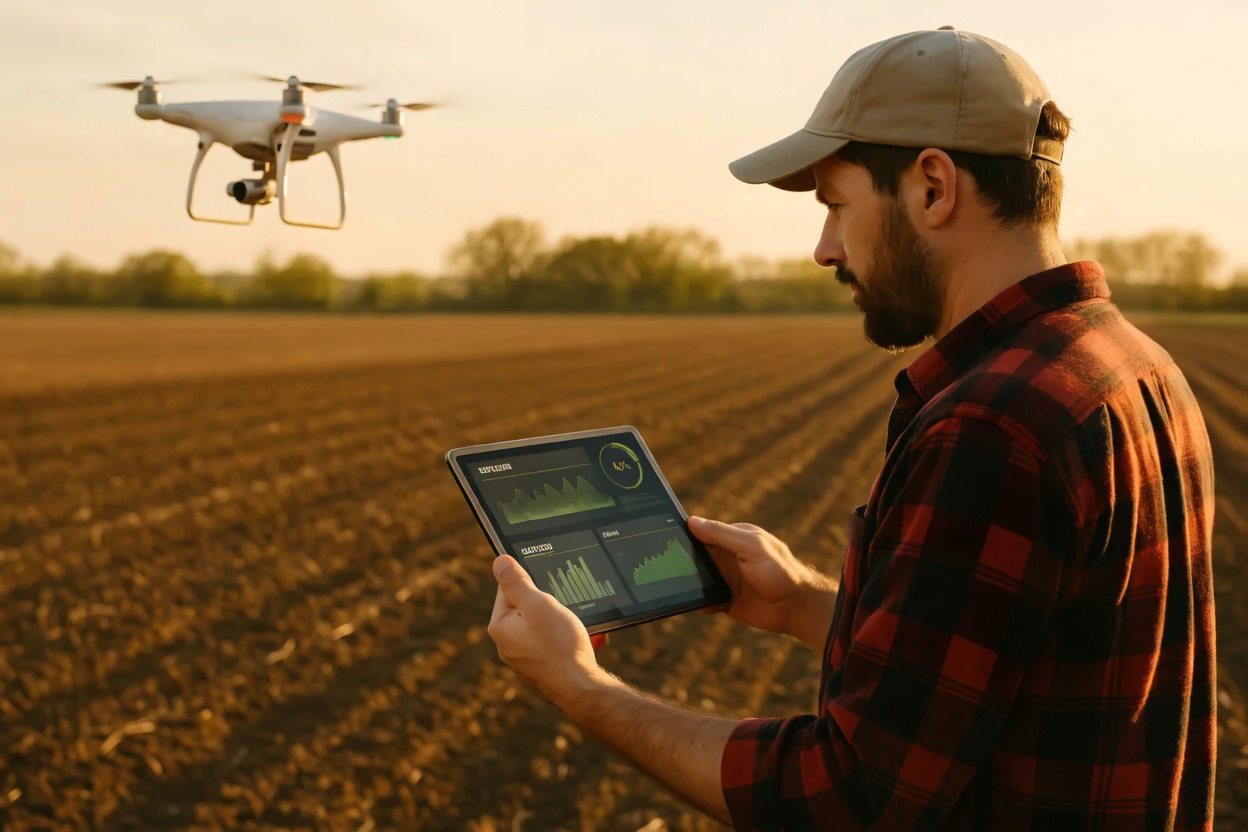
AI-powered tools analyze data from drones, satellites, sensors, and IoT devices to deliver hyper-local insights. Farmers can now apply water, fertilizer, and pesticides only where needed—known as variable rate technology. This slashes waste and boosts return on investment (ROI).
Precision farming powered by AI is no longer a luxury—it’s a competitive necessity. By integrating data from drones, satellites, ground sensors, and IoT devices, AI delivers hyper-local, real-time insights at the individual plant level. This enables variable rate technology (VRT) , allowing farmers to apply water, fertilizers, and pesticides with surgical accuracy—only where and when needed.
The financial and environmental returns are compelling:
-
Water savings: Smart irrigation systems, guided by soil moisture sensors and weather forecasts, reduce water usage by 20–30% while maintaining or even increasing yields. For example, vineyard trials using AI-driven drip irrigation achieved 25% higher grape yields with 20% less water.
-
Herbicide reduction: Computer vision technology, such as John Deere’s See & Spray, distinguishes crops from weeds in milliseconds. This precision reduces herbicide application by up to 90%, slashing chemical costs and meeting rising consumer demand for sustainable practices.
-
Labor optimization: Automated weeding, pest detection, and harvesting reduce reliance on seasonal labor—a critical advantage given ongoing workforce shortages.
Business impact: Lower input costs and higher output per acre directly expand profit margins. According to McKinsey, widespread AI adoption could unlock $250 billion annually in value for U.S. agriculture alone, driven by yield improvements, input savings, and productivity gains. For farmers, this means stronger cash flow; for investors, it signals a scalable, high-ROI sector ready for capital deployment.
2. Yield Prediction, Risk Management, and Market Intelligence
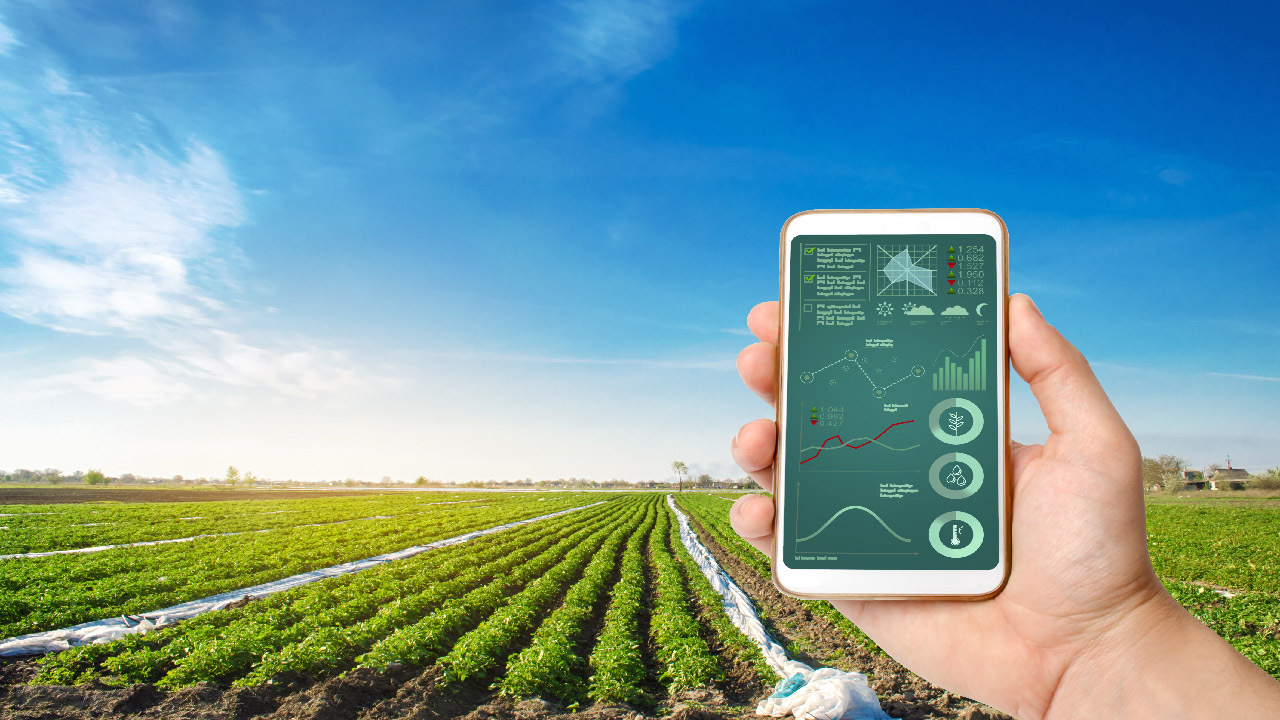
AI models forecast crop yields, pest outbreaks, weather impacts, and even market prices using historical data, satellite imagery, and climate models. This replaces guesswork with data-driven decisions.
- Farmers choose optimal planting/harvesting times and crop varieties for maximum profitability.
- Early pest/disease detection prevents losses (up to 30% yield protection in some maize trials).
- Market trend analysis helps time sales for better prices.
Real-world results: Indian chili farmers using AI tools saw 21% yield increases, 9% less pesticide, and $800 extra income per acre.
3. How AI Opens New Investment and Financing Doors
Beyond day-to-day operations, AI directly supports investment by making farms more bankable and creating new revenue streams:
- Better access to finance and insurance: Traditional credit scoring excludes many smallholders due to lack of collateral or history. AI platforms (e.g., Amini in Africa, Apollo Agriculture in Kenya/Zambia, FarmDrive) analyze satellite data, sensor readings, and transaction history to provide instant credit scores and precision crop insurance. This de-risks lending and has already helped thousands access loans they couldn’t before.
- Carbon credits and regenerative practices: AI tracks soil carbon and sustainability metrics, enabling farmers to earn payments for eco-friendly methods—turning conservation into a profitable investment stream.
- Attracting agtech investment: Data-rich farms appeal to investors. AI also helps farmers evaluate their own investment decisions (e.g., equipment purchases or diversification) and even apply for grants faster using AI-assisted writing tools.
Lenders now use AI for faster underwriting and portfolio monitoring, creating a virtuous cycle: smarter farms = lower risk = more capital available.
Challenges and How to Get Started
Adoption barriers include initial costs, digital literacy, and data privacy. However, affordable AI-as-a-service platforms and mobile apps (WhatsApp-based chatbots like Farmer.chat) are making it accessible even for smallholders. Start small: drone scouting, soil sensors, or free/pilot AI advisory tools from companies like Bayer or Digital Green.
Conclusion: AI Is the Smartest Investment in Your Farm’s Future
AI doesn’t replace farmers—it amplifies their expertise. By enhancing efficiency, reducing risks, and unlocking finance and sustainability revenues, it turns traditional agriculture into a high-growth, investment-ready business. Whether you’re a small family farm or a large operation, integrating AI today positions you for stronger profits tomorrow.
Farmers who embrace these tools are not just surviving—they’re thriving in a competitive, climate-challenged world. The future of farming is intelligent, profitable, and investable.