



. Discover how Law 14,112 empowers aggressive corporate restructuring and financial survival.)
Mastering Law 14,112: How Modern Recuperação Judicial (Judicial Recovery) Redefines Corporate Insolvency, Safeguards Assets, and Drives Aggressive Strategic Turnarounds in the South American Market.
When multinational corporations and large domestic enterprises face severe financial distress in South America’s largest economy, the instinct is often to retreat. However, the most successful executive boards view insolvency not as a death knell, but as a tactical battlefield. Brazil’s equivalent to the US Chapter 11—known as Recuperação Judicial (RJ)—has evolved into a highly aggressive, strategic weapon for corporate survival and rebirth.
Following the transformative amendments of Federal Law No. 14,112/2020, the Brazilian bankruptcy framework has been modernized to mirror the flexibility of international restructuring while introducing distinct, high-stakes local mechanisms. In the current economic landscape of 2026, where market volatility is a constant, leveraging an RJ is no longer a last resort; it is a calculated move to freeze liabilities, renegotiate debt on favorable terms, and protect the core enterprise from being dismantled by impatient creditors.
“Restructuring is not the end of the enterprise; it is the aggressive rebirth of its core value.” — Article Excerpt
The Shift to DIP Financing and Strategic Asset Liquidation
Historically, companies entering judicial recovery in Brazil struggled to secure operating capital. The 2020 legal reform completely overhauled this by introducing robust frameworks for Debtor-In-Possession (DIP) financing. Today, lenders who provide capital to a struggling company during its RJ process are granted super-priority status, leapfrogging older, unsecured claims. This creates a lucrative sub-market for distressed asset investors and gives the debtor the immediate oxygen needed to stabilize operations.
Furthermore, the updated law expanded the ability to sell “Isolated Business Units” (UPIs). Under an aggressive Chapter 11 strategy in Brazil, a corporation can carve out profitable divisions and sell them “free and clear” of existing liabilities—including toxic labor and tax debts.

However, executing the sale of UPIs requires meticulous risk management. Executive boards must navigate the hidden corporate insurance gaps that often plague restructuring efforts. If Director & Officer (D&O) liability policies or operational risk transfers are not tightly secured prior to the carve-out, the residual liabilities could pierce the corporate veil, leaving leadership personally exposed. An aggressive legal strategy ensures these insurance parameters are locked down before the first asset is ever brought to the auction block.
Out-of-Court Reorganizations: Speed and Tactical Discretion
While a full Recuperação Judicial offers a 180-day “stay period” (suspending executions against the company), the public nature of the courts can sometimes cause reputational damage. Enter the Recuperação Extrajudicial (Out-of-Court Reorganization)—the silent, swift, and highly aggressive counterpart.
Since the recent legal modernizations, out-of-court reorganizations have surged. This mechanism allows a company to negotiate a pre-packaged restructuring plan privately. Once the debtor secures approval from a simple majority (over 50%) of the creditors within a specific class, they can present it to a judge to make it legally binding on all creditors in that class—including the holdouts who actively opposed it.

This “cram-down” effect is what makes the extrajudicial route so potent. It bypasses deadlocks, eliminates the leverage of minority activist creditors, and vastly reduces administrative costs. For corporate entities looking to execute a rapid financial pivot without alerting competitors to their vulnerability, this strategy is unmatched.
Integrating Next-Gen Financial ERPs for Court-Supervised Transparency
Drawing on institutional and agency theory, next-gen Financial ERPs enhance court-supervised transparency through immutable audit trails and real-time reconciliation. As stated:
“Blockchain-integrated ERP systems reduce information asymmetry, ensuring fiduciary compliance and judicial oversight in restructuring proceedings.”
(Source: He, J., & Wang, L., “Digital ERPs in Legal Accountability,” Journal of Accounting and Public Policy, Vol. 43, Issue 1, 2025).
An aggressive legal strategy is only as strong as the data supporting it. Brazilian bankruptcy courts require rigorous, verifiable, and continuous financial reporting. The days of managing a corporate restructuring via fragmented spreadsheets are gone. To survive an RJ, a company must deploy next-gen financial ERPs (Enterprise Resource Planning systems).
When a company files for Chapter 11 in Brazil, the judge appoints a Judicial Administrator to oversee the process. If the debtor’s financial data is opaque or inconsistent, the administrator can recommend converting the reorganization into a Falência (liquidation). Modern ERPs provide the real-time cash flow projections, granular liability tracking, and automated audit trails required to satisfy court mandates and retain the trust of DIP financiers.
“In the middle of difficulty lies opportunity.” — Albert Einstein
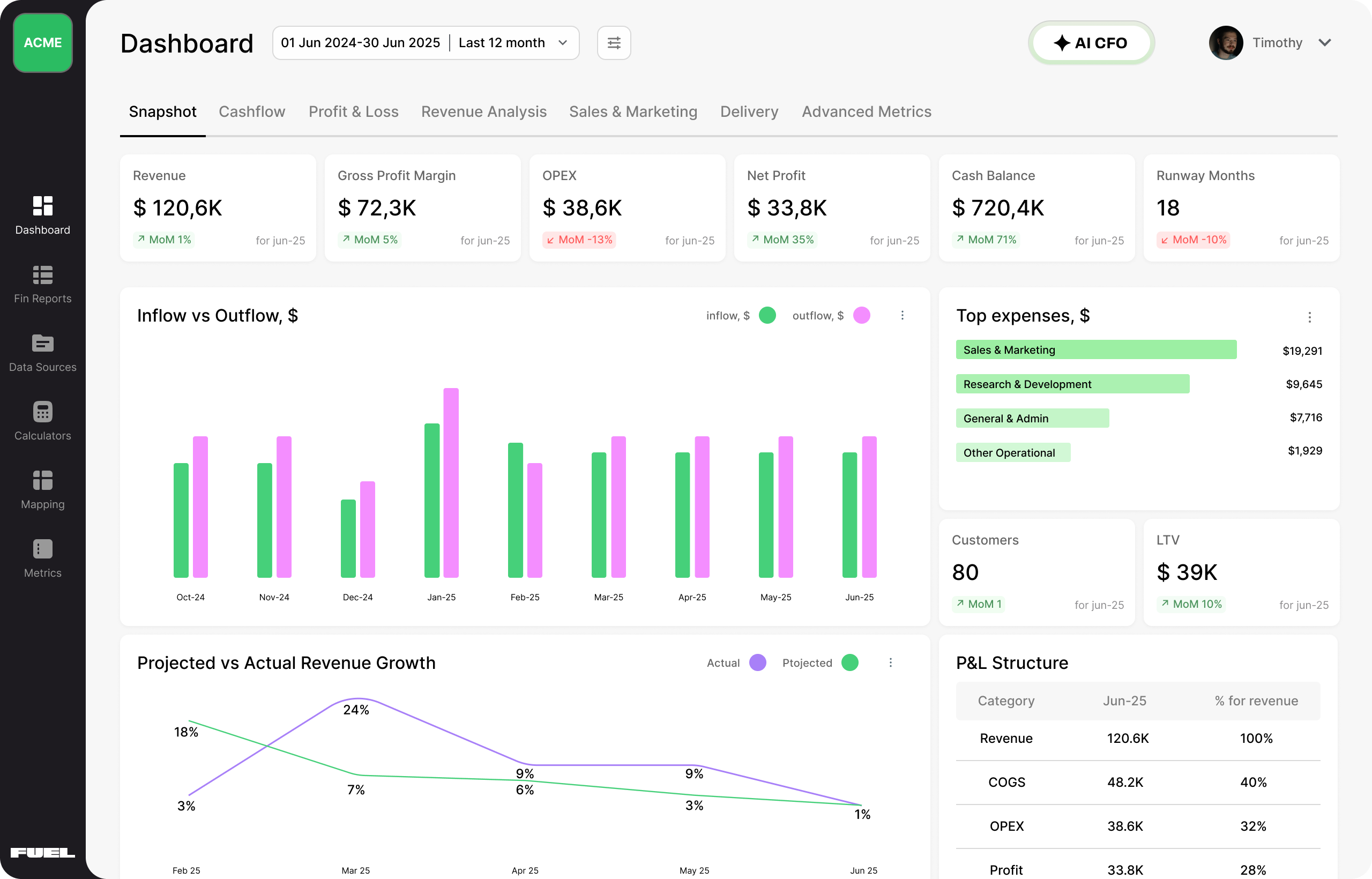
By integrating deep technological oversight, the debtor maintains total control of the narrative. A well-implemented ERP system allows the C-suite to aggressively model different creditor payout scenarios, proving the mathematical viability of their reorganization plan and leaving dissenting creditors with no factual grounds to object.
Conclusion
Executing a “Chapter 11” strategy in Brazil is not an admission of defeat; it is the ultimate expression of corporate resilience. By weaponizing Law 14,112, securing DIP financing, utilizing out-of-court cram-downs, and backing every move with bulletproof data from next-gen financial ERPs, companies can strip away toxic debt and emerge leaner and more profitable. In the high-stakes arena of corporate finance, Recuperação Judicial is the aggressive, legally sound strategy that ensures legacy businesses survive to dominate another day.