




Discover the most advanced, legally compliant tax optimization strategies for ultra-high-net-worth individuals. Explore how family offices and elite trusts can preserve generational wealth and mitigate exposure.
“The hardest thing in the world to understand is the income tax.” — Albert Einstein
Managing substantial assets requires precision, foresight, and an elevated level of expertise. For ultra-high-net-worth individuals (UHNWIs), business owners, and engineers who have scaled companies to extraordinary valuations, traditional financial planning is no longer sufficient. Wealth of this magnitude inherently becomes a larger target for taxation, multi-jurisdictional compliance hurdles, and estate erosion.
Without strategic intervention, taxes can quietly gnaw away at your net worth—year after year, asset after asset. The objective of elite tax optimization is not merely compliance, but aggressive, legally sound wealth preservation. By establishing protective barriers around your assets, you ensure that the wealth you spent a lifetime building remains intact for future generations. This article explores the sophisticated mechanisms utilized by private banking institutions, elite law firms, and top-tier consulting agencies to optimize tax exposure, protect capital, and construct an unshakeable legacy.
The Role of the Family Office in Multi-Jurisdictional Tax Efficiency
When wealth crosses borders, it demands smarter, centralized strategies. Establishing a Family Office—whether a Single-Family Office (SFO) or a Multi-Family Office (MFO)—is increasingly the preferred structure for UHNW families to manage their legacy with precision.

A family office acts as the financial quarterback, orchestrating seamless collaboration between legal, tax, and investment teams. This structure allows for multi-jurisdictional tax optimization, ensuring that exposure is mitigated across different countries and regulatory environments. UHNW individuals often face complex tax situations derived from diverse income streams, international real estate portfolios, and cross-border corporate holdings.
Through a family office, you can execute real-time adjustments to portfolio allocations and estate structures as tax laws evolve. This includes establishing holding companies in tax-efficient jurisdictions and navigating the nuances of international tax treaties to prevent double taxation. As wealth management transitions from mere asset growth to holistic enterprise management, the family office provides concierge-level oversight that ensures compliance while maximizing after-tax returns.
“Wealth is not about having a lot of money; it’s about having a lot of options.” — Chris Rock
Leveraging Charitable Remainder Trusts (CRTs) and Dynasty Trusts
Trust planning is the cornerstone of long-term tax mitigation and intergenerational wealth transfer. For the ultra-wealthy, utilizing advanced trust structures like the Charitable Remainder Trust (CRT) and the Dynasty Trust can significantly reduce both estate and capital gains taxes.

A Charitable Remainder Trust (CRT), recognized under Section 664 of the U.S. Internal Revenue Code, is an irrevocable, tax-exempt entity. It allows an individual to transfer highly appreciated assets—such as private company stock or real estate—into the trust. The trust can then sell these assets without immediately triggering capital gains taxes. The CRT provides an income stream to the donor or designated beneficiaries for a specified term or life, after which the remainder is distributed to a designated charity. This strategy not only satisfies philanthropic goals but also provides an immediate charitable income tax deduction while deferring capital gains.
Similarly, a Dynasty Trust (or generation-skipping trust) is designed to facilitate wealth transfers to grandchildren and subsequent generations while avoiding estate taxes at each generational interval. By utilizing the unified credit against estate tax (Section 2010 of the Internal Revenue Code), families can lock in today’s wealth and push future growth toward their heirs. These trusts serve a dual purpose: they freeze asset values to cut tax burdens and construct an impenetrable barrier against creditors, lawsuits, and divorce settlements.
Tax-Loss Harvesting and Concentrated Holdings Diversification
Founders, engineers, and early-stage investors frequently face a distinct problem: concentrated wealth. Being overly weighted in a single company’s stock exposes you to severe, unintended market risk and triggers monumental capital gains tax liabilities upon liquidation.
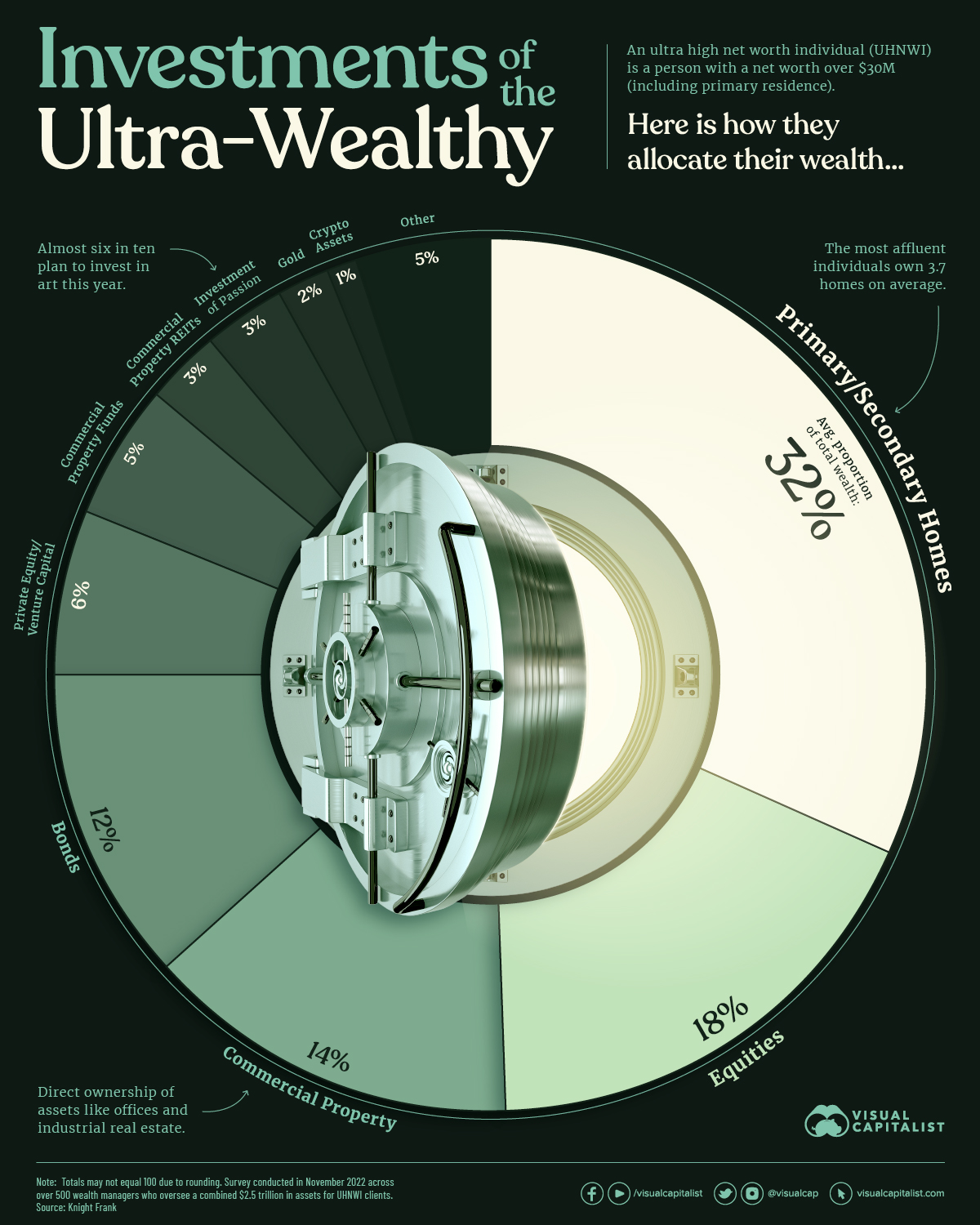
To mitigate this, elite advisors deploy tax-efficient diversification strategies. This may involve pooling assets into an exchange fund, which allows an investor to swap concentrated stock for a diversified basket of equities without triggering a taxable event. Other strategies include staged selling over multiple tax years or utilizing direct indexing.
Furthermore, Tax-Loss Harvesting is an essential, continuous process within a UHNW portfolio. This involves strategically selling investments at a loss to offset the capital gains realized from the sale of highly appreciated assets. For investors with massive, diversified portfolios containing both public and private holdings, algorithmic tax-loss harvesting integrated into ongoing rebalancing creates compounded tax savings over decades. When structured correctly, these mathematical tax efficiencies translate to millions of dollars in preserved capital.
“In this world, nothing can be said to be certain, except death and taxes.” — Benjamin Franklin
(But how much you pay is a matter of strategy.)
Conclusion
For ultra-high-net-worth individuals, wealth preservation is an active, ongoing discipline. The intersection of global tax regulations, corporate law, and investment strategy demands a proactive approach rather than a reactive one. Whether through the holistic architecture of a Family Office, the philanthropic tax-sheltering of a CRT, or the rigorous math of tax-loss harvesting, keeping your wealth intact requires elite advisory.
By engaging private wealth managers and specialized legal counsel, you ensure that your financial blueprint is stress-tested against shifting economic conditions and evolving legislation. Ultimately, optimizing your tax footprint is not just about keeping more capital; it is about securing your legacy and ensuring that your life’s work outlasts you, structurally sound and fully protected.
References
-
UNITED STATES INTERNAL REVENUE SERVICE. 26 U.S. Code § 664 – Charitable remainder trusts. 1969. Available from: https://www.law.cornell.edu/uscode/text/26/664
-
UNITED STATES INTERNAL REVENUE SERVICE. 26 CFR § 1.664-1 – Charitable remainder trusts. Date of publication varying. Available from: https://www.law.cornell.edu/cfr/text/26/1.664-1
-
UNITED STATES INTERNAL REVENUE SERVICE. 26 U.S. Code § 2010 – Unified credit against estate tax. 1976. Available from: https://www.law.cornell.edu/uscode/text/26/2010
-
CREATIVE PLANNING. Introduction to Tax Planning for Ultra-High-Net-Worth Individuals and Families. 2024. Available from: https://creativeplanning.com/insights/taxes/tax-planning-ultra-high-net-worth-families/
-
TIGER 21. What is a Family Office? 2026. Available from: https://tiger21.com/insights/what-is-a-family-office/
-
KALINKA GROUP PRIVATE WEALTH MANAGEMENT. Ultra-high-net-worth families & business owners. 2024. Available from: https://www.kalinkaprivatewealth.com/ultra-high-net-worth-families-business-owners
-
ELIZABETH MORGAN & ASSOCIATES. Charitable Remainder Trusts. 2018. Available from: https://www.emalegal.com/wp-content/uploads/2018/09/Charity-Remainder-Trusts-Memo.pdf
-
GUOTAI JUNAN INTERNATIONAL (GTJAI). Family Office Advisory Services. 2024. Available from: https://www.gtjai.com/en/product_service_familyoffice