




Discover how artificial intelligence is transforming modern agricultural machinery, delivering higher productivity, lower costs, and smarter investment opportunities for farmers and agribusinesses.
How AI is Rewiring Agriculture: From Intuition to Intelligence
Artificial intelligence is shifting agriculture from a labor-intensive tradition into a precision-driven, data-centric industry. According to recent industry analyses, farmers using AI-enabled machinery report 10–20% higher crop yields and up to 15% lower input costs—a competitive edge that is reshaping the business of growing food. For investors and agribusinesses, this evolution unlocks new revenue models, operational efficiencies, and scalable agritech opportunities.
Precision Agriculture: Smarter Decisions in the Field
Modern AI systems integrate real-time sensors, GPS, and machine learning into tractors, sprayers, and harvesters. These platforms process live soil, weather, and crop data to optimize every pass across the field.
Gone are the days of guesswork. AI-powered equipment adjusts seeding depth, fertilizer rates, and irrigation flows instantly—slashing waste while boosting productivity by 15–25%. The result: more food on less land, with lower environmental impact.
Autonomous Tractors and Robotics: 24/7 Efficiency at Scale
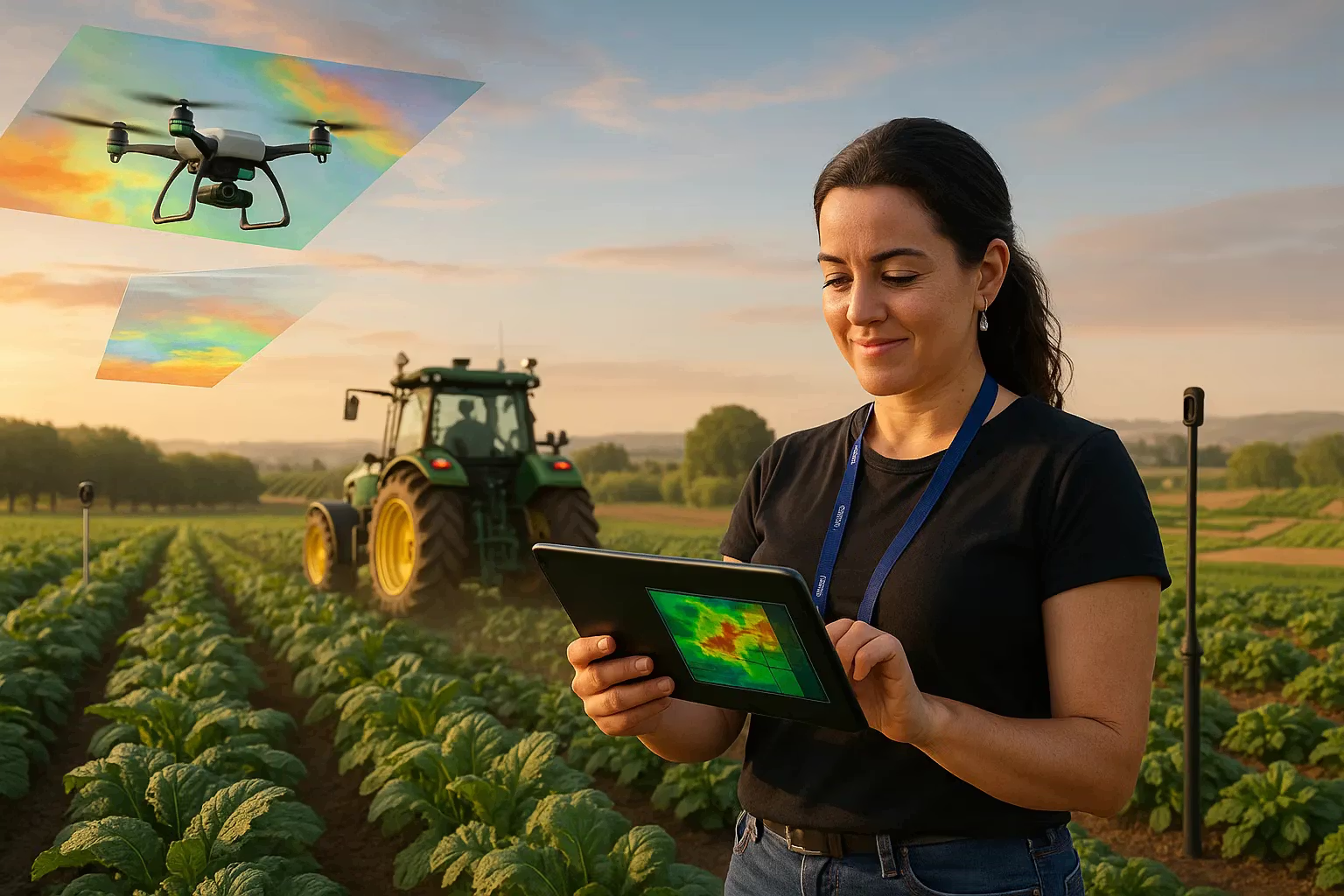
Industry leaders such as John Deere and Monarch are pioneering autonomous tractors powered by AI, computer vision, and high-precision GPS. These machines operate entirely without drivers—tilling, seeding, and harvesting around the clock, unaffected by fatigue or low visibility. For farm operators, this translates directly into lower labor costs, reduced fuel consumption, and optimized machine utilization.
Beyond individual units, robotic systems also minimize soil compaction through lighter, more agile designs. Farmers can remotely coordinate fleets of up to eight machines working in sync. The outcome is substantial: 20–40% gains in field coverage and overall productivity, especially during critical planting and harvest windows.
Drones: Aerial Intelligence for Proactive Crop Management
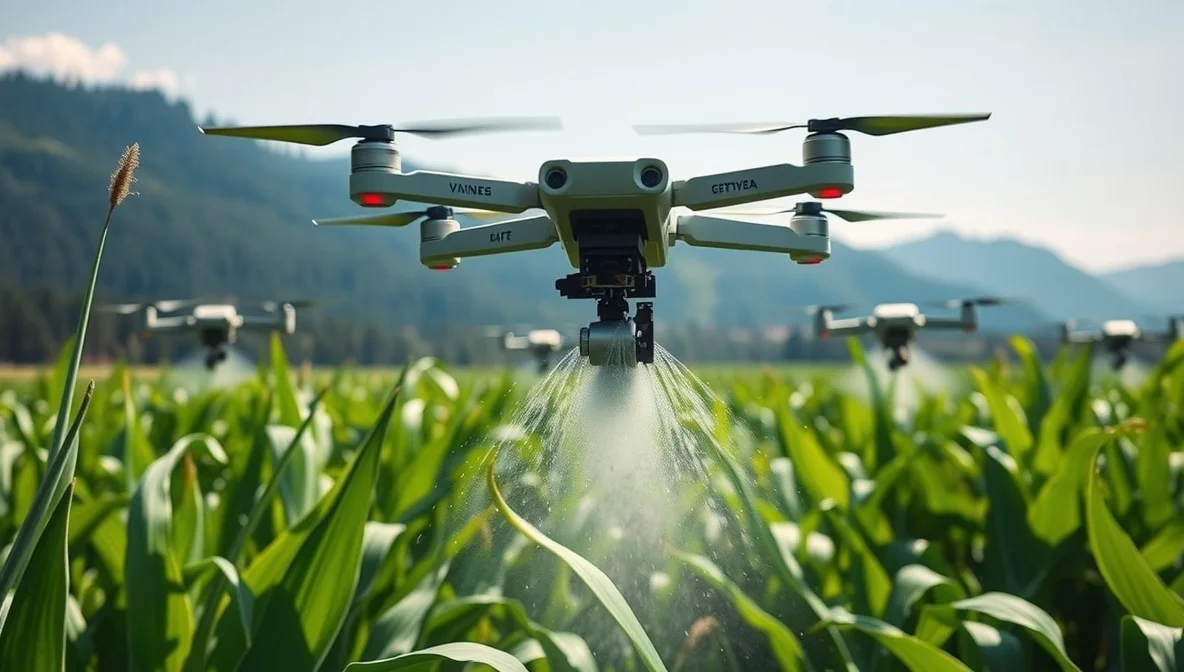
AI-equipped drones fitted with multispectral cameras soar above fields to detect early signs of pest infestations, diseases, nutrient deficiencies, and moisture stress. Unlike traditional blanket spraying, these aerial systems enable targeted chemical application—reducing herbicide and pesticide use by up to 90% in advanced platforms like John Deere’s See & Spray technology.
The economic and environmental benefits are profound: farmers save billions annually while reducing runoff and ecosystem harm. Drones also support precision seeding and AI-driven yield prediction, transforming vast acres of cropland into manageable, data-rich hubs for smarter decision-making.
Predictive Maintenance: Minimizing Downtime
AI monitors machinery health in real time, predicting failures before they occur. John Deere’s systems have helped fleets cut unexpected breakdowns by 40% and generated up to $1 billion in annual industry savings through proactive repairs.
For businesses, this means higher uptime during critical harvest windows and lower repair costs—directly improving ROI on expensive equipment.
Business Advantages: Cost Savings, Higher Yields, and Scalability
- Cost Reduction: 25-30% lower operational expenses through optimized inputs and labor.
- Revenue Growth: 15-20% yield increases translate to higher profits.
- Sustainability Edge: Reduced chemical runoff appeals to eco-conscious markets and regulators.
Small and large farms alike scale operations without proportional labor increases, making AI machinery a competitive necessity.
Investment Opportunities in Agritech
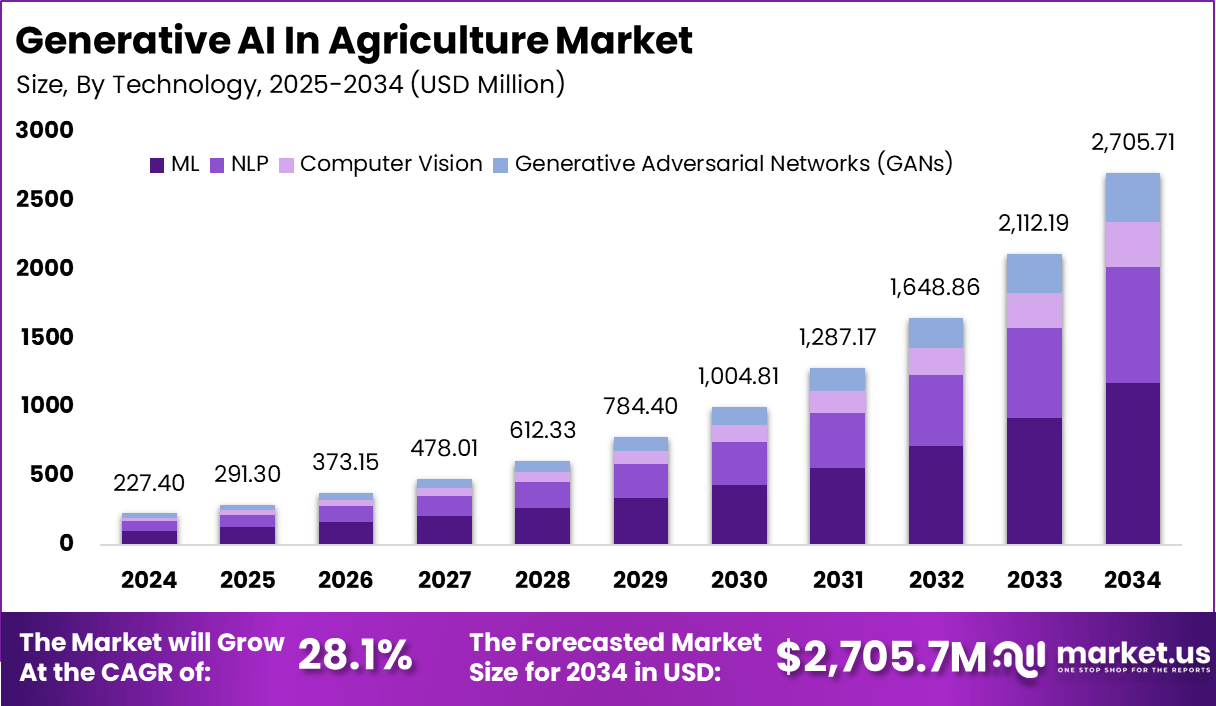
The agritech market is exploding. Generative AI in agriculture alone is projected to reach $2.7 billion by 2034 with a 28.1% CAGR. Overall agritech is forecasted to hit $58.79 billion by 2030.
Investors are backing AI startups in robotics, drone analytics, and predictive platforms. Companies like John Deere (with acquisitions like Blue River Technology) show strong returns through hardware-software bundles and subscription models.
Farm businesses can also invest internally—upgrading to AI machinery often pays for itself within 2-3 seasons via efficiency gains.
Challenges and the Road Ahead
Despite its transformative potential, widespread adoption of AI in agriculture faces real-world hurdles. For smallholder farmers, high upfront costs for autonomous machinery and sensors remain prohibitive. Additionally, reliable internet connectivity—essential for real-time data processing and cloud-based AI models—is still unavailable in many rural regions. Data privacy concerns and the need for digital literacy training further slow progress.
Encouragingly, these barriers are eroding. Hardware prices are falling rapidly, and governments in Europe, North America, and parts of Asia are rolling out subsidies and incentive programs to support agritech adoption. By 2030, industry analysts expect fully autonomous fleets and AI-powered virtual advisers to become standard equipment, making smart machinery essential for resilient, profitable farming—not a luxury.
Conclusion: The Business Case for Intelligent Farming
AI in agricultural machinery is more than a technological upgrade—it is a business multiplier. Farmers gain measurable efficiency, higher yields, and reduced waste. Agribusinesses achieve lower operating costs and scalable operations. For investors, this represents one of the fastest-growing sectors in agritech, with compound annual growth rates exceeding 20% in precision farming markets.
Adopting these technologies today positions forward-thinking farmers and companies for long-term success in a volatile climate and competitive global market. The future of farming is intelligent, autonomous, and—above all—highly profitable.