




Discover how strategic investments in global sanitation projects deliver exceptional financial returns while advancing ESG goals. From 5–46x ROI to billions in institutional capital from mutual funds, wealth managers, and investment banks — clean water is the smart, sustainable profit engine of the 21st century. (209 characters)
In today’s investment landscape, few opportunities combine purpose with profit as powerfully as global sanitation projects. With 2.2 billion people still lacking safely managed drinking water and 3.4 billion without safely managed sanitation, the crisis is not only humanitarian — it is an economic goldmine.
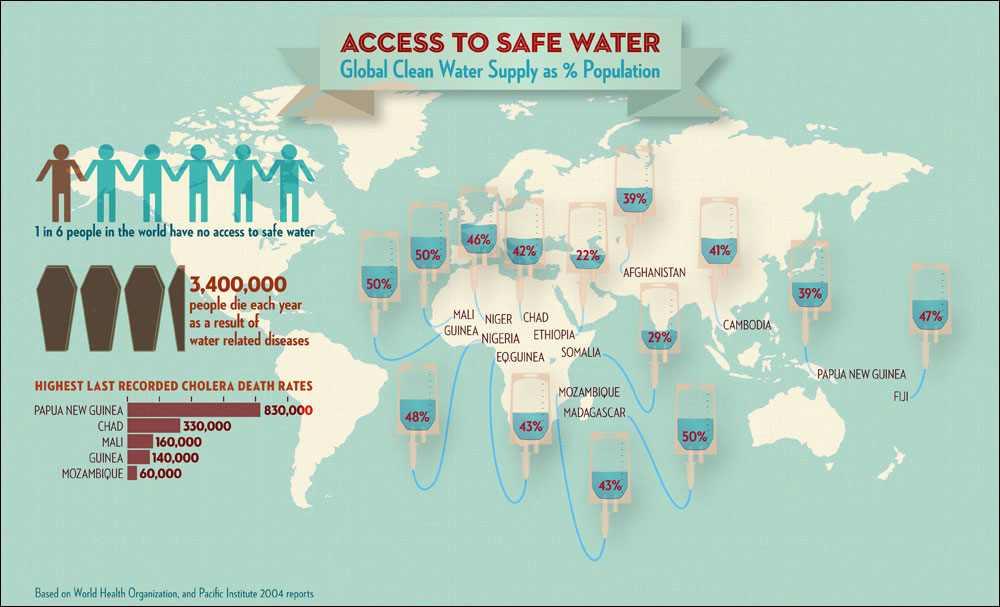
Smart capital is already flowing. ESG mutual funds, wealth management firms, and investment banks are deploying billions into water and sanitation infrastructure, drawn by proven returns, regulatory tailwinds, and the undeniable long-term value creation. This is impact investing at its most compelling: projects that generate measurable profit while addressing one of humanity’s greatest challenges.
“Every US$1 spent on water supply and sanitation in Africa returns US$7 — and could boost GDP by 5%, delivering an annual economic gain of US$200 billion across the continent alone.” — World Bank (2025)
The numbers are clear. Sanitation investments routinely deliver benefit-cost ratios between 5:1 and 46:1 in developing regions. Every dollar invested in improved drinking water supplies generates $4–$8 in economic returns. For forward-thinking investors, clean water is no longer a cost center — it is a high-yield asset class.
The Massive Market Opportunity: Why Sanitation Is Ripe for Investment
The global water and sanitation infrastructure gap is staggering. The World Bank estimates $6.7 trillion in water-related investments will be needed by 2030, rising to $22.6 trillion by 2050. Governments alone cannot close this gap — which is precisely why private capital, ESG funds, and institutional investors are stepping in.
Public-private partnerships (PPPs), green bonds, and performance-based contracts are unlocking new revenue streams. Utilities in emerging markets are being professionalized to generate stable cash flows. Investors benefit from long-term contracts, inflation-linked tariffs, and measurable ESG metrics that satisfy both regulators and clients.
“The sanitation economy is where investment and impact meet.” — Sanitation Economy thought leaders (2025)
Engineers and project owners already know the technical feasibility. Investors are now discovering the financial upside: resilient infrastructure that withstands climate shocks while delivering predictable returns.
Quantifying the Returns: Proven High ROI in Sanitation Projects
The economic case is ironclad. Classic studies by Hutton et al. (2007, updated analyses) show that water and sanitation improvements are cost-beneficial in every developing sub-region. Benefit-cost ratios range from 5:1 in the least developed areas to as high as 46:1 for targeted interventions.
Recent World Bank data reinforces this: sanitation projects in Africa deliver $7 return per $1 invested. In Latin America and Asia, PPP wastewater treatment plants have achieved payback periods under 10 years while generating power from biogas and selling treated water.
ESG-focused funds like the Virtus Duff & Phelps Water Fund, Robeco Sustainable Water, and BlackRock’s Circular Economy Fund explicitly target companies in water supply, sanitation, and circular systems — delivering both financial performance and measurable impact.

Investors are willing to pay a premium — up to 63 basis points — for ESG mandates because the risk-adjusted returns and resilience are superior in the long term. Short-term costs give way to long-term gains in firm valuation and operational efficiency.
For wealth managers and family offices, these projects offer portfolio diversification, inflation hedging, and alignment with client demand for values-driven investing.
How ESG, Wealth Management, and Investment Banks Are Driving Capital to Sanitation
Institutional capital is pouring in. ESG mutual funds now exceed $630 billion in assets under management (ICI, 2026), with dedicated water and sanitation strategies growing rapidly. Investment banks are structuring innovative financing — green bonds, sustainability-linked loans, and blended finance vehicles — that de-risk projects for private investors.
Wealth management platforms increasingly recommend water-themed allocations for high-net-worth clients seeking both alpha and impact. The result? A virtuous cycle: better-governed utilities attract more capital, which improves service delivery, which generates higher revenues and further investor confidence.
“Investing in ESG is no longer optional — it is the path to resilient, long-term profitability.” — Leading sustainable investment analysts
Engineers and project developers benefit directly: access to larger funding pools means faster project scaling and world-class technology deployment.
Strategic Pathways for Investors and Project Leaders
Whether you are an engineer evaluating project bankability, a fund manager seeking the next ESG alpha, or a wealth advisor building client portfolios, the message is the same: global sanitation is investable, scalable, and profitable.
Start with data-driven feasibility studies that incorporate full economic returns — including health, productivity, and environmental externalities. Partner with development finance institutions for de-risking. Leverage ESG reporting frameworks to attract premium capital.
The economics of clean water are no longer theoretical. They are delivering measurable profits today.
Conclusion: Invest in Water, Reap the Future
The era of viewing sanitation solely as a social good is over. It is now a premier investment thesis — one that aligns profit, purpose, and planetary resilience. For owners, engineers, and sophisticated investors, the opportunity is clear: those who act now will capture both financial upside and lasting legacy.
Clean water is not just an expense. It is the ultimate high-return, impact-driven asset class.
Ready to explore specific opportunities? Connect with specialized ESG water funds and advisory platforms shaping the next decade of infrastructure finance.
References
- WORLD BANK. 2024. Scaling up finance to ensure a water-secure future for all [online]. Available at: https://blogs.worldbank.org/en/voices/scaling-up-finance-to-ensure-a-water-secure-future-for-all [Accessed 17 April 2026].
- HUTTON, G. and BARTRAM, J. 2007. Global cost-benefit analysis of water supply and sanitation interventions. Journal of Water and Health, 5(4), pp. 481–502. Available at: https://pubmed.ncbi.nlm.nih.gov/17878562/ [Accessed 17 April 2026].
- INVESTMENT COMPANY INSTITUTE (ICI). 2026. ESG Investing: February 2026 [online]. Available at: https://www.ici.org/research/stats/esg_investing [Accessed 17 April 2026].
- UN-WATER. 2025. Progress on household drinking-water, sanitation and hygiene 2000–2024: Special focus on inequalities [online]. Available at: https://www.unwater.org/publications/sdg-6-progress-reports [Accessed 17 April 2026].
- BLACKROCK. 2026. BGF Circular Economy Fund (A2) [online]. Available at: https://www.blackrock.com/sg/en/products/310165/blackrock-circular-economy-fund [Accessed 17 April 2026].
- ROBECO. 2026. Robeco Sustainable Water F USD [online]. Available at: https://www.robeco.com/en-int/products/funds/isin-lu2146191486/robeco-sustainable-water-f-chf [Accessed 17 April 2026].
- WORLD BANK. 2025. New Program to Accelerate Access to Water, Sanitation, and Hygiene in Eastern and Southern Africa [online]. Available at: https://www.worldbank.org/en/news/press-release/2025/09/30/new-program-to-accelerate-access-to-water-sanitation-and-hygiene-in-eastern-and-southern-africa [Accessed 17 April 2026].
- MORNINGSTAR. 2025. Global Sustainable Fund Flows: Q4 2025 in Review [online]. Available at: https://www.morningstar.com/business/insights/research/global-esg-flows [Accessed 17 April 2026].