




Beyond the Price Tag: How NASA’s Multi-Billion Dollar Budget Actually Reinvents the Global Economy and Delivers Massive Dividends to the Population in 2026 and Beyond
The shimmering expanse of the cosmos has always beckoned, but in an era of fluctuating global economies, the price of “reaching for the stars” is under more scrutiny than ever. To the casual observer, NASA’s multi-billion dollar budget might look like a vault of cash launched into a vacuum. However, as we look at the fiscal landscape of 2026, a deeper truth emerges: space exploration is not a luxury—it is a high-stakes investment in our survival and our bank accounts.
“The best way to predict the future is to create it,” famously said Peter Drucker.
NASA does exactly that. For every dollar funneled into the Artemis missions or Mars exploration, a ripple effect of innovation, job creation, and technical mastery is felt in every corner of the globe. Yet, the debate remains: can we justify the cost of the universe when our own planet faces mounting challenges? In this article, we peel back the layers of the NASA ledger to examine the staggering financial impacts and the profound ways space exploration touches the lives of the global population—for better and for worse.
The glittering stars and distant galaxies have always beckoned humanity, but reaching them comes with a earthly price tag that often sparks heated debate. For decades, NASA has stood as a beacon of discovery, pushing the boundaries of what is possible. Yet, as global economies face unprecedented challenges, many ask: Is it justifiable to spend billions on the stars when there are problems on the ground? To understand the value of space exploration, we must look beyond the launchpad. It isn’t just about rockets; it is a massive financial engine that impacts every aspect of modern life. As legendary astronomer Carl Sagan once said:
“Somewhere, something incredible is waiting to be known.” But how much are we paying to know it, and what does the average person get in return? In this deep dive, we break down the staggering costs and the life-changing impacts—both positive and negative—of NASA’s mission to the stars.
The Financial Blueprint: Breaking Down NASA’s Annual Budget
For the fiscal year 2026, the proposed NASA budget sits at approximately $24.4 billion. While that sounds like an astronomical figure, it represents less than 0.4% of the total U.S. federal budget. To put it in perspective, for every dollar spent by the government, less than half a penny goes to space.
This funding is strategically divided:
-
Deep Space Exploration: Over $7.6 billion is dedicated to the Artemis campaign, aiming to return humans to the Moon and eventually Mars.
-
Science & Earth Monitoring: Approximately $7.6 billion goes toward studying our own planet’s climate and searching for life elsewhere.
-
Space Operations: $4.4 billion sustains the International Space Station (ISS) and plans for its eventual transition to commercial hubs.
The Economic Ripple Effect: How Space Dollars Stay on Earth
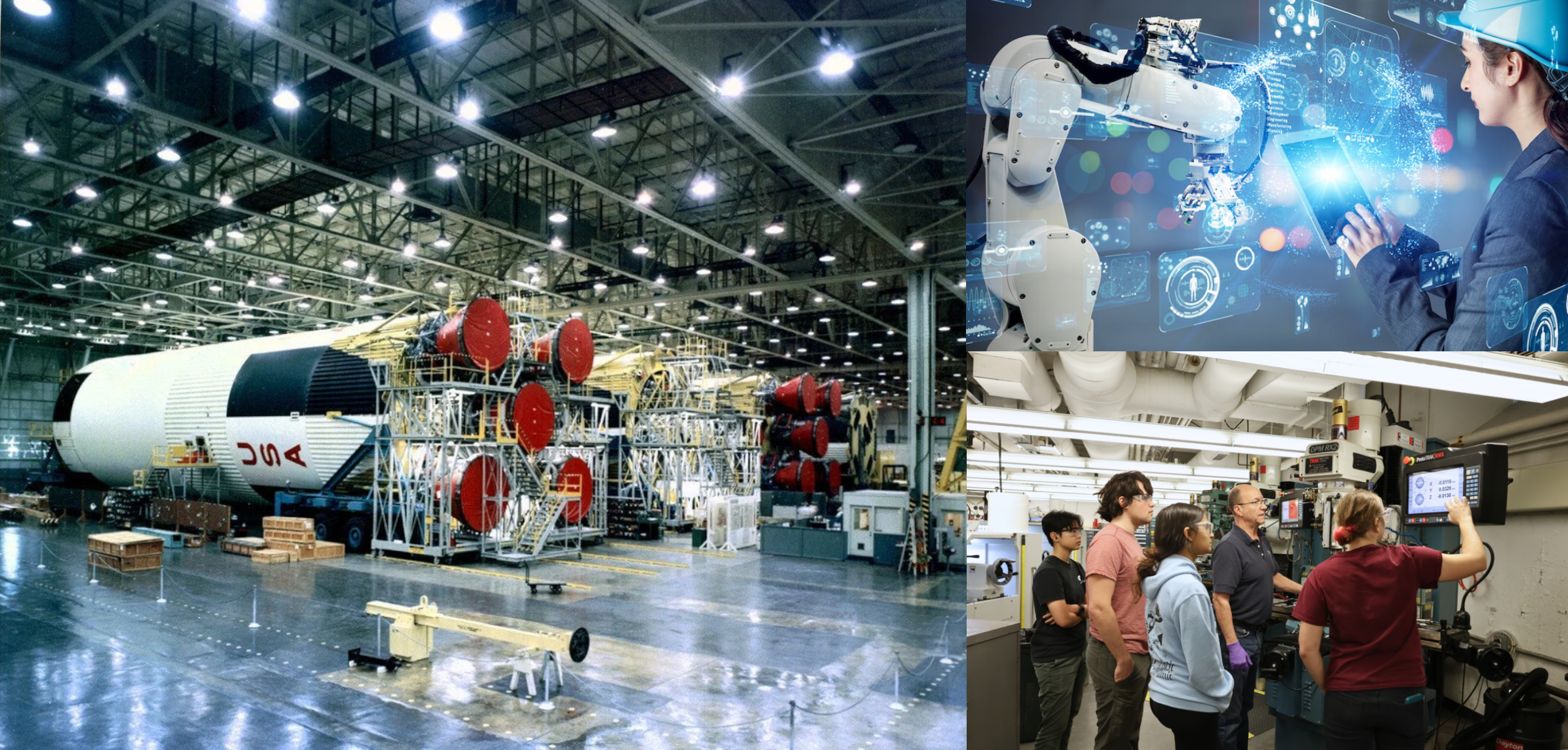
One of the most common misconceptions is that NASA “throws money into space.” In reality, every cent is spent right here on Earth. NASA generates more than $75.6 billion in total economic output annually. This creates a massive network of high-paying jobs and fuels local economies in states like California, Maryland, and Texas.
-
Job Creation: NASA employs roughly 17,000 civil servants but supports hundreds of thousands of additional jobs through private contractors like SpaceX, Boeing, and Lockheed Martin.
-
STEM Motivation: The agency acts as a primary catalyst for students to enter science and engineering fields, ensuring a skilled workforce for the future.
As Neil deGrasse Tyson famously noted:
“Space exploration is a force of nature unto itself that no other force in society can rival.”
The “Hidden” Gains: Spinoff Technologies That Save Lives
The financial impact isn’t just in the ledger; it’s in your pocket and your doctor’s office. NASA research has led to over 2,000 spinoff technologies. When we invest in space, we aren’t just building rockets; we are inventing the future of the population.
| Technology | Origin | Impact on Population |
| CMOS Sensors | Space Cameras | The technology in your smartphone camera. |
| Infrared Thermometers | Star Temperature Research | Used in every hospital for non-invasive care. |
| Water Purification | ISS Life Support | Provides clean water in developing nations. |
| Artificial Limbs | Robotics Research | More responsive, durable prosthetics for amputees. |
Your smartphone camera exists thanks to NASA’s miniaturized imaging technology (Source: Pexels)
The Cost of Ambition: Negative Financial Impacts and Public Skepticism
Despite the benefits, space exploration is not without its critics. The most significant “negative” impact is the opportunity cost. Skeptics argue that $25 billion could be better spent on healthcare, ending homelessness, or direct climate action.
Furthermore, the history of space flight is littered with cost overruns. The James Webb Space Telescope, for instance, ended up costing nearly $10 billion—ten times its original estimate. For the population, these overruns can feel like a mismanagement of public funds, especially when domestic issues remain unresolved.
Conclusion: A Small Price for the Infinite?
The question of NASA’s cost is ultimately a question of vision. While billions are spent, the return on investment—roughly $3 for every $1 spent—suggests that space exploration is one of the most profitable endeavors in human history. It provides the tools to monitor our climate, the technology to heal our sick, and the inspiration to dream bigger.
As we look toward 2026 and the upcoming Artemis missions, we must weigh the immediate costs against the long-term survival and prosperity of our species. Is it expensive? Yes. But as the philosopher Socrates once hinted, we must rise above the Earth to understand the world we live in.
“Man must rise above the Earth—to the top of the atmosphere and beyond—for only thus will he fully understand the world in which he lives.”
Investing in NASA is not a choice between Earth and Space; it is an investment in the humanity of tomorrow.