



Introduction: The New Imperative for Intelligent Supply Chains
In an era defined by volatile markets, shifting consumer expectations, and increasingly complex global logistics, businesses can no longer rely on traditional supply chain management. Instead, forward-thinking enterprises are turning to artificial intelligence to build supply chains that anticipate disruption before it strikes. According to McKinsey, companies that fully digitize their supply chains can expect to boost annual earnings growth by 3.2% and reduce operational costs by up to 30%.
1
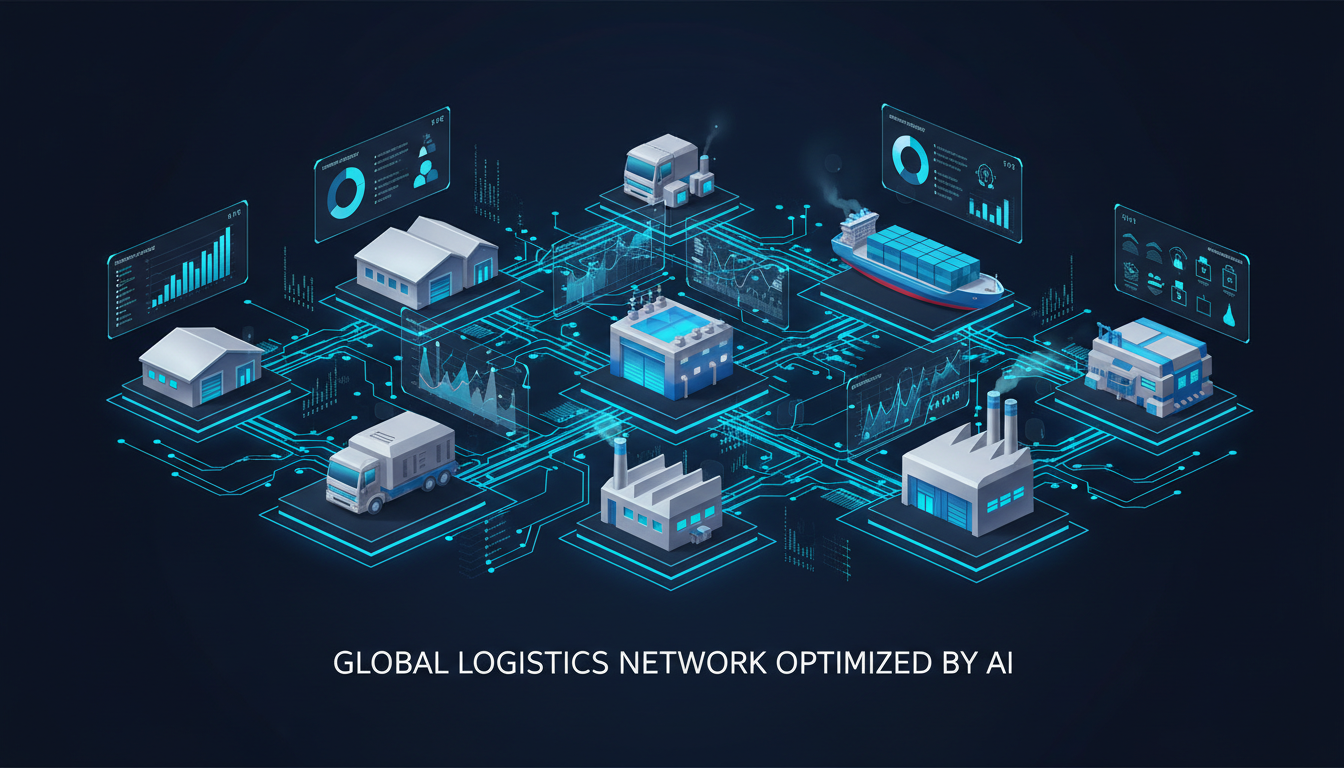
From Fragile to Agile — Why AI-Driven Supply Chains Are No Longer Optional
Moreover, the urgency has never been greater. The COVID-19 pandemic exposed deep fragilities in just-in-time models, while geopolitical tensions continue to reconfigure trade routes overnight. As a result, AI-driven supply chain optimization has rapidly evolved from an experimental advantage into a strategic necessity. Consequently, organizations that delay adoption risk falling behind competitors who already leverage machine learning, predictive analytics, and autonomous decision-making systems.
This article explores how AI transforms every link of the supply chain — from demand forecasting and procurement to warehouse management and last-mile delivery. Furthermore, it examines the regulatory landscape, quantifiable ROI, and the cultural shifts required to unlock the full 30% cost-reduction potential that leading research consistently identifies.
“The best way to predict the future is to create it.”
— Peter Drucker, Management Theorist
Predictive Analytics and Demand Forecasting: The Brain of the Modern Supply Chain
At the heart of AI-driven optimization lies predictive analytics — the ability to process enormous volumes of historical data, market signals, and external variables to forecast demand with remarkable precision. Traditional statistical methods typically achieve 60–70% accuracy at the SKU level. In contrast, machine learning models consistently surpass 85% accuracy, and in some industries, they reach above 95%.
2
For example, Walmart uses AI algorithms to analyze over 200 million data points per day — including weather forecasts, local events, and social media sentiment — to optimize inventory across 10,500 stores worldwide. Consequently, the retail giant has reduced out-of-stock incidents by 16% while simultaneously decreasing excess inventory costs. Similarly, Unilever employs digital twins of its entire supply chain to run thousands of “what-if” scenarios, thereby enabling proactive decisions rather than reactive firefighting.
Additionally, natural language processing (NLP) models now scan supplier communications, news feeds, and regulatory filings to detect early warning signs of supply disruptions. This approach shifts the paradigm from reactive crisis management to proactive risk mitigation. Therefore, companies with mature AI forecasting capabilities report 20–50% reductions in lost sales due to stockouts, as Gartner research confirms.
2
“Without data, you’re just another person with an opinion.”
— W. Edwards Deming, Statistician & Quality Management Pioneer
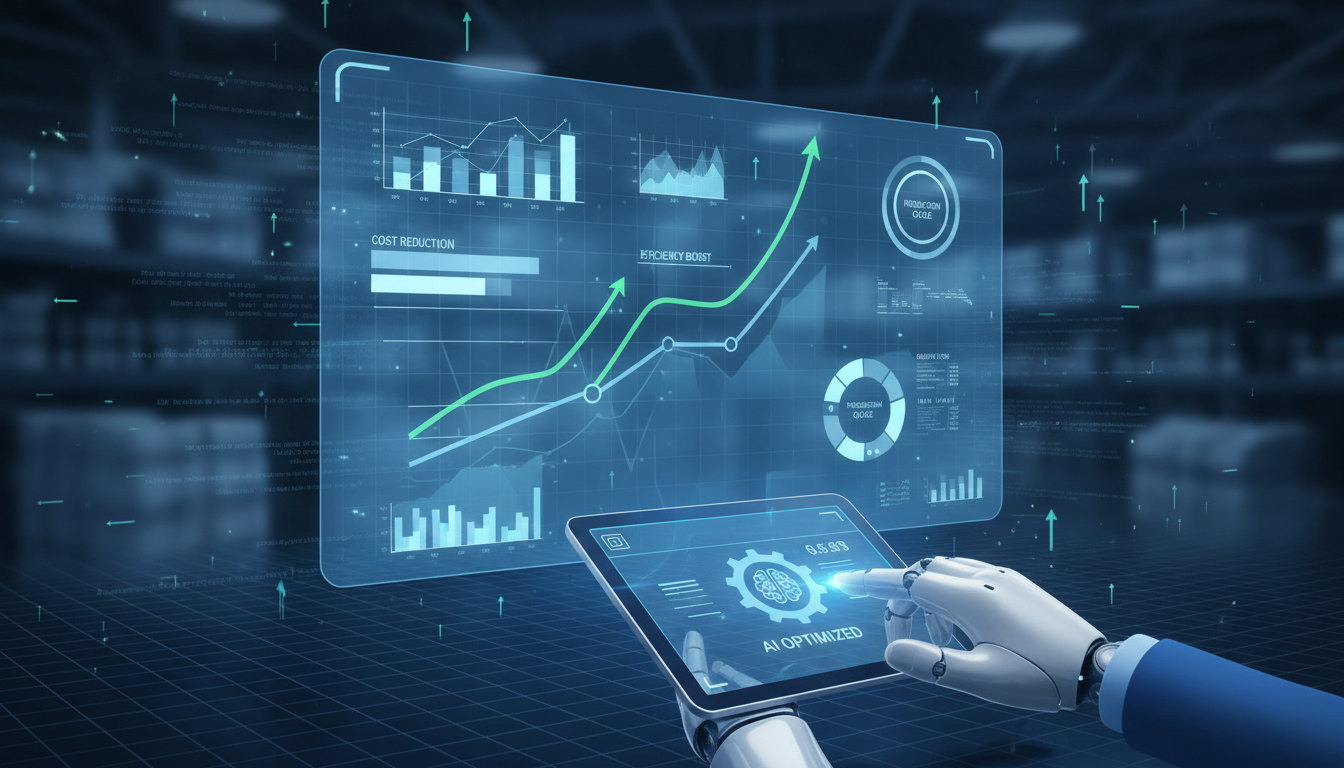
Autonomous Warehousing and Smart Logistics: From Efficiency to Intelligence
Beyond forecasting, AI fundamentally reimagines physical operations within warehouses and distribution centers. Autonomous mobile robots (AMRs), computer-vision quality inspection, and AI-optimized slotting algorithms collectively deliver throughput gains of 25–40%. For instance, Amazon deploys over 750,000 robots across its fulfillment network, which has reduced the average order processing time from hours to minutes.
7
Furthermore, route optimization engines powered by reinforcement learning now process real-time traffic, weather, and vehicle capacity data to dynamically adjust delivery routes. DHL reports that its AI routing system has cut fuel costs by 15% and improved on-time delivery rates by 18%. Meanwhile, Maersk uses machine learning to optimize container vessel loading patterns, thereby reducing both fuel consumption and port turnaround times.
However, the transformation extends beyond robots and algorithms. AI-powered control towers — centralized visibility platforms — integrate data from every node of the supply chain into a single real-time dashboard. Consequently, supply chain leaders gain end-to-end visibility, which enables faster decision-making and dramatically reduces the bullwhip effect. As Deloitte emphasizes, smart factories that integrate AI control towers achieve 10–12% improvements in manufacturing output alongside 15–30% reductions in quality-related costs.
7
“Any sufficiently advanced technology is indistinguishable from magic.”
— Arthur C. Clarke, Science Fiction Author & Futurist
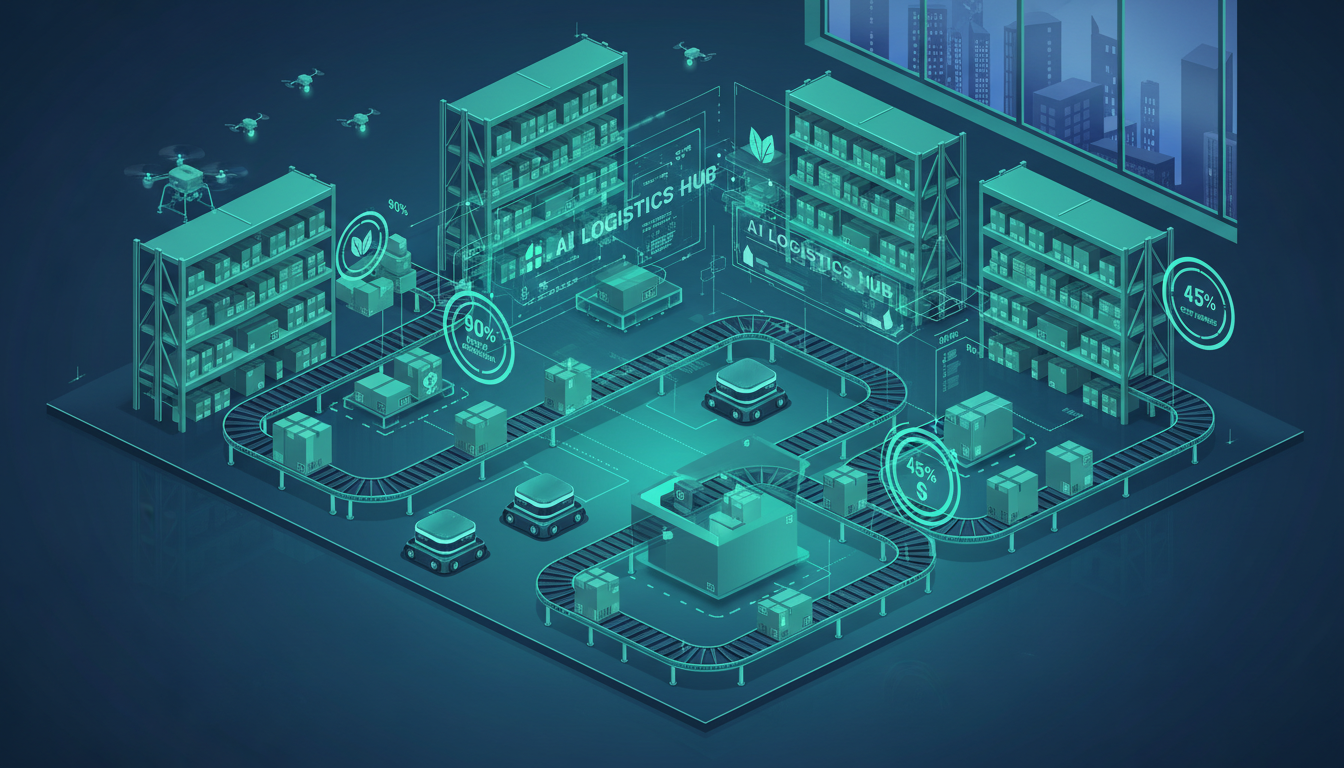
Governance, Compliance, and Measurable ROI: Building the Business Case
While the technological possibilities are compelling, sustainable AI adoption demands robust governance frameworks. The European Union’s Artificial Intelligence Act (Regulation 2024/1689) establishes the world’s first comprehensive legal framework for AI, classifying supply chain applications under varying risk tiers and requiring transparency, human oversight, and periodic audits.
3
Similarly, the United States’ National Artificial Intelligence Initiative Act of 2020 promotes responsible AI development while incentivizing research and workforce training.
4
In addition, the OECD’s Recommendation on Artificial Intelligence provides internationally recognized principles — including transparency, accountability, and security — that guide corporate AI governance strategies across 46 signatory nations.
5
Consequently, organizations that embed compliance into their AI deployment from the outset avoid costly retroactive remediation and build stronger stakeholder trust.
From a financial perspective, the return on investment is substantial. According to the World Economic Forum, early adopters of AI in manufacturing and logistics achieved an average of 30% reduction in operational costs, a 50% decrease in time-to-market, and a 25% improvement in customer satisfaction scores.
8
Furthermore, Chopra and Meindl note that AI integration reduces total supply chain management costs by enabling dynamic pricing, just-in-time procurement, and predictive maintenance — all of which contribute to the bottom line.
6
“In the middle of difficulty lies opportunity.”
— Albert Einstein, Theoretical Physicist & Nobel Laureate
Conclusion: The Competitive Mandate of AI-Driven Supply Chains
To summarize, artificial intelligence is no longer an optional enhancement for supply chain management — it is the defining differentiator between industry leaders and laggards. Throughout this article, we have examined how predictive analytics eliminates demand uncertainty, how autonomous warehousing reshapes physical operations, and how governance frameworks ensure sustainable, compliant deployment.
Indeed, the evidence is unequivocal: organizations that commit to AI-driven optimization consistently achieve cost reductions of 20–30%, significant improvements in service levels, and enhanced resilience against disruption. However, success requires more than technology. It demands a cultural transformation — one that empowers data-literate teams, invests in ethical AI governance, and views the supply chain not as a cost center but as a strategic asset.
Ultimately, the question is not whether AI will transform your supply chain. The real question is whether your organization will lead the transformation or be disrupted by those who do. The 30% cost reduction is achievable, documented, and within reach for every enterprise willing to embrace the intelligent supply chain of tomorrow.
“It is not the strongest of the species that survives, nor the most intelligent, but the one most responsive to change.”
— Charles Darwin, Naturalist
References
| Disclaimer: This article is provided for informational purposes only and does not constitute professional advice. The statistics cited reflect publicly available reports at the time of writing. Readers should verify current data before making business decisions. |