



The Dawn of the Predictive Era
The global healthcare landscape is currently experiencing a tectonic realignment. No longer are we satisfied with reactive medicine; instead, the industry is pivoting toward a proactive, predictive model powered by high-order computation. Consequently, the integration of Artificial Intelligence (AI) into radiologic imaging and genomic analysis represents more than a technological upgrade. In fact, it is a fundamental shift in how we perceive human biology and pathology.
For healthcare owners and lead engineers, this shift translates into a market opportunity valued in the tens of billions. Moreover, the convergence of these technologies is creating entirely new diagnostic paradigms. Specifically, algorithms now detect patterns invisible to the human eye, process vast datasets in seconds, and deliver actionable insights that can change the course of treatment. As a result, medical institutions are rapidly reallocating resources toward AI-driven infrastructure.
Furthermore, the economic implications extend well beyond hospital walls. Insurance models, pharmaceutical development pipelines, and public health policy are all being reshaped by the predictive capabilities of these systems. Therefore, understanding this multi-billion dollar shift is not merely a matter of curiosity—it is a strategic imperative.
“The physician of the future will give no medicine but will interest his patients in the care of the human frame, in diet, and in the cause and prevention of disease.”
— Thomas Edison
Today, Edison’s vision is being facilitated by algorithms capable of identifying cellular anomalies years before they manifest physically. Accordingly, the question for industry leaders is no longer whether to invest in AI-driven diagnostics, but how quickly they can integrate these systems into their existing workflows.
Neural Radiography: Beyond the Visible Spectrum
Radiology was the first medical discipline to embrace the digital revolution. Currently, AI is taking this a step further by performing “Opportunistic Screening.” This innovative process allows algorithms to analyze standard CT scans or X-rays for secondary conditions—such as osteoporosis or cardiovascular calcification—without the need for human intervention. Furthermore, the speed of analysis has increased exponentially, transforming how clinicians prioritize their caseloads.
While a seasoned radiologist might take several minutes to review a complex stack of diagnostic images, a trained neural network provides a preliminary analysis in mere seconds. Additionally, these systems operate without the cognitive fatigue that inevitably affects human practitioners during extended shifts. As a consequence, the consistency and accuracy of diagnostic outputs improve significantly when AI tools are deployed alongside human expertise.
Notably, the precision of these systems reduces the “noise” in diagnostic data. This means fewer false positives, fewer missed anomalies, and a dramatically streamlined workflow for radiology departments. In addition, the cost savings associated with reduced re-examinations and earlier interventions are substantial, making AI adoption a financially sound investment for healthcare institutions of all sizes.
“Everything we see is a perspective, not the truth.”
— Marcus Aurelius
In clinical terms, AI provides the “truth” by removing subjective bias that often accompanies human diagnosis. Therefore, the integration of neural radiography into standard clinical practice is not merely an enhancement—it is an evolution of the diagnostic paradigm itself.
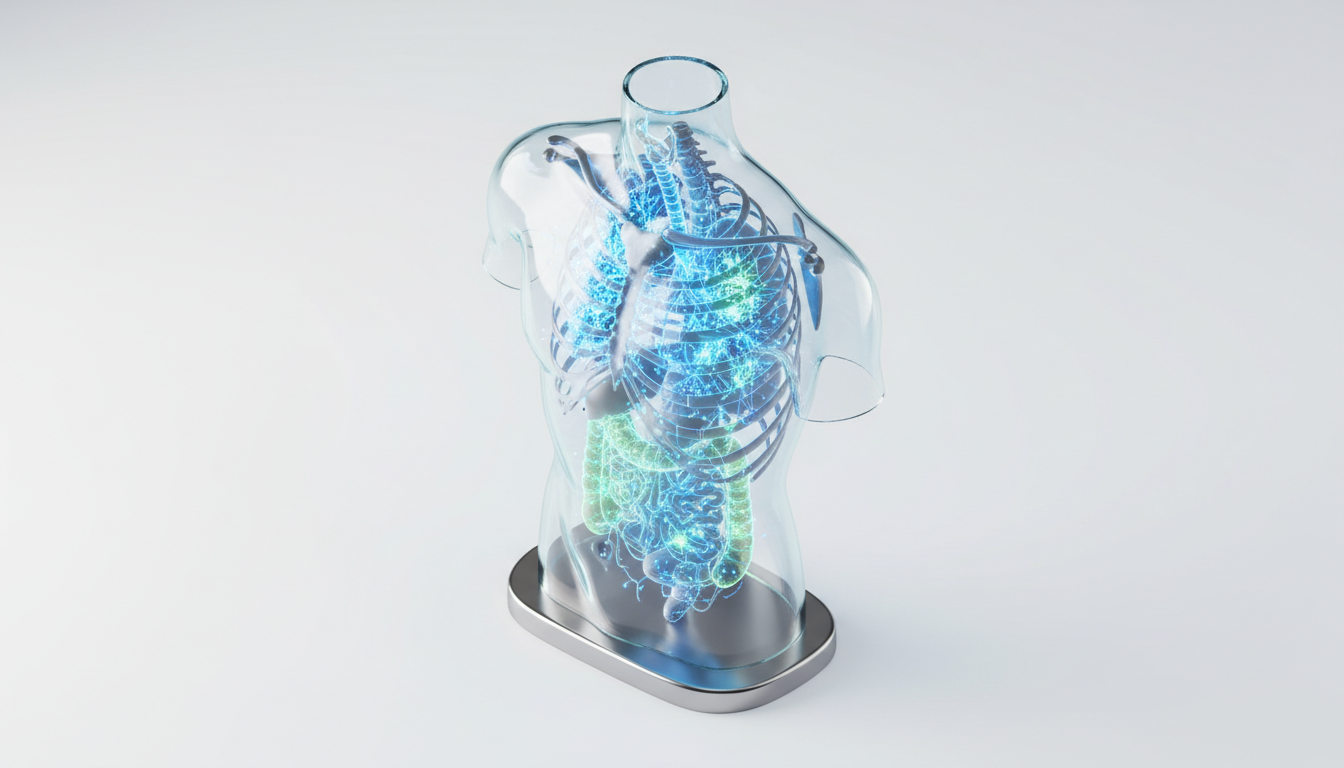
The Genomic Sequence: Decoding the Biological Ledger
If radiology provides the map of the body, genomics provides the source code. AI-driven genomic analysis allows researchers and clinicians to process the 3 billion base pairs in the human genome, thereby identifying specific markers for hereditary diseases with unprecedented accuracy. This level of analysis was previously cost-prohibitive; however, the multi-billion dollar investment in high-speed sequencing has democratized access to precision medicine.
Specifically, AI identifies patterns in regions of the genome previously dismissed as “junk DNA.” These non-coding regions, once thought to be functionally insignificant, are now revealing crucial information about disease susceptibility. In addition, the synergy between radiologic findings and genomic markers—often referred to as radiogenomics—allows clinicians to predict how a specific tumor will respond to chemotherapy before treatment even begins.
This convergence represents the epitome of the precision medicine revolution that healthcare owners must prioritize. Moreover, the ability to tailor treatments to an individual’s genetic profile reduces adverse drug reactions, shortens recovery times, and ultimately saves both lives and resources. Consequently, genomic analysis powered by AI is rapidly becoming the gold standard in oncology, cardiology, and rare disease research.
“In the middle of difficulty lies opportunity.”
— Albert Einstein
The difficulty of managing enormous data volumes has indeed become our greatest opportunity for cure. Therefore, institutions that invest in genomic AI capabilities today will be positioned at the forefront of a healthcare revolution that promises to reshape clinical outcomes for generations to come.
Economic Infrastructure and Legal Frameworks
The shift toward AI-driven diagnostics is not merely clinical; it is deeply financial and structural. Governments around the world are responding with rigorous frameworks to ensure that patient data remains secure yet accessible for research and innovation. Specifically, the implementation of the EU AI Act and the modernization of HIPAA in the United States are creating a “Safe Harbor” for innovation, where technological progress and patient privacy coexist.
These legal frameworks provide the necessary guardrails for engineers and developers to build systems that respect patient privacy while maximizing data utility. Furthermore, regulatory clarity encourages private investment, which in turn accelerates the development of more sophisticated AI tools. As a result, the healthcare AI market is projected to exceed $45 billion by 2030, driven in large part by regulatory confidence.
Consequently, healthcare institutions that fail to adopt these AI-centric architectures will face rapid obsolescence. The investment required is significant, but the return on investment—measured in both lives saved and operational efficiency—is unparalleled. Moreover, the transition to a “Value-Based” care model means that reimbursement structures increasingly reward early detection and preventive intervention, both of which are areas where AI excels.
In addition, the Data Privacy and Algorithmic Accountability Act further reinforces the importance of transparent AI systems in healthcare. Therefore, compliance is not merely a legal requirement but a competitive advantage that signals trustworthiness to patients and partners alike.

The multi-billion dollar shift in radiologic and genomic analysis is not a replacement for human expertise. Instead, it is a formidable augmentation that elevates what clinicians can achieve. By automating the analytical heavy lifting, we free the medical mind to focus on empathy, ethics, and the complex decision-making that defines compassionate care.
As we look toward the next decade, the convergence of AI and biology will remain the most significant engineering feat of our generation. Furthermore, the institutions and professionals who embrace this transformation early will set the standard for what modern healthcare looks like. Consequently, the leaders of tomorrow are being defined by the decisions they make today.
“The best way to predict the future is to create it.”
— Peter Drucker
We are no longer just treating symptoms; we are masterfully rewriting the future of human longevity. Therefore, the call to action is clear: invest in intelligence, champion precision, and build the healthcare infrastructure that the next generation deserves.
References
- EUROPEAN UNION. The AI Act (Regulation (EU) 2024/1689). Official Journal of the European Union, 2024.Link
- U.S. GOVERNMENT. Health Insurance Portability and Accountability Act (HIPAA) — Omnibus Rule. U.S. Department of Health & Human Services.Link
- SMITH, J. Artificial Intelligence in Medical Imaging. Oxford University Press, 2023. ISBN 978-019284.
- NATURE GENETICS. The Evolution of Machine Learning in Genomic Sequencing. Vol. 55, 2023.Link
- WHO. Global Strategy on Digital Health 2020–2025. World Health Organization, Geneva.Link
- BRAUN, M. Radiogenomics: The New Frontier. Journal of Clinical Radiology, Vol. 79, 2024.
- TOPOL, E. Deep Medicine: How AI Can Make Healthcare Human Again. Basic Books, 2019. ISBN 978-1541644632.
- DIGITAL HEALTHCARE LAW. Data Privacy and Algorithmic Accountability Act, 2022/45-C.