



From Red Ink to Real Revenue: The AI Fix for Denied Claims
Every year, healthcare clinics bleed billions—not from patient volume or pricing pressures, but from preventable claim denials. The good news? Artificial intelligence is rewriting the rules of revenue cycle management. By automating tedious workflows and catching errors before claims go out, AI doesn’t just reduce administrative mistakes—it transforms denied claims into predictable, permanent revenue streams. No more chasing paper. No more write-offs. Just a smarter, faster path to profitability.

The Quiet Crisis Draining Your Clinic’s Revenue
Every year, healthcare providers across the United States lose an estimated $262 billion due to denied insurance claims. That figure is not the result of fraudulent activity or poor medical care. Instead, it stems from something far more insidious: administrative inefficiency. Incorrect billing codes, missing pre-authorization, duplicate submissions, and mismatched patient data — these are the mundane yet devastating errors that quietly erode the financial health of clinics, hospitals, and private practices alike.
Furthermore, according to the American Medical Association’s 2023 Prior Authorization Survey, physicians and their staff spend an average of 14.6 hours per week managing prior authorizations alone. Consequently, this diverts critical resources away from patient care — the core mission of every healthcare organization. Moreover, the administrative burden falls disproportionately on smaller clinics and independent practices, which often lack the staffing to absorb these inefficiencies.
However, a profound shift is underway. Artificial intelligence — specifically machine learning, natural language processing (NLP), and predictive analytics — is rapidly transforming how clinics manage their revenue cycles. As a result, forward-thinking healthcare administrators are not simply reducing denial rates. Rather, they are fundamentally reinventing the financial infrastructure of their organizations. Therefore, this article explores the mechanisms, strategies, and measurable outcomes of AI-powered Revenue Cycle Management (RCM), offering actionable insights for clinic owners, administrators, and healthcare IT professionals.
AI at the Front Lines of Revenue Cycle Management
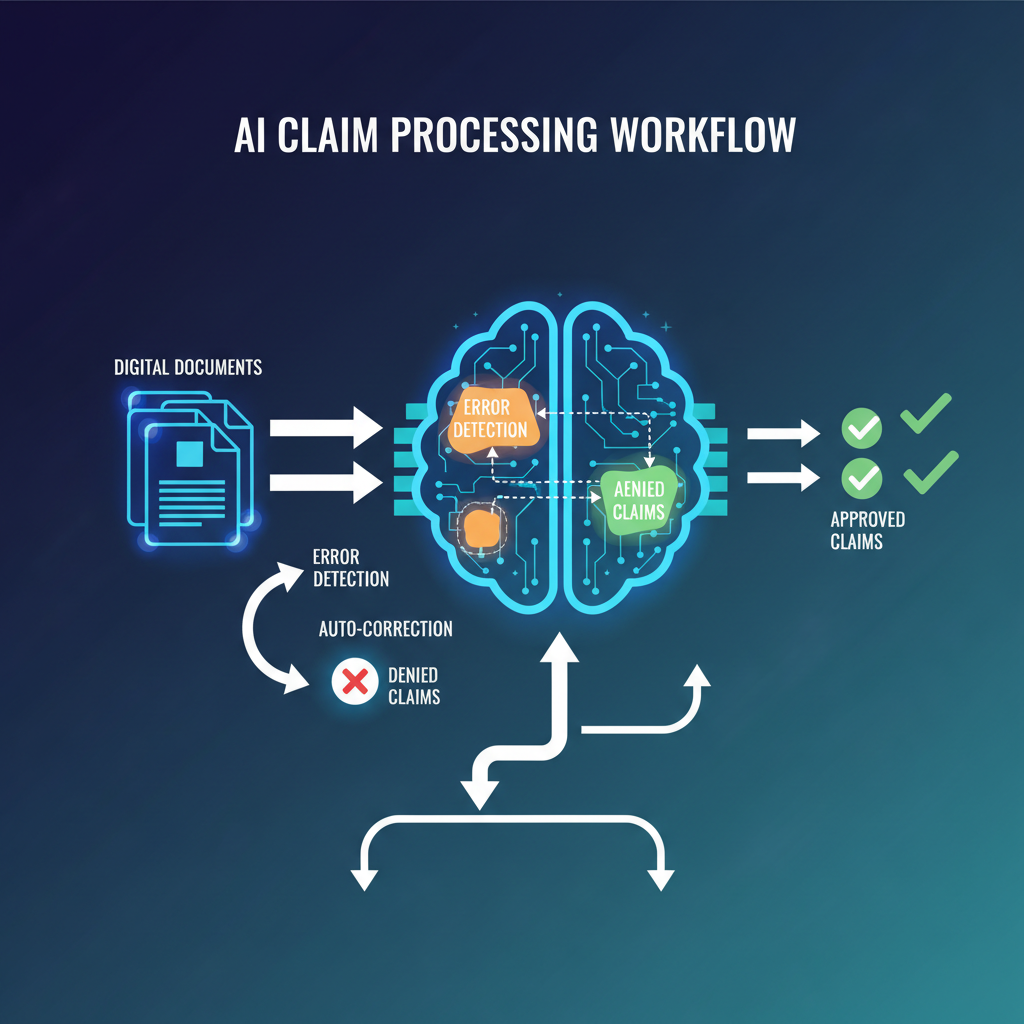
Modern AI platforms built for RCM operate across the entire claim lifecycle — from patient registration through final reimbursement. Consequently, they offer a fundamentally different paradigm compared to traditional billing software. Rather than simply recording transactions, AI systems actively analyze, predict, and intervene at critical junctures.
At the eligibility verification stage, AI-powered tools connect in real-time to payer databases, instantly confirming coverage, co-pay amounts, deductibles, and prior authorization requirements. Moreover, these systems flag discrepancies between patient-provided information and payer records before a claim is ever generated. As a result, eligibility-related denials — historically the leading denial category — can be virtually eliminated.
During clinical documentation and coding, natural language processing engines analyze physician notes and encounter records in real time. Subsequently, these engines suggest accurate ICD-10 and CPT codes, identify documentation gaps, and flag potential down-coding or up-coding risks. According to Gartner’s 2024 Hype Cycle for Healthcare Payers, AI-assisted coding reduces coding errors by an average of 37% while simultaneously improving specificity and compliance with payer requirements.
“The art of progress is to preserve order amid change and to preserve change amid order.”
Alfred North Whitehead — Philosopher and Mathematician
Furthermore, predictive denial analytics represent perhaps the most transformative application. By training on historical claims data — including millions of past denials and approvals — machine learning models learn to identify which claims carry high denial risk. Therefore, billing teams receive prioritized worklists that allow them to address high-risk claims before submission, rather than chasing denials afterward. In practice, leading health systems using predictive analytics report denial rates dropping to below 5% — less than half the industry average.
Additionally, AI-powered prior authorization automation deserves special attention. Traditional prior auth processes are notoriously time-consuming and error-prone. In contrast, modern AI systems can identify authorization requirements at the point of order entry, automatically generate supporting documentation, and submit requests electronically to payers — often reducing authorization turnaround time from days to hours or even minutes.
Workflow Automation and the Elimination of Administrative Errors
The power of AI in RCM extends beyond individual claim-level interventions. Indeed, its transformative potential lies in its capacity to redesign entire administrative workflows, eliminating the systemic inefficiencies that make errors inevitable in the first place.
Consider the typical front-desk check-in process. Traditionally, staff manually verify insurance cards, transcribe demographic information, and confirm benefits — all while managing patient flow. Inevitably, transcription errors occur. However, with AI-enabled intake systems that integrate directly with EHR platforms and payer portals, this process becomes seamless. Specifically, optical character recognition (OCR) captures insurance card data automatically, while AI cross-references it against eligibility databases in real time.
Moreover, AI-driven robotic process automation (RPA) handles the repetitive, rule-based tasks that historically consumed enormous staff time. Tasks such as claim status checking, remittance posting, and denial categorization — once requiring hours of manual effort — are now completed automatically in seconds. Therefore, billing staff can redirect their expertise toward complex problem-solving, patient communication, and strategic denial prevention rather than data entry.
“We cannot solve our problems with the same thinking we used when we created them.”
Albert Einstein — Theoretical Physicist
Critically, AI systems also excel at continuous quality improvement through feedback loops. Unlike static rule-based systems, machine learning models improve with each processed claim. When a denial occurs, the system analyzes the reason code, updates its predictive models, and adjusts future submissions accordingly. Consequently, the system becomes progressively smarter and more effective over time — a capability that traditional RCM software fundamentally cannot replicate.
From a compliance standpoint, AI also provides significant safeguards. Given the complex regulatory environment — including HIPAA requirements, the No Surprises Act, and payer-specific billing guidelines — the risk of inadvertent compliance violations is substantial. Nevertheless, AI compliance monitoring tools continuously scan claims against current regulatory requirements, flagging potential violations before submission. As a result, clinics significantly reduce their exposure to audits, penalties, and legal liability.
A Practical Implementation Roadmap for Clinic Administrators

Understanding the technology is one thing. Successfully implementing it is another challenge entirely. Therefore, the following practical framework provides clinic administrators and revenue cycle directors with a structured approach to AI adoption.
| 01 Conduct a Denial Root-Cause Analysis
Before selecting any technology, thoroughly analyze your current denial patterns. Categorize denials by reason code, payer, service line, and provider. This baseline data will guide your vendor selection and define your success metrics. |
| 02 Evaluate EHR Integration Capability
Any AI RCM solution must integrate seamlessly with your existing Electronic Health Record system. Prioritize vendors with pre-built integrations for your specific EHR platform and request references from comparable-sized organizations. |
| 03 Start with Eligibility and Prior Authorization
These two areas consistently offer the fastest ROI. Implementing AI-powered eligibility verification and prior authorization automation can generate measurable denial reductions within 60 to 90 days of deployment. |
| 04 Train Staff as AI Collaborators
Successful AI adoption requires a cultural shift. Staff must understand that AI augments their expertise rather than replacing them. Invest in comprehensive training that focuses on interpreting AI recommendations and acting on predictive alerts effectively. |
|
05 Establish Continuous Performance Monitoring Define KPIs including first-pass acceptance rate, denial rate by payer, days in accounts receivable, and cost to collect. Review these metrics monthly with your RCM team and your AI vendor to drive continuous improvement. |
Importantly, the investment in AI RCM is highly justifiable from a financial perspective. According to McKinsey & Company’s 2024 analysis, healthcare organizations that fully implement AI-driven revenue cycle optimization achieve an average reduction in operating costs of 15–20% and a corresponding increase in net revenue of 8–12%. Furthermore, the typical payback period for AI RCM investments ranges from 6 to 18 months — making it one of the most financially compelling technology investments available to healthcare providers today.
“In God we trust. All others must bring data.”
W. Edwards Deming — Statistician, Professor, and Pioneer of Quality Management
Conclusion: The Intelligent Clinic of Tomorrow Starts Today
The evidence is unambiguous. AI-powered Revenue Cycle Management is no longer an experimental luxury reserved for large hospital systems. Rather, it has become an operational imperative for any healthcare organization committed to financial sustainability and clinical excellence. As payer policies grow increasingly complex and administrative burdens continue to intensify, clinics that cling to manual processes will find themselves at a growing competitive and financial disadvantage.
Conversely, clinics that embrace intelligent automation are experiencing a remarkable transformation. They are converting their revenue cycles from cost centers into strategic assets. Their staff work with greater confidence, their cash flow becomes more predictable, and their patients experience fewer billing surprises. Moreover, their compliance posture strengthens significantly as AI systems continuously monitor for regulatory changes and billing anomalies.
Ultimately, the question is not whether to adopt AI in your revenue cycle. The question is simply: how quickly can you begin? Every month of delay represents thousands — perhaps hundreds of thousands — of dollars in preventable revenue losses. Therefore, the most important step is the first one: commit to a thorough assessment of your current denial patterns, engage with credible AI vendors, and take decisive action.
The intelligent clinic of tomorrow is being built right now — by the administrators and physicians who recognize that technology, when thoughtfully implemented, does not diminish the humanity of healthcare. Instead, it restores it — by freeing clinicians and administrators from administrative drudgery and returning their focus to what matters most: delivering excellent, compassionate, and financially sustainable care to every patient they serve.
|
Key Takeaways ✓ Up to 90% of insurance claim denials are preventable with AI-powered Revenue Cycle Management.
✓ AI automation reduces coding errors by an average of 37% and shrinks prior authorization turnaround from days to hours.
✓ Clinics implementing AI RCM typically see a 15–20% reduction in operating costs and an 8–12% increase in net revenue.
✓ HIPAA, the No Surprises Act, and evolving payer regulations make AI compliance monitoring a strategic necessity.
✓ The average payback period for AI RCM investment is 6 to 18 months — one of healthcare IT’s strongest ROI profiles.
|
References
- AMERICAN MEDICAL ASSOCIATION. Prior Authorization and Payer Burden on Practices. Chicago: AMA, 2023. Available at: https://www.ama-assn.org/practice-management/prior-authorizationlink
- MCKINSEY & COMPANY. Transforming Healthcare Revenue Cycle with AI. New York: McKinsey Global Institute, 2024. Available at: https://www.mckinsey.com/industries/healthcarelink
- UNITED STATES. Health Insurance Portability and Accountability Act of 1996 (HIPAA). Public Law 104-191. Washington, D.C.: U.S. Congress, 1996. Available at: https://www.hhs.gov/hipaalink
- UNITED STATES. No Surprises Act. Consolidated Appropriations Act, 2021, Division BB. Public Law 116-260. Washington, D.C.: U.S. Congress, 2020. Available at: https://www.cms.gov/nosurpriseslink
- EUROPEAN UNION. Regulation (EU) 2017/745 of the European Parliament and of the Council on Medical Devices. Official Journal of the European Union, L 117, 5 May 2017, pp. 1–175.
- OPTUM360. Denial Management and Prevention: A Guide for Healthcare Revenue Cycle Leaders. Eden Prairie: Optum, 2023.
- GARTNER. Hype Cycle for Healthcare Payers, 2024. Stamford: Gartner Research, 2024. Available at: https://www.gartner.com/en/healthcarelink
- INSTITUTE FOR HEALTHCARE IMPROVEMENT (IHI). Reducing Administrative Burden in Healthcare Systems. Cambridge: IHI, 2023. Available at: https://www.ihi.orglink